Pages

Thursday, August 20, 2026

Was Doc Holliday Exempt From Tombstone's Ordinance No. 9?

Before we get into the question put to me, "Was Doc Holliday Exempt From Tombstone's Ordinance No. 9," it's important for us to look at some of the backstory taking place at the time to find out why he may have been exempt from following Tombstone's City Ordinance that stopped some people from carrying weapons within its city limits. 

First, we have to look at when the Earp clan became in charge of things in Tombstone. Let's remember that Virgil Earp became Tombstone City Marshal after the accidental killing of Marshal Fred White by William "Curly Bill" Brocius in October of 1880. Yes, it was accidental even though Wyatt Earp rushed over and smashed his pistol over Curly Bill's head to buffalo him to the ground moments after it happened. 

In fact, as City Marshal Fred White laid on his death bed, he said the shooting that eventually kill him was accidental. And no, Marshal White had absolutely no reason to say it was an accident if he didn't think it was just that. 

Fred White, who was only 31 or 32 years old when he served as the first town marshal of Tombstone, became City Marshal starting in January of 1880. Virgil Earp who was still a U.S. Deputy Marshal became the town's City Marshal when Tombstone Mayor Alder Randall appointed Virgil Earp as City Marshal to replace Fred White on October 28, 1880. City Marshal White died two days later on October 30. 

Some say the accidental shooting of City Marshal Fred White is what inspired the town council to make Tombstone's city ordinance prohibiting the carrying of weapons within city limits. Whether Fred White's death was or wasn't what motivated the town council to enact such a city ordinance, enforceable by a $25 fine, I think that's up for debate. The fact is that, unlike what is depicted in Hollywood movies, the city ordinance against carrying weapons in their city limits wasn't enacted and put into effect until 6 months after Fred White's accidental killing.

This is important since Tombstone's Ordinance No. 9 was actually posted in April of 1881. It's official title was "To Provide Against Carrying of Deadly Weapons." And yes, it was effective as of April 19, 1881. The city ordinance prohibited the carrying of guns within the city limits of Tombstone. Supposedly without exception. 

As for the ordinance itself, contrary to what some folks think, city ordinances against carrying guns in city limits were becoming more and more common as more and more towns were adopting such regulations. As was the case in other towns in the Old West that enacted such local bans on guns within city limited, it was generally supported by merchants and businesses who publicly stated how disarmed streets were better for public safety and business. Most town merchants at the time would have told you that they saw it as a step toward having more peaceful communities which they saw as something that attracted more trade and investment. 

I find it interesting that town merchants and businesses felt that way considering they themselves usually had a firearm or two nearby in case of robberies, disturbances, or if they were called out for a posse, or if the local militia was called up. 

The fact is that while self-righteous newspapers and politically-minded town leaders routinely argued that open access to firearms in crowded streets, saloons, and theaters invited deadly accidents and violence, they knew full well that shop owners, merchants, and all sorts of business owners kept firearms close by for self-defense, property protection, and community defense during emergencies like robberies or local conflicts. Many storekeepers stored loaded revolvers under the counter or kept a shotgun near the cash register. That's just the way it was.

A great example of merchants and business owners grabbing their guns and coming to the aid of their town was what took place in Northfield, Minnesota, when armed citizens shot-up the James-Younger Gang who was in the process of robbing their banks. 

That took place on September 7, 1876, when the James-Younger Gang attempted to rob the First National Bank of Northfield in Northfield, Minnesota. When acting cashier Joseph Lee Heywood refused to open the safe and local citizens realized what was happening, armed townspeople and merchants opened fire from the streets and windows, crippling the notorious outlaws in a fierce seven-minute gunfight. 

That was a long drawn out gunfight in the streets of Northfield. J.S. Allen was the local merchant who first recognized the danger outside the bank and shouted the alarm to the town. A.R. Manning was the hardware store owner who grabbed a rifle and shot gang member Bill Chadwell dead while wounding Cole Younger. Henry Wheeler was a medical student who picked up an Army carbine at a nearby hotel and shot Clell Miller dead in the street. 

In the end, outlaws Clell Miller and Bill Chadwell were killed instantly during the active shootout on Division Street. Joseph Lee Heywood, the heroic bank cashier was murdered in cold-blood by Jesse James as James was fleeing the bank. While some folks have some sort of sick sense of fan-worship when it comes to Jessie James, his shooting unarmed bank cashier Heywood at point-blank range in frustration over Heywood refusing to open the bank vault should tell folks what sort of low-life killer Jessie James really was. 

As for the Younger Brothers, the town's merchants shot Cole, Jim, and Bob. All three were severely wounded during the fight and captured two weeks later near Madelia, Minnesota. Frank and Jesse James eluded capture initially by splitting from the rest of the group and escaping into the Dakota Territory.

What were some common business firearms kept on hand by merchants in the Old West? The Colt Single Action Army pistol with shortened barrels was seen as a reliable and popular six-shot revolver used for quick personal defense. Double-barrel shotguns were seen as a powerful weapon favored by shopkeepers for close-range store protection. Winchester rifles or other lever-action long guns were kept behind the counter for longer-distance threats and militia duty. Does that sound familiar? It should. It's what most Americans owned and relied on for defense in the Old West.  

Let's be frank here, folks in the Old West weren't stupid people. They knew reliable firearms. They knew they were responsible for their own security. They knew they had to protect what was theirs. They understood the fact that the city marshal's office couldn't be everywhere all the time to provide security for everyone in town. They knew that their city marshal, even with the best intentions, and having 20 deputies on hand which was never the case in the Old West, couldn't possible know when or where an outlaw would strike. 

Sounds like things today? It should. Some things don't change. Today, even with the best intentions, law enforcement is reactive because they couldn't possible know when or where a criminals will strike. And yes, we live in a world that demands that we are pro-active and provide for our own security, be self-reliant as they were in the Old West, and know how to protect ourselves and our families. We need to do so for the same reasons that folks did that in the Old West -- because we simply cannot depend on a police department or sheriff's office to be there when outlaws strike. 

Besides, under United States laws, local police departments and individual officers do not have a Constitutional duty to protect individual citizens from harm. Instead, their duty is owed to the public at large. This means citizens should realize that the police cannot prevent a crime, stop an attack, or be everywhere. 

As was the case in the Old West, lawmen provide public services to the public as a whole, but not to specific individuals. Today, we understand that the police do not have a Constitutional duty to enforce a restraining order, or provide citizens with special security coverage other than what's provided to the general public. Of course, law enforcement has a duty to protect a person is in police custody, just as they have a duty to provide medical care and protection because the incarcerated individuals cannot seek help on their own. Other than that, we are on our own and have to be as self-reliant as the folks in the Old West were.

And yes, people in the Old West knew that they were their best defense against outlaws. As I said, folks in the Old West weren't stupid. Merchants back in the day knew really well that outlaws and thieves targeted general stores and banks for cash and goods. They knew that they had to be armed to protect themselves and their investments. And yes, they knew they had to be armed because merchants and other business owners in the Old West were often called up to help the town marshal to keep the peace during brawls and shootings, as well as to help supplement the town marshal's needs with extra security for the jail -- especially during trials of notorious criminals where the threat of jail breaks were a real concern. 

As for posse duty, business owners routinely joined local posses when tracking outlaws outside town limits. And by the way, for the record, I've never read a report in newspaper archives or court records that said itinerant drunks and bar-flies hanging out at the local saloons in a town were the people asked to be part of a posse. That just didn't happen. Not even Vigilante Committees wanted drunks. Maybe in Hollywood scripts, but not in real life.

So as for Tombstone's Ordinance No. 9, though it's said that compliance with the city ordinance was met with very little resistance from most everyday town residents and visiting merchants, who supposedly checked their guns in at designated local saloons, hotels, or the city marshal's office upon entering town, who really knows how true that is? After all, the townspeople supposedly did so "willingly." But, we know that the townspeople remained armed at their homes and businesses. And yes, so did gamblers like Doc Holliday. 

Then there's the fact that when such city ordinances were enacted, townspeople carried their guns and knives concealed to avoid getting in trouble and be fined. The fact is that most folks who wanted to carry a weapon, either a gun or knife, simply carried their choice of weapon concealed under their coats and out of the sight of the city marshal who was in charge of enforcing that local ordinance. So, instead of open carrying their guns on their hips, as seen in the movies in holsters, most folks simply carried their weapons concealed and hidden. 

And yes, it is a fact that small short barreled pistols and what was known as "hideaway" guns were very popular at the time -- especially as cities banned the carry of guns in city limits. As frontier cowtowns like Dodge City and mining towns like Tombstone enforced strict ordinances requiring visitors and residents to check their large revolvers at city limits, demand surged for easily concealable "hideout" or pocket pistols that could slip past local bans. 

Popular "hideaway" guns of that era included the Remington Model 95 twin-barrel, .41 rimfire break-action pistol. It became the iconic standard for double-derringers. The Sharps Four-Barrel Derringer is a multi-shot pepperbox design small enough to fit in custom vest or suspender holsters. Colt's Third Model Derringer is a compact, single-shot heel-trigger pistol popular among gamblers for its flat profile. And yes, there were other pocket pistols, ultra-small, hammerless, or ones with folding-trigger revolvers that offered a person the ability to carry but not be noticed. 

As for those folks who didn't care if they were noticed carrying a gun under their coat in Tombstone, that has to do with those folks who were allies and friends of the Earps. They carried their guns in town because they were allies and friends of the Earps. They carried their guns concealed but didn't have to worry about the city marshal of a deputy seeing it. They didn't care if the Earps knew that they did, because they were in effect "exempt."  

For everyone else, hotels and saloons acted as official drop-off points where guests and travelers checked their pistols and rifles upon arriving in town, then retrieving them only when they were leaving town. Unless of course, you were special friends with the Earps as was the case of Doc Holliday. 

Though he is famous for carrying a short double-barreled shotgun, which Virgil handed him and told him to hide under his long coat on the way to the shootout near the O.K. Corral, he also carried a pistol. In fact, after shooting unarmed Tom McLaury with the shotgun, Doc Holliday dropped the shotgun and drew his pistol to keep shooting at the only two armed Cowboys at that gunfight -- Billy Clanton and Frank McLaury.

Eyewitness at the gunfight described Holliday's pistol as a nickel-plated revolver. It is believed that it was a double-action Colt Lightning. Doc Holliday typically carried his preferred nickel-plated Colt Lightning, or a Colt Thunderer, both double-action revolvers in his pocket or his waistband. Usually, he carried it concealed beneath his long coat or frock coat. Only in the movies do we see him carrying a pistol using a standard hip holster. 

And frankly speaking, most gamblers who sat in chairs at card tables for a living, didn't wear hip holsters as seen in movies. Instead, it was very common for gamblers like Holliday to slip a compact pocket pistol or a  double-action revolver directly into their coat pockets or waistbands for quick, discreet access. 

Dressing as the refined "Southern Gentleman" that he saw himself to be, Holliday was known to dress sharply and frequently wore long coats that allowed him to completely conceal larger revolvers without alarming citizens or violating strict local ordinances against open carry. He was believed to have also carried small backup hideout guns, such as a pearl-handled .41 caliber Remington derringer. He supposedly tucked it into a vest or trouser pocket.

So, as for the question, was Doc Holliday somehow exempt from following Tombstone's city ordinance against carrying weapons in the city limits? 

While I believe friends and allies of the Earps were "unofficially exempt" from that law -- especially when we consider that that law was enacted to disarm the Cowboy faction -- I believe he was only "officially exempt" when City Marshal Virgil Earp deputized him just before the shootout near the O.K. Corral.  

Other than that, after Tombstone City Marshal Virgil Earp was ambushed and replaced by acting City Marshal James Flynn, I think Doc Holliday became not exempt from Tombstone's gun laws just the same as any other private citizen. 

Private citizens, visitors, and gamblers like Doc Holliday had to follow this rule. There is proof of him being forced to follow the law after Virgil Earp was no longer City Marshal. That happened with Holliday was got arrested for breaking it. 

In January 1882, a few months after the shootout near the O.K. Corral, Doc Holliday got into a standoff on the street with outlaw John Ringo. That happened on January 17, 1882, when Doc Holliday and Johnny Ringo got into a verbal confrontation on Allen Street. No actual gunfight or duel took place because Tombstone's Acting City Marshal James Flynn intervened and arrested both of them before a single shot was fired. 

So yes, Holliday and Ringo did in fact trade heated words in front of the Occidental Saloon. Some say both reached for their weapons, at the time that Acting City Marshal James Flynn stepped in, disarmed them, and hauled them before a judge.

Actually, Flynn snuck up behind Johnny Ringo and grabbed him. Then disarmed both men before shots could be fired. Flynn arrested both Holliday and Ringo, as well as arresting Wyatt Earp, who had stepped into the fray, for carrying concealed weapons inside city limits. 

He arrested all three without assistance from anyone. Both Holliday and Ringo were fined $30 for carrying concealed weapons inside city limits. Wyatt Earp, who was wearing a gun, was charged with violating the city ordinance but his charges were dropped because he was a Deputy U.S. Marshal at the time. So yes, without Virgil Earp in the position of City Marshal, Doc Holliday was fined $30 for carrying a concealed weapon just like any other citizen. Imagine that.

Did Doc Holliday have to check in his pistol like any other citizen? No, at least not while the Earps were the law in Tombstone. Doc Holliday walked around armed while in Tombstone because he was a close friend and ally of City Marshal Virgil Earp. Local enforcement of the law was selectively enforced and ignored by friends of the Earps. 

Myth says there were 5 Cowboys at the vacant lot near the O.K. Corral. But only 2 Cowboys were armed. So when the Earps and Holliday arrived to disarm the Cowboys, we know that only 2 had guns on. Billy Clanton and Frank McLaury had guns on. Tom McLaury did as the law reqired and checked in his gun at a saloon. Ike Clanton and Billy Claiborne were both unarmed and ran away before the fight started.

While I have no idea why Billy Clanton was there and wearing a gun, I can only speculate that he was with the McLaury brothers on business. We know for a fact that the McLaury brothers were in town on business. We know for a fact that they were there to get provisions and cash because they were headed to visit their brother William in Texas before heading to Iowa for their sister's wedding. 

We know that both brothers had loaded Winchester rifles in their saddle scabbards. So yes, we know they were armed for their trip through Apache country -- during a time when the Apache leaders and 200 followers were on the warpath. But none of that mattered since they were not friends of the Earps, and the Earps wanted to "disarm" them. 

It was a fact of life in Tombstone at the time that Tombstone's City Marshals office routinely applied Tombstone's Ordinance No. 9 against political rivals and rowdy cowboys like the Clantons while turning a blind eye to allies. That's what the gunfight near the O.K Corral was all about. 

That was just the reality of Tombstone with the Earps in charge. Section 1 of Tombstone's city ordinance allowed carrying a deadly weapon if a written permit was secured from the City Marshal. Those friends of the Earps were were provided such permits. They were the Earps' designated supporters. And yes, they broke the law, or skirt the law, as a benefit for being friends of the Earps. 

The rules for others did not apply to the friends and allies of the Earp clan. They carried concealed weapons despite the ban. They operated outside strict public oversight because they were a part of the Earp inner circle. 

So was Doc Holliday exempt from Tombstone's Ordinance No. 9? In my opinion, only while the Earps were in charge.

Tom Correa


Friday, August 14, 2026

The Gunfight At The O.K. Corral -- Revisited


Black Powder and Close Quarters

On October 26, 1881, at shortly after 8:00a.m., bartender E. F. Boyle spoke to Ike Clanton in front of the Telegraph Office. Ike had been drinking all night. Boyle encouraged him to get some sleep, but Ike insisted he would not go to bed. 

Boyle later testified he noticed Ike was armed and covered his gun for him, recalling that Ike told him "'As soon as the Earps and Doc Holliday showed themselves on the street, the ball would open—that they would have to fight'... I went down to Wyatt Earp's house and told him that Ike Clanton had threatened that when him and his brothers and Doc Holliday showed themselves on the street that the ball would open."  Ike said in his testimony afterward that he remembered neither meeting Boyle nor making any such statements that day.

Virgil testified that "the first man who spoke to me about any threats was Officer Bronk. I was down home in bed when he called. He came down after [a] commitment I had for a party that was in jail. It was about 9 o'clock I should think, on the 26th of October. While he was getting the commitment, he said, "You had better get up. There is liable to be hell!" He said, "Ike Clanton has threatened to kill Holliday as soon as he gets up." And he said, "He's counting you fellows in too," meaning me and my brothers. I told him I would get up after a while, and he went off. The next man was Lynch; I've stated what he said. The next I met, was Morgan and James Earp. One of them asked me if I had seen Ike Clanton. I told them I had not. One of them said, "He has got a Winchester rifle and six-shooter on, and threatens to kill us on sight." I asked Morgan if he had any idea where we could find him. He said he did not. I told him then to come and go with me, and we could go and arrest him, and disarm him."

So at this point, we know that Ike Clanton and Doc Holliday had argued the day before, an argument that ended with threats from both men. Then, shortly before noon on the 26th, Virgil Earp was awakened and told Ike Clanton, armed with a rifle and revolver, was visiting the Allen Street bars, threatening Doc Holiday. Carrying weapons inside the town limits was a violation.

Virgil later testified that he "found Ike Clanton on Fourth Street between Fremont and Allen with a Winchester rifle in his hand and a six-shooter stuck down in his breeches. I walked up and grabbed the rifle in my left hand. He let loose and started to draw his six-shooter. I hit him over the head with mine and knocked him to his knees, and took his six-shooter from him. I ask him if he was hunting for me. He said he was, and if he had seen me a second sooner he would have killed me. I arrested Ike for carrying firearms, I believe was the charge, inside the city limits. When I took him to the courtroom, Judge Wallace was not there. I left him in charge of Special Officer Morgan Earp while I went out to look for the Judge. After the examination I asked him where he wanted his arms left, and he said, "Anywhere I can get them, for you hit me over the head with your six-shooter. I told him I would leave them at the Grand Hotel bar, and done so. I did not hear, at that time, any quarrel between Wyatt Earp and Ike Clanton. The next I saw them, they were, all four; Ike Clanton, Billy Clanton, Frank McLaury, and Tom McLaury in the gun shop on Fourth Street."

Supposedly, someone stated that Virgil's six-shooter made a dull thudding sound as it smacked up against Ike's head, before he was said to be whimpering and threatening the whole way as he was being dragged to Police Court. Ike was fined $25, and his weapons were confiscated.

It's no wonder that later that same day, just moments before the shooting started, that Ike Clanton threw up his hands and yelled that he was unarmed and ran away. He was unarmed earlier by Virgil Earp. 

Of course, before that happened later that day, earlier Wyatt and Ike exchanged bitter words during the brief court hearing when Ike was fined. Each of the two threatening the other. Then, an angry Wyatt Earp stalked out of the courtroom and came face-to-face with Tom McLaury. Soon, another argument started between Wyatt Earp and Tom McLaury. It is said to have ended pretty quickly when Wyatt smashed his pistol into Tom McLaury's head when he "buffaloed" him before walking away.

Another town ordinance violation was to bring the Earps and the Clanton crowd to one more face-to-face meeting before that fateful thirty second gunfight. A few minutes after the anger vented inside and outside the courtroom, Virgil and Wyatt Earp saw four of the cowboys, the two McLaury brothers, Billy Clanton, and a friend, Billy Claiborne, a wannabe "gunslinger" youngster who liked to be called "Billy the Kid," walk into Spangenberg's Gun Shop on Fourth street. They watch as Ike Clanton soon joined them.

Virgil testified that "Several men came on Allen Street between Fourth and Fifth; miners whose names I do not know. This was after Ike Clanton's arrest and before the fight. There was one man in particular who came and said, "Ain't you liable to have trouble?" I told him I didn't know, it looks kind of that way, but couldn't tell. He said, "I seen two more of them just rode in," and he said, "Ike walked up to them and was telling them about you hitting him over the head with a six-shooter." He said that one of them rode in on a horse [and] said, "Now is our time to make a fight." This was after the arms of Ike Clanton were returned to the Grand Hotel.

Just about the time the man was telling me this, Bob Hatch came and beckoned to me, as though he wanted to speak to me, and said, "For God's sake, hurry down there to the gun shop, for they are all down there, and Wyatt is all alone!" He said, "They are liable to kill him before you get there!" The other man told me to be careful, and not turn my back on them or I would be killed, that they meant mischief. Lynch remarked­ [paragraph not completed.

There was a man named W. B. Murray, and a man named J. L. Fonck came at separate times and said, "I know you are going to have trouble, and we have got plenty of men and arms to assist you. Murray was the first man to approach me, on the afternoon of the 26th. I was talking to Behan at the time in Hafford's Saloon, trying to get him to go down and help me disarm them. Murray took me to one side and said, "I have been looking into this matter and know you are going to have trouble. I can get 25 armed men at a minutes notice." He said, "If you want them, say so." I told him, as long as they stayed in the corral, the O.K. Corral, I would not go down to disarm them; if they came out on the street, I would take their arms off and arrest them. He said, "You can count on me if there is any danger."

I walked from the comer of Fourth and Allen Streets, west, just across the street. J. L. Fonck met me there, and he said, "The cowboys are making threats against you." And he said, "If you want any help, I can furnish ten men to assist." I told him I would not bother them as long as they were in the corral; if they showed up on the street, I would disarm them. "Why," he said, "they are all down on Fremont Street there now. Then I called on Wyatt and Morgan Earp, and Doc Holliday to go with me and help disarm them. I saw Wyatt Earp shooing a horse off the sidewalk and went down and saw them all in the gun shop, filling up their belts with cartridges and looking at the pistols and guns."

The visit of their enemies to a gun shop might have given the Earps pause to consider what lay ahead. Of more immediate concern, however, was Frank McLaury's horse, standing on the sidewalk, a legal violation. To that, Wyatt grabbed the horse by the bridle and started to back the horse into the street. 

Frank dashed out, and grabbed the bridle too. There was a moment of silence between the two men that might have become the Battle of Spangenberg's Gun Shop. But, instead silently, Wyatt was smart enough to all Frank to finish backing his horse off the wooden sidewalk. 

Tom McLaury was in town at this time, in fact, as we know, he'd spent the night in a poker game with Ike Clanton, Virgil Earp, John Behan, and a unidentified fifth card player. They finished playing cards at around dawn. 

So later that morning he got into an argument with Wyatt Earp which ended with Wyatt publicly striking him over the head with a pistol. It was after that that Frank and Tom McLaury and Ike gathered together with Billy Clanton and Billy Claiborne at the vacant lot near the rear of the O.K. Corral. 

Earp supporters like to say that the Frank and Tom McLaury were in town as part of the gang of Cowboys, there just to murder the Earps. Or there just to break the law and intimidate the public. The fact is, Frank and Tom McLaury were not in Tombstone the day of the gunfight to have it out with the Earps - that story is nothing else but fiction built up by people who think the mundane is too mundane. 

No, the fact is, Frank and Tom McLaury were not there in Tombstone that fatal day because they belong to some gang called the "Cowboys". Unknown to the Earps, the McLaury brothers were simply in town to get cash before leaving to travel to Texas to see their brother William before traveling across country back to their hometown in Iowa to attend their sister's wedding.

O.K Corral myth says the McLaury brothers were in Tombstone with the other Cowboys to kill the Earps. But the facts say differently since it is believed that Frank and Tom McLaury were in town on business to withdraw cash and leave town to visit their brother in Texas.

How do we know this? This is based on the fact that when he died, Tom McLaury had $3,300 in cash on him -- and receipts were found on his body. Historical accounts and testimony from the inquest following the gunfight indicate that Tom McLaury had approximately $3,300 in cash and receipts on his body which prove that Tom and his brother Frank were in Tombstone on legitimate business related to selling part of their cattle herd. The large sum of money became a point of discussion during the subsequent murder trial of the Earps and Doc Holliday.

Hotel keeper Albert Billickie and retired army surgeon Dr. J.W. Gardiner both testified to seeing a bulge in Tom's pants pocket prior to the gunfight. They initially thought it might be a pistol. It was later determined to be the cash and receipts. A bank deposit receipt for a large amount of money, signed by Tom McLaury just days before the gunfight, further corroborates his financial activity in town.

The facts surrounding Tom McLaury's cash and receipts are true. His brother William testified that Tom and Frank McLaury had just sold their cattle herd and were in Tombstone to deposit money before heading to Texas to visit him. A bank receipt found with Tom confirmed he had deposited a large sum ($4,984.50) at the Pima County Bank on October 20, 1881, which he later withdrew, accounting for the $3,000 found on his body.

What significance did that have? The fact that Tom had left his pistol at the Cosmopolitan Hotel earlier that day and was found without a weapon on his person after the gunfight supported the defense's argument that he was unarmed during the shootout and targeted by the Earps and Holliday.

The receipts, along with William's testimony that his brothers were on the way to Texas to visit him, provided evidence of their legitimate business in town and their plans to leave town, which contradicted the false claims by the Earps that the money was stolen -- and that the McLaury brothers were there with the Clantons to kill the Earps.

Since Ike Clanton, Billy Claiborne, and Tom McLaury were not armed, was there really a reason to go to the vacant lot to disarm people who were already unarmed and actually leaving town?

Remember, Ike had his guns taken from him, Claiborne was unarmed. And bartender, Andrew Mehan, testified later that Tom McLaury had checked his pistol in with him earlier that day at Cosmopolitan Hotel as the city ordinance required.

So all in all, Billy Clanton and Frank McLaury were the only two men who were wearing guns. And yes, in reality, though the McLaury brothers both had loaded rifles in their saddle scabbard in case of trouble on the trail to Texas, Frank and his brother Tom were leaving town. They weren't there to assassinate anyone. It was firmly established that they were there on business and were leaving. 

Why would the McLaury brothers have loaded rifles in their scabbards if they were in fact leaving town? Well, it's because they weren't stupid and understood the risk that traveling had at the time. 

Let's remember, there was real and widespread panic regarding Apache Indians on the warpath near Tombstone in late October of 1881. Just weeks prior to what took place at the gunfight near the O.K. Corral, there was a Reservation breakout. In fact, on October 1st, 1881, Apache leaders Geronimo and Naiche fled the San Carlos Reservation with hundreds of their Apache followers. That Reservation breakout prompted Cochise County Sheriff John Behand and Tombstone's Mayor to have City Marshal Virgil Earp drop doing his local duties and join a massive posse to hunt down the raiding Apaches. 

On October 5th, 1881, local resident and miners joined some of Tombstone's more prominent figures to form an impromptu citizen militia to intercept the Apache raiders. It was a time of ongoing fear as the threat from Apaches hung heavy over southeastern Arizona. All in all, it created a tense backdrop for the region just days before the legendary gunfight. 

So, why would the McLaury brothers have loaded Winchester rifles in their saddle scabbards as they were leaving Tombstone and headed to Texas to visit their brother William? It's because they were smart enough to know that Americans didn't travel unarmed when Apache raiders were on the prowl.  

Of course, I don't think that mattered to the Earps, as Virgil said later, "There was a committee waiting on me then and called me away to one side. I turned to Wyatt Earp and told him to keep peace and order until I came back and to move the crowd off the sidewalk and not let them obstruct it. When I saw them again, all four of them were going in Dunbar's Corral. They did not remain long there. They came out and went into the O.K. Corral. 

I called on Johnny Behan who refused to go with me, to go help disarm these parties. He said if he went along with me, there would be a fight sure; that they would not give up their arms to me.

He said, "They won't hurt me," and, "I will go down alone and see if I can disarm them." I told him that was all I wanted them to do; to layoff their arms while they were in town. Shortly after he left, I was notified that they were on Fremont Street, and I called on Wyatt and Morgan Earp, and Doc Holliday to go and help me disarm the Clan tons and McLaurys. We started down Fourth Street to Fremont, turned down Fremont west, towards Fly's lodging house. When we got about somewhere by Bauer's butcher shop, I saw the parties before we got there, in a vacant lot between the photograph gallery and the house west of it. The parties were Ike and Billy Clanton, Tom and Frank McLaury, Johnny Behan, and the Kid. "

Sheriff John Behan, of course, did nothing and the Earps with Doc Holiday walked down Allen Street with the intention of disarming the Cowboys. Although Virgil was still carrying his pistol, he had given his Wells Fargo shotgun to Holiday and told him to stick it under his coat to appear peaceful. What exactly happened when the lawmen reached the corral is mostly taken from what the survivors had to say.

Gun-Control is a tricky business. Folks might not go along without a fight. Look how enforcing a Gun-Control City Ordinance went wrong at the OK Corral!

We know that the Earp brothers gathered in front of Hafford's Saloon, on the corner of Fourth and Allen streets, wondering what the day would bring. They were joined by Doc Holiday, carrying a cane as he usually did when his tuberculosis particularly was bothering him. They didn't have to wait long. 

Soon, a man named Coleman, whether acting as a concerned citizen or was just someone stirring the pot while hoping to see a good fight, supposedly approached Virgil Earp. He supposedly told Virgil that the Clantons and McLaurys were gathered at the rear entrance of the O.K. Corral and were plotting trouble.

That's all it really took, and with that, down Fourth Street marched the Earps with Doc Holliday. They confronted five Cowboys on Fremont Street in an alley between the Harwood House and Fly's Boarding House and Photography Studio, the two parties were initially only about 6 to 8 feet apart.

When asked later, Virgil said he was in the lead and the other 3 were behind him and not along side as the movies depict. He said, regarding Wyatt and Morgan Earp and Doc, "They were right behind me. We were all in a bunch. I think he was also right behind me."

Doc Holliday traded his cane for Virgil Earp's shotgun. He pulled his arm from one sleeve of his coat and held the shotgun between his coat and his body. Virgil later said, "When I called Morgan Earp, Wyatt Earp, and Doc Holliday to go and help me disarm the McLaurys and Clantons, Holliday had a large overcoat on, and I told him to let me have his cane, and he take the shotgun, that I did not want to create any excitement going down the street with a shotgun in my hand. When we made the exchange, I said, 'Come along,' and we all went along."

As the lawmen neared the corner of Third and Fremont, they saw the Clanton brothers, the McLaury brothers, and Billy Claiborne, arranged along the wall of a small assay office that flanked the west side of the vacant lot. To the east of the narrow strip of open land was the boarding house and gallery of Camillas S. Fly, frontier photographer who ranged through Tombstone and around the wide countryside recording the sights and the events and the people of that fabulous time.

Talking with the men, while Frank and Tom McLaury held their horses, was Cochise County Sheriff John Behan. When Behan saw the Earps approaching, with the maneuvering Doc Holliday swinging wide into the street, Sheriff Behan hurried back to them, told them to stop. Virgil asked if the cowboys were under arrest, and, not getting a reply to his satisfaction, pushed on past, leading his brothers and Holliday to the vacant lot.

Virgil later testified that "Johnny Behan seen myself and party coming down towards them. He left the Clanton and McLaury party and came on a fast walk towards us, and once in a while he would look behind at the party he left, as though expecting danger of some kind. He met us somewhere close to the butcher shop.

He threw up both hands, like this and said, "For God's sake, don't go there or they will murder you!"

I said, "Johnny, I am going down to disarm them." By this time I had passed him a step and heard him say, "I have disarmed them all." When he said that, I had a walking stick in my left hand, and my right hand was on my six-shooter in my waist pants, and when he said he had disarmed them, I shoved it clean around to my left hip and changed my walking stick to my right hand. As soon as Behan left them, they moved in between the two buildings, out of sight of me. We could not see them. All we could [see] was about half a horse. They were all standing in a row. Billy Clanton and Frank McLaury had their hands on their six-shooters. I don't hardly know how Ike Clanton was standing, but I think he had his hands in an attitude where I supposed he had a gun. Tom McLaury had his hand on a Winchester rifle on a horse."

That was inconsistent with what eyewitnesses said, but that was his story. In fact, Sheriff Johnny Behan met Virgil Earp near Bauer’s butcher shop and said, "I don’t want you to go any further." The Earp party made no reply and walked past him.

Supposedly, Virgil Earp was not planning on a fight. He had given Doc a short, double-barreled shotgun and carried Holliday's cane in his right hand. When finally confronting the Cowboys, he immediately commanded the Cowboys to "Throw up your hands, I want your guns!" But, as in many situations of the sort that law enforcement faces every day, that didn't work, and the Cowboys reached to draw their guns.

Virgil and Wyatt testified they saw Frank McLaury and Billy Clanton draw and cock their six-shooters. Virgil  testified later that he heard the "click click" of the pistol hammers and yelled: "Hold! I don't mean that!" or "Hold on, I don't want that!"

Virgil later testified, "As soon as I saw them, I said, "Boys, throw up your hands, I want your guns," or "arms." With that, Frank McLaury and Billy Clanton drew their six-shooters and commenced to cock them, and I heard them go "click-click." Ike Clanton threw his hand in his breast. At that, I said, throwing both hands up, with the cane in my right hand, "Hold on, I don't want that!" As I said that, Billy Clanton threw his six-shooter down, full cocked. I was standing to the left of my party, and he was standing on the right of Frank and Tom McLaury. He was not aiming at me, but his pistol was kind of past me. Two shots went off right together. Billy Clanton's was one of them. At that time I changed my cane to my left hand, and went to shooting; it was general then, and everybody went to fighting. At the crack of the first two pistols, the horse jumped to one side, and Tom McLaury failed to get the Winchester. He threw his hand back this way [shows the motion]. He followed the movement of the horse around, making him a kind of breastwork, and fired once, if not twice, over the horse's back."

Some believe that the fight started after Doc Holiday cocked his concealed shotgun. Shotguns of the period, like single-action revolvers carried by both groups, had to be cocked before firing. According to one witness, Holliday drew a "large bronze pistol" -- this is interpreted by some as Virgil's coach gun -- from under his long coat and shoved it into Frank McLaury's belly, then took a couple of steps back. Yes, they were that close.

It is not known who started shooting first. Accounts by both participants and eyewitnesses are contradictory. Those loyal to one side or the other told conflicting stories, and independent eyewitnesses who did not know the participants by sight were unable to say for certain who shot first. Virgil Earp reported afterward, "Two shots went off right together. Billy Clanton's was one of them."

Billy Clanton
All witnesses generally agreed that two shots were fired first, almost indistinguishable from each other. General firing immediately broke out. Wyatt testified, "Billy Clanton leveled his pistol at me, but I did not aim at him. I knew that Frank McLaury had the reputation of being a good shot and a dangerous man, and I aimed at Frank McLaury." 

Wyatt Earp testified that he shot Frank McLaury after both he and Billy Clanton went for their revolvers. Eyewitnesses testified that Wyatt Earp fired the first shot.  

Virgil and Wyatt said later that they thought Tom was armed. When shooting started, the horse that Tom McLaury held jumped to one side. Wyatt said he also saw Tom McLaury throw his hand to his right hip. Virgil said Tom followed the horse's movement, hiding behind it, and he and Wyatt stated later that they believed that Tom fired once, if not twice, from over the horse's back.

At some point in the first few seconds, Holliday stepped around Tom McLaury's horse and shot him with the short, double-barreled shotgun in the chest and right side at close range. 

Eyewitness C. H. "Ham" Light saw Tom McLaury stumbling westward on Fremont Street towards Third Street, away from the gunfight, while Frank and Billy were still standing and shooting. Light testified that Tom McLaury fell at the foot of a telegraph pole on the corner of Fremont and 3rd Street and lay there, without moving, through the duration of the fight.

Ike Clanton
After shooting Tom, Holliday, Doc tossed the shotgun aside, pulled out his nickel-plated revolver, and continued to fire at Frank McLaury and Billy Clanton. Despite having bragged that he would kill the Earps or Doc Holliday at his first opportunity, once the shooting broke out, Wyatt told the court afterward that Ike Clanton ran forward and grabbed Wyatt, exclaiming that he was unarmed and did not want a fight. To this protest Wyatt said he responded, "Go to fighting or get away!"

Clanton ran through the front door of Fly's boarding house and escaped, unwounded. Almost immediately when the Earps arrived at the vacant lot, Billy Claiborne ran away before getting killed. 

According to the one newspaper of the town, The Tombstone Epitaph, "Wyatt Earp stood up and fired in rapid succession, as cool as a cucumber, and was not hit." 

Morgan, who actively worked alongside his brother Virgil as his deputy to enforce local city ordinances against carrying weapons in town, took a bullet across his shoulder from Billy Clanton. That happened when Morgan fired almost immediately as Billy drew his gun right-handed, hitting Billy Clanton in the right wrist. While the shot disabled Billy's gun hand and forced him to shift the revolver to his left hand. Young Billy Clanton, with his right wrist shattered, shifted his gun to his left hand and continued firing, hit Morgan in the shoulder, and still kept firing until he emptied his pistol. It's believed that Billy Clanton fired 5 rounds from his Colt 1873 pistol since it was customary at the time to keep the hammer of a Colt Single-Action Army on an empty chamber for safety.

As amazing as it sounds, though wounded, Billy Clanton kept shooting. And yes, it is believed that Billy used his left hand to shoot Morgan Earp across the back in a wound that struck both shoulder blades and a vertebra.  

Frank and Holliday exchanged shots as Frank moved into Fremont street with Holliday following, and Frank hit Holliday in his pistol pocket, grazing his belt. Frank lost control of his horse, and firing his weapon, crossed Fremont Street to the sidewalk on the east side.

Holliday followed Frank across Fremont Street, exclaiming, "That son of a bitch has shot me, and I am going to kill him." Morgan who tripped and went down for a moment before picking himself up. Morgan actually tripped over a newly buried waterline. As Morgan Earp picked himself up, he fired a shot at Frank. It was that shot that killed Frank McLaury.

Frank is believed to have fired all of the 5 rounds from his Colt 1873 pistol and may have tried to grab his rifle from its scabbard on his horse. It's also claimed that while he was doing this that he fired his revolver over the horse's head, but the horse got away before he could withdraw the rifle from the scabbard. 

A number of witnesses observed a man leading a horse into the street and firing near it, and Wyatt in his testimony thought this was Tom McLaury. But that's not true and couldn't have been the case since Tom was unarmed. It was indeed Frank McLaury who was trying to retrieve his rifle because his pistol was empty.

Claiborne said that only one man had a horse in the fight, and that this man was Frank McLaury who was holding his own horse by the reins -- which he lost in the middle of the street when the shooting started at his horse spooked and bolted. Eyewitness Wes Fuller also identified Frank as the man in the street trying to control a horse. 

Frank, by then entirely across Fremont street and still walking at a good pace according to Claiborne's testimony, fired twice more before he was shot in the head under his right ear. It's true. Frank had his horse's reins and was struggling with the horse in the street, when Morgan's bullet slammed into Frank's head. 

Later, both Morgan and Holliday apparently thought they had fired the shot that killed Frank. But since neither of them testified at the hearing, we know that Morgan fired the shot that killed Frank from second-hand accounts. Also, a passerby testified to having stopped to help Frank. He saw Frank try to speak, but he died where he fell, before he could be moved. The Coroner later determined that after being shot by Morgan, that Frank McLaury was dead before hitting the ground. 

Frank McLaury
As for Billy Clanton, he too only had 5 rounds loaded in his pistol. As I said before, it was customary at the time to keep the hammer of a Colt Single-Action Army on an empty chamber for safety. Though that was the case, besides shooting Morgan in the back across his should blades, Billy also shot Virgil Earp in the calf. Virgil said later that it was Billy Clanton who shot him. 

Though Wyatt Earp would take credit years later, it was Virgil, though hit, who fired his the shot that killed Billy Clanton. In fact, Virgil Earp fired 1 shot that missed Frank McLaury, and he fired at least 2 shots that hit Billy Clanton.

Billy kept firing as two more bullets tore through his body, and one shot hit Virgil Earp in the calf. Billy is said to have tried to weakly keep firing as he lay on the hard packed sand, but he couldn't muster the strength to pull the trigger. 

Billy Clanton was shot in the chest, the abdomen, in the arm and in the wrist, and after a minute or two slumped to a sitting position near his original position at the corner of the MacDonald house in the alley between the house and Fly's Lodging House.

Claiborne later said that Billy Clanton was supported by a window initially after he was shot, and fired some shots after sitting, with the pistol supported on his leg. After he ran out of ammunition, he called for more cartridges, but C. S. Fly took his pistol at about the time the general shooting ended.

A few moments later, Tom McLaury was carried from the corner of Fremont and Third into the Harwood house on that corner, where he died without speaking. Passersby carried Billy to the Harwood house, where Tom had been taken.
Morgan Earp

Billy was in considerable pain and asked for a doctor and some morphine. He told those near him, "They have murdered me. I have been murdered. Chase the crowd away and from the door and give me air." Billy gasped for air, and someone else heard him say, "Go away and let me die."

Ike Clanton, who had repeatedly threatened the Earps with death, was still running. Eyewitness William Cuddy testified that Ike passed him on Allen Street and Johnny Behan saw him a few minutes later on Tough Nut Street.

In that split second when the firing started all of the pent-up scores were going to be settled as the first bullets tore through the air. The boastful Ike Clanton, the man who was going to kill all the Earps single-handedly and drop Doc Holliday for good measure, ran screaming from the fight and ducked into Fly's photograph gallery for safety. It was where Sheriff Behan had also quickly taken refuge when the bullets started to fly.

Close behind Ike was Billy "The Kid" Claiborne, recently released from jail after supposedly killing a man who "bothered" him. But the events at that vacant lot near the O.K. Corral were a different kind of bother to Billy, and he quickly decided that it really wasn't his fight after all.

While it is theorized that Wyatt Earp stood in one place during the shooting because he may have froze as if paralyzed by fear while his brothers and Holliday moved during the shooting to evade being shot when the shooting started, it is believed that Wyatt Earp actually fired rounds at Tom McLaury and missed, fired at Billy Clanton and missed. In fact, Wyatt Earp who would years later take credit for the who gunfight only shot one round that hit a Cowboy. That was Frank McLaury who Wyatt shot in the belly at almost pointblank range at the beginning of the gunfight. 

As for Tom McLaury, it's said that he tried to reach the rifle in the saddle scabbard of his horse, but the frightened horse reared, exposing Tom to Doc Holiday's shotgun blast. Tom stumbled a few feet into Fremont Street, where now there were two dead McLaurys. Billy Clanton died a few minutes later, his pistol taken from his hand by Camillas Fly as he was lifted and carried into Fly's boarding house. 

It was over. There were a few awful moments of silence, then there was a new sound - the whistles of the Vizina and Tough Nut mines shrilled in the air, calling the members of the Citizens' Safety Committee to form against what many feared might now he a general insurrection on the part of the outlaw elements. 

Sheriff Behan told Wyatt Earp that he was under arrest. Wyatt supposedly replied, "I won't be arrested today. I am right here and am not going away. You deceived me. You told me these men were disarmed; I went to disarm them." Wyatt wasn't arrested that day, and outlaw violence hadn't broken out yet. 

But within a few days, the Earp brothers and Doc Holliday were charged with murder. And yes, because Morgan and Virgil still were recovering from their wounds, Judge Wells Spicer decided to proceed to trial without them.

Sheriff Behan testified the Clanton party made no effort to begin shooting when the Earp party stalked to the Corral and, according to him, told them to throw up their hands. He said the Earps already had their guns at the ready. He did admit however, that Frank McLaury had told him a short time before the shooting that he would not give up his weapons until the Earps were disarmed. As if that would happen.

Tom Correa

Tuesday, August 11, 2026

Massachusetts Democrats Celebrate Killing Their Babies At Birth


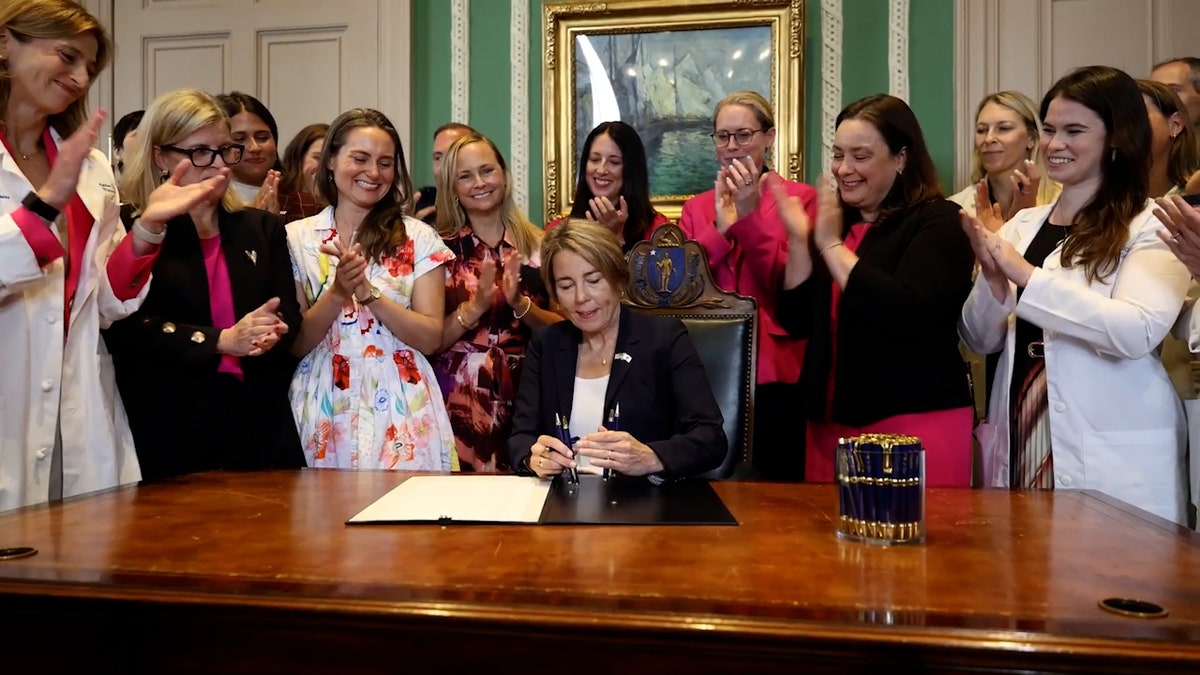
The picture above is of a group of women smiling and applauding as Massachusetts Democrat Governor Maura Healey signs a bill into law allowing women in Massachusetts to be among the tens of thousands who have their babies barbarically dismembered limb by limb and torn apart every single year just before birth.

So now, as August 2026, there are 10 states and Washington, D.C., that have no statutory gestational age limits or restrictions that ban abortion at any point in pregnancy. The states and district that do not enforce a specific gestational limit by law include Alaska, Colorado, Illinois, Maryland, Massachusetts, Minnesota, New Jersey, New Mexico, Oregon, Vermont, and Washington, D.C.

In those jurisdictions, decisions regarding killing a baby that has gone past its due date is left to abortionist doctors.
 
I find it interesting that out of 193 member nations that belong to the United Nations, that only 8 countries allow abortion on request or at the federal level without a statutory gestational limit specified by national law. Only the United States at the federal level, though individual states implement their own restrictions, Australia, Canada, China, Guinea-Bissau, Mexico, South Korea, and Vietnam allow killing a baby that has gone past its due date. 

Many other countries around the world that enforce strict gestational limits for elective or early-stage requests, such as 12 to 24 weeks, still permit late-term or post-limit terminations if the pregnant person's life or physical/mental health is endangered, or in cases of severe fetal impairment.

Democrat Gov. Maura Healey, who was met with applause and smiles as she signed away Massachusetts' gestational limits on killing babies, said the law is intended to ensure families facing medical complications late in pregnancy can abort their babies in Massachusetts rather than having to go through the expense of traveling out of state to abort their babies. Those medical complications can include maternal health complications and fatal diagnoses.

Of course, women in Massachusetts, or any of the other 9 states and Washington D.C., can abort their babies for any reason that they want. Whether a woman is not happy with the sex of the baby, if the baby is suspected of being Gay, if the child won't have a desired eye color, or a woman suspects that the baby may be a candidate for gender dysphoria, are all valid reasons for a woman to have an abortion in Massachusetts or any of the other jurisdictions that have no statutory gestational age limits or restrictions that ban abortion at any point in pregnancy.

Can that happen? The answer is yes. Yes. Massachusetts law, like the others, does not restrict abortion based on specific personal reasons like the sex or eye color of the fetus. Abortion decisions are legally left to the individual in consultation with their abortionist professional. The state does not have criminal bans prohibiting abortions due to sex selection or other personal motivations.

Legally, in those jurisdictions, their statutes do not require a patient to disclose or justify their personal motivation, such as fetal sex or characteristics or color of skin or how they feel at the moment, to obtain an abortion. This is considered a part of their medical and personal freedom. 

Massachusetts Gov. Maura Healey said "the new abortion law will grant medical professionals greater discretion to perform abortions later in pregnancy without facing legal repercussions." 

And yes, she is correct. Massachusetts and those other  jurisdictions have policies is place that put "reproductive healthcare," which is a silly term since there's nothing "reproductive" about killing babies, decisions in the hands of the patient and their abortionist medical doctors. So no, there is nothing restricting abortions over a women's concern that she may not have a certain type of child.

Of course, since such abortions involve dismemberment of the fetus, and no, I don't know if Planned Parenthood is planning on selling dismembered babies. Frankly, I can't find evidence that Planned Parenthood is planning to sell fetal body parts in Massachusetts or anywhere else.

What's that all about? Well, under United States federal law, selling human fetal tissue is a felony punishable by up to 10 years in prison and a fine of up to $500,000. In 2015, undercover videos released by an anti-abortion group called the Center for Medical Progress (CMP) alleged that Planned Parenthood was illegally selling aborted fetal organs for profit.

In the videos, supposedly Planned Parenthood officials were discussing "standard legally compliant programs" where patients could choose to donate fetal tissue for medical research. The monetary figures discussed in the video for body parts were "standard reimbursements" meant to cover the clinic's administrative costs of processing and shipping the tissue. Supposedly, because of the undercover videos, Planned Parenthood later stopped accepting those cost reimbursements to eliminate any further controversy.

Now, just for the record, killing an infant after birth is classified as "infanticide" or homicide, and it is strictly illegal under the criminal laws of all 50 states. 

So what is the distinction between "Abortion" and "Infanticide"? Well, infanticide is defined as the taking the life of a child who has been born alive is treated as murder or manslaughter in every jurisdiction, regardless of the child's age or health status. An abortion is the ending of a pregnancy before the fetus can live outside the uterus. 

What is a "Late-Term Abortion"? This term is commonly used to describe abortions that occur at or after 21 weeks of gestation. But, that's not always true. In fact, the American College of Obstetricians and Gynecologists (ACOG) notes that medically, "late-term" actually refers to a pregnancy that has gone past its due date (41 to 42 weeks).

While "late-term abortion" laws vary significantly by state, federal and state laws draw a definitive legal line at birth, and under federal statutes like the Born-Alive Infants Protection Act, any infant who is born alive at any stage of development is legally recognized as a person with full protections under the law.

The Born-Alive Infants Protection Act of 2002 established that any infant born alive, including those who survive an attempted abortion, is legally recognized as a "person" under federal law. The debate surrounding this topic has evolved around a newer, separate piece of legislation called the Born-Alive Abortion Survivors Protection Act. The differences in how political parties view this issue involve specific arguments.

Advocates argue that the original Born-Alive Infants Protection Act 2002 law lacks strict enforcement mechanisms to punish doctors who fail to provide care to infants surviving abortions. In the newer version, the Born-Alive Abortion Survivors Protection Act, actually seeks to mandate that health care professionals provide the same degree of care given to any other newborn baby, adding criminal penalties and fines for non-compliance. It tells healthcare professionals that they can't just let a baby die.

Supporters say that the updated bill is important as a commonsense measure against infanticide to protect vulnerable human life.

Democrats have a different perspective and see the new legislation as completely unnecessary and redundant, as the intentional killing or neglect of any infant is already illegal and prosecuted as homicide nationwide. Going along with the Democrats are major health organizations that say the new Born-Alive Abortion Survivors Protection Act represents government intrusion into medical care because it's "intimidation." 

Yes, they say the Born-Alive Abortion Survivors Protection Act's penalties are designed to intimidate medical providers by mandating healthcare professionals to do everything in the power to keep a child alive. As for that Bill restricting a woman's legal right to access safe reproductive healthcare? No one can explain how that would happen under a Bill that would happen under the Born-Alive Abortion Survivors Protection Act.

The Born-Alive Abortion Survivors Protection Act requires health care practitioners to provide immediate, same-degree lifesaving medical care and hospital transport for any child born alive following an abortion or attempted abortion, imposing criminal penalties for non-compliance. 

The Bill's key provisions are 1) "Standard of Care" which mandates that any health care practitioner present exercise the same degree of professional care to preserve the life of the child as would be given to any other child born alive at the same gestational age; 2) "Hospital Admission" which requires the immediate admission of the infant to a hospital; 3) "Mandatory Reporting" requires practitioners or employees with knowledge of a failure to comply to immediately report it to law enforcement; 4) "Penalties" imposes criminal penalties (fines and/or up to five years in prison) for practitioners failing to provide care or report violations, and allows for prosecution for murder if someone intentionally kills the child; and 6) "Protection for the Mother" explicitly bars the criminal prosecution of the mother and permits her to bring civil action against a violating practitioner.

Democrats don't agree with the idea that a newborn baby surviving an attempted abortion is a legal person who possesses an inherent right to life and deserves the identical standard of care given to any other newborn. And frankly, I don't understand how they don't understand that.

Tom Correa


Friday, August 7, 2026

America's Cattle Problems Started Long Before 2026


I've been thinking about what the government can do to help ranchers. Research shows that the U.S. cattle inventory has dropped to 86.2 million head which is its lowest level in 75 years. If you look it up, you'll see that some folks are blaming this problem on multi-year droughts in the West, high feed and production costs, and economic liquidations. 

Frankly, that's partially true. Recent grazing conditions have been terrible because of severe consecutive years of dry weather across the West's major cattle-producing regions. There is no argument about how droughts have drastically depleted available pasture and forage. Add that to ever higher costs to ranchers in the form of soaring prices for feed, non-alfalfa hay, fuel, and equipment, and anyone with half a brain can see how that's cut profit margins for multi-generational and independent ranchers, big and small alike. 

We should all understand how droughts are a real problem. We should understand how they are cyclical. Let's look back at how droughts affected the Great Cattle Die Up of 1886 when ranchers were hit with almost 10 years of droughts before getting slammed with a historically cold and wet winter. That event killed hundreds of thousands of cattle. The Great Cattle Die-Up of 1886, also called the Big Die-Up, was a historic disaster of Biblical proportions on the Great Plains. 

In the Great Die Up, ranchers made it through years of droughts to watch hundreds of thousands of cattle freeze and starved to death across Montana, Wyoming, and the Dakotas due to severe blizzards, bitter cold, and severe overgrazing. While ranchers made it through by rebuilding, that was the event that marked the dramatic end of the open-range cattle industry. 

Of course, American ranchers also made it through the droughts that created the Dust Bowl of the 1930s, and they survived the horrible drought that we experienced in the 1970s. I remember how some folks at the time didn't think America's cattle industry would ever come back from that. Thankfully, through shear determination of ranchers who didn't know the word "quit," they rebuilt their herds. 

As for those ever increasing costs to ranchers in the form of soaring prices for feed, non-alfalfa hay, fuel, and equipment? When have they not been present? I'm old enough to remember how screwed the 1970s and 1980s economy was for everyone, including the cattle industry. 

We survived and even prospered, but it sure wasn't easy. Back in the 1970s and 1980s, we faced severe "stagflation" which was a terribly painful mix of high Inflation, super high Unemployment, and incredibly high Interest Rates. While some folks out there have memory lapses about the numbers, I remember how Inflation, Unemployment, and Interest Rates reached staggering levels.

Friends, official numbers say Inflation peaked at an annual rate of almost 15% in March of 1980. Official Unemployment numbers reached a recession high of 11% in 1982. But frankly, that 1982 Unemployment figure is a lie.

Since Americans were only able to collect Unemployment Benefits at the time for a maximum of 12 weeks, while proving that you were trying to find a job, at the end of those 12 weeks you fell off the rolls whether you found a job or not. The government "assumed" you must have found work even if you hadn't. That made it look like you were employed when you weren't.

During the Great Depression in 1933, the official U.S. Unemployment rate reached 25% (representing roughly 12.8 to 15 million people), the federal government did not systematically track monthly joblessness at the time. In fact, modern economic analyses and historical calculations suggesting total underemployment and localized joblessness at the time to have been closer to 30% when factoring in severe underemployment and discouraged workers who stopped looking for work.
Just as what took place during the Great Depression in the 1930s, during the severe early 1980s recession, the official U.S. unemployment rate peaked at 10.8% in December 1982. However, unofficial or broader alternative estimates incorporating discouraged workers and the underemployed, made those numbers surge past 20% for total labor impact. This is absolutely what took place, including in specific hard-hit sectors like construction and auto manufacturing that saw localized joblessness exceed 20% to 24%.
When folks factor in part-time workers who wanted full-time jobs and discouraged dropouts, the Unemployment numbers get pushed to the true functional hardship rate above 20%. And as for industrial being devastated, it's a fact that auto manufacturing Unemployment spiked to 24% and construction sector Unemployment hit 22% at the time. 
I remember reading about how factory towns in the Rust Belt and Midwest saw localized peaks matching or exceeding Great Depression levels -- an example of that was Rockford, Illinois, that saw 25% Unemployment.

As for the Interest Rates at the time? The prime rate peaked at a record 21.5% in December 1980. It didn't kill us. Life still went on. And yes, it was common for Americans to buy homes with a 30-year fixed mortgage rate of 18.3% in 1981. I remember buying my first new car in 1979. I bought a CJ-5 Jeep for $3,200 at an Interest Rate of 17%. And yes, I had great credit! 

Farmers and ranchers were also buying new equipment and feeding their cattle back then. And yes, they sharpened their pencils to steal from Peter to pay Paul, but they made things work on the most part. 

I remember really well, how during the 1970s and 1980s, American ranchers faced severe financial strain due to soaring production costs. Prices for livestock feed, non-alfalfa hay, fuel, and heavy machinery spiked dramatically, driven by high Inflation and the 1970s energy crises. And yes, just as what's going on today, cattle and livestock prices often failed to keep pace. 

The global oil crises in the 1970s caused diesel and gasoline prices to jump. This raised the daily cost of running tractors, trucks, and ranch operations. Add that to the fact that we faced drought conditions in the 1970s and high energy costs, and you see what pushed prices for grain, supplements, and non-alfalfa hay to record highs. 

As for equipment expenses? Tractors, fencing materials, and replacement parts became much more expensive to buy and maintain. Now add to that how the horrible government policies coming from Democrat President Jimmy Carter in the late 1970s brought Americans double-digit Interest Rates which made debt servicing and land mortgages crippling for many family operations. Any of this sound familiar? Democrats today have the same policies. 

As for the result of the Democrat policies on ranchers? Operating costs outpaced market returns for beef and other livestock. Many ranchers liquidated to regrow their herds. And yes, many long-standing family ranches were forced to sell off land or livestock just to survive. Sadly, smaller independent operators disappeared or merged into larger corporate setups.

This is all true. During the 1970s and early 1980s, Democrat policies created soaring Inflation, skyrocketing Interest Rates (peaking over 21%), and a collapsing export market -- which triggered the worst crisis for American agriculture since the Great Depression. 

Don't fool yourself into thinking that I might be exaggerating things just because Democrat policies ruined our economy and almost put America into a Second Great Depression at the time. It is a fact that ranchers who had borrowed heavily to buy land and expand their operations during the 1970s boom, a boom that was promoted by the federal government to borrow money, all of a sudden faced crushing debt payments, plunging land values, and widespread foreclosures as operating costs outpaced livestock prices. 

In the 1970s, the high Inflation drove ranchers and farmers to buy more land and equipment, treating real estate as a safe inflation hedge. Lenders happily pushed loans, assuming land prices would climb forever. And of course, in 1979 the Federal Reserve tried to aggressively raise interest rates to kill inflation. That never works, but they did it anyway, which sent borrowing costs as high as 21% to 24%.

As for the financial collapse that followed, the crushing debt of existing loans with variable interest rates doubled or tripled in operating cost overnight, meaning total interest payments soon exceeded net ranch income. That meant that ranchers faced collapsing asset values. And yes, land values plummeted by 30% to over 60% in many regions, wiping out the equity ranchers needed to secure operating loans.

As for the demand for beef by Americans? Because a lot of us were out of work,  high Unemployment, businesses closing, factories closing or moving out of the country, frankly jobs were hard to find. And really. those who were working knew better than to quit. So, all in all, the economic slowdowns in America dropped domestic meat consumption. 

Americans couldn't afford beef. It's true. Eating beef in the late 1970s became a luxury for a lot of hard working Americans who simply couldn't afford it. 

People have short memories and don't remember how tough times were back then. Because the economy was in the toilet, the late 1970s saw a major spike in beef prices due to high Inflation, rising feed costs, and a sharp drop in cattle inventory after a multi-year liquidation cycle. This all made beef expensive for many families, causing a shift toward cheaper poultry and pork alternatives.

The cattle cycle is always a factor. Ranchers reduced herds earlier in the decade because of high grain costs and low profits. High overall Inflation in the late 1970s raised the cost of processing, packaging, and transporting meat. High beef prices at the stores caused average beef consumption to drop from peak levels as shoppers bought chicken and pork instead. 

Here's something else, soon the supply of cattle dropped. Fewer cattle available on the market directly drove up supermarket beef prices. The result was that American families changed weekly meal plans to cope with the higher cost of living. 

As for Americans experiencing hard times, yes, foreclosures and bankruptcies were through the roof. As for ranchers specifically? It was a time that saw thousands of generational ranch and farm families lost their land to banks and the Farm Credit System. Add to that rural bank failures. It's true. There were a lot of rural banks that served agricultural communities that simply went under because borrowers could not pay back their massive debts.

So now, let's talk about how Republican President Ronald Reagan tried to save American ranchers from high Inflation, high Unemployment, and high Interest Rates of the horrible economy of the 1970s and 1980s. 

For me, I find it interesting that he was the first president to use the term "Make America Great Again" in his 1980 presidential campaign. And yes, even though there was an assassination attempt on his life, and the Democrats tried to Impeach him right after being elected in a landslide victory, none of that stopped him from reversing years of detrimental Democrat policies, and move ahead with an "America First" policy.  

While Republican President Ronald Reagan did not fully save American ranchers and farmers from the severe economic crisis of the early 1980s, and the high Interest Rates and falling land values triggered a devastating Farm Crisis in America, President Reagan's broad free-market economic policies lowered national Inflation Rates while trying to rebuild our shattered economy. 

His economic policies were called "Reaganomics." Democrats hated it because he cut taxes on all Americans to get Americans to keep more of their hard earned money. He also promoted small businesses and large corporations to invest in America. He gave incentives to businesses to create jobs. Not merely create a bigger Welfare State as Democrats were doing at the time, but allowing free Americans the freedom to create wealth which created wealth for others in the form of needed jobs. 

He did that by instituting sweeping tax cuts to individual and corporate tax rates via the Economic Recovery Tax Act to stimulate private investment. And, supported by the Federal Reserve's tight money policies, Reagan was able to drop Inflation from 13.5% in 1981 when he entered office --  down to 4.1% by 1988 when he left office. 

And as for relieving the pain on farmers and ranchers in the way of getting those high Interest Rates lowered, President Reagan took action and was able to pass an agricultural relief emergency debt restructuring bill. He signed the Agriculture Credit Act of 1987, authorizing a multi-billion dollar rescue package to restructure farm and ranch loans over 20-year terms with lower interest rates. 

He supported the creation of Chapter 12 bankruptcy in 1986, which created a custom legal shield specifically designed to protect family farmers and ranchers from total liquidation. And to get beef more affordable for Americans, he lifted the 1980 Soviet Grain Embargo on his first day in office and pushed to restore America’s status as a reliable global agricultural supplier.

As for the federal over regulations, land-use policies that restricted ranchers, Leftist environmentalist attacks and other Democrat attacks on American beef producers? 

During the 1970s and 1880s, American ranchers had to contend with drought, soaring costs, and financial ruin. Add to this how ranchers faced years of Democrats adding more and more federal mandates, environmental restrictions, how the Left waged a war against the beef industry, the political assaults from the Left, the false claims that cattle were all of a sudden bad for the earth, and all of proposed updates to the Packers and Stockyards Act. That's why I say America's cattle problems started long before 2026. That's why I said, that folks our beef problems today on multi-year droughts in the West, high feed and production costs, and economic liquidations, are only looking at what's partially to blame.

Friends, besides droughts and natural conditions, and raising costs, ranchers have had to fight Washington to survive. Just the imposed heavy compliance burdens and operational uncertainty alone would put must businesses out of business. 

And yes, in 2026, many American ranchers continue to experience financial and operational pressure stemming from previous years of government regulation, trade policies, and land management decisions. While cattle prices are at record highs in 2026 due to extreme supply shortages, the industry faces structural challenges, with producers calling for help from President Donald Trump to alleviate regulatory burdens that have accumulated over the past decades. 

Years of drought, coupled with rising feed costs and government regulatory pressures has led to the smallest U.S. cattle herd in 75 years by 2026. Ranchers are  struggling to rebuild, but the roadblocks in the way citing high costs associated with compliance are not helping them. Add to all of this, Democrat politicians who are getting huge campaign contributions from Leftist environmentalist groups are attacking ranchers in court. 

That is why, earlier this year, 2026, President Trump's USDA department noted a need to protect ranchers from "politically motivated lawfare" and "unnecessary seizures of farmland." To help ranchers, President Trump has launched initiatives to reduce regulatory burdens that have hindered American beef production.

Let's hope he's successful.

Tom Correa