Wednesday, June 19, 2013

Elbert Guillory: "Why I Am a Republican"

Published on YouTube Jun 16th, 2013

Louisiana Senator Elbert Guillory (R-Opelousas) explains why he recently switched from the Democrat Party to the Republican Party.

Sen. Guillory holds a Bachelor of Arts from Norfolk State University and a J.D. law degree from Rutgers University in Newark, New Jersey. He is a practicing lawyer.

He previously served as state representative for District 40.


He discusses the history of the Republican Party which was founded as an Abolitionist Movement in 1854.

Guillory talks about how the welfare state is only a mechanism for politicians to control the black community.

He's saying things Democrats wish he wouldn't!

And yes, it's all about people being educated about the truth.


Monday, June 17, 2013

The Rotten Egg Bill

Right now, Democrats and the Obama Administration have American Farmers in their sights

This week the US House of Representatives is considering the 2013 Farm Bill — the agriculture policy tool for the federal government.

Of all of the amendments that will be debated, there is one in particular that has Conservatives fighting to stop.

If passed, "The Egg Bill" amendment will result in an unfunded government mandate on millions of American family farmers.

The Egg Bill was introduced in the Senate by Sen. Dianne Feinstein. That alone should have you understanding who is in favor of such a bill - PETA and those yo-yos!  

The amendment calls for federal requirements on the size and structure of egg producing facilities.

This mandate could have significant consequences for farmers — especially the smaller, family run businesses.

It would likely force farmers to shut down their operations or significantly increase their production costs, which will inevitably be passed on to consumers at the grocery stores and at restaurants.

This complete overhaul of our nation’s egg producing facilities is expected to increase the price of eggs and any food containing eggs, such as baked goods.
The Egg Bill amendment is being pushed on Capitol Hill by Liberal animal activist groups, such as PETA and the Humane Society of the United States, who have made it their mission to end animal agriculture as we know it.
The Egg Bill amendment is opposed by Conservative groups, such as Americans for Prosperity, and a majority of the US agriculture industry.

Opponents say that similar mandates in Europe have cut food supplies and driven up costs, without any evidence of improved food safety, animal welfare or other social benefits.
It is also widely believed that the Egg Bill amendment sets a dangerous precedent for government control of all family farms – including those that produce meat, poultry and dairy products.

Furthermore, it needlessly replaces the family farmer’s traditional values and good judgment with Federal bureaucratic mandates from Washington, DC.
This looming move by Congress comes on the heels of scandals at the Internal Revenue Service and the Justice Department, and would continue the precarious trend of the federal government overreaching and compromising Americans’ freedoms.
One organization is standing up to big government and working to keep The Egg Bill off the Farm Bill.

Keep Food Affordable is a coalition that brings together consumers, farmers and food security organizations to support policies and practices that will allow America’s farmers to produce food safely, efficiently and without any unnecessary financial burdens so that all Americans can have access to safe and affordable food.

The Keep Food Affordable coalition brings together consumers, farmers, and food security organizations to keep food safe, affordable, and available for all Americans.

 Food prices are escalating in the United States and throughout the world, all because of many factors out of our control: a booming global population; high oil prices; and the rising standards of living in emerging nations.

Keep Food Affordable aims to influence the factors that are in our control.
They support policies and practices that will allow America’s farmers to produce food safely, efficiently, and without any unnecessary financial burdens so that all Americans can have access to safe and affordable food.

Farmers are between a rock a hard place when it comes to surviving in today's America.

Being a Farmer takes toughness and determination, the like of which have never been seen before.

Why you ask?

Well, besides traditional burdens like lousy weather and horrible market prices, the cost to produce food is going up, financial burdens are piling on, and the radical environmentalist and animal activist who pour money into re-election campaigns of liberals throughout the nation are using the power of the Federal Government to try to destroy the American Farmer through Federal over-regulation and unrealistic mandates.

Yes, over-regulation and unrealistic mandates, all of which are backed by outrageous fines, confiscation of property, and even possible imprisonment.
Keep Food Affordable has a mission to keep food safe, affordable and abundant for all Americans.
They, like other pro-Farmer groups, need our support!  
Keep Food Affordable is made up of agriculture groups, including National Pork Producers Council (NPPC)National Cattlemen’s Beef Association (NCBA), and Egg Farmers of America, as well as thousands of consumers who support their mission of keeping food affordable and accessible.
The coalition hopes that with enough input from constituents, the House will act in the best interest of those most at risk of being hurt by the Egg Bill.
If the Farm Bill passes with the Egg Bill attached as an amendment, farmers will lose income, American families will be forced to spend even more money on food, and Congress will emerge with egg on its face.

Keep Food Affordable is helping Americans voice their opposition to the Egg Bill and communicate their desire to keep Washington D.C. bureaucrats off family farms directly to their members of Congress through an online advocacy tool.
  You can help by going to the link below and taking a stand!
Stop The Rotten Egg Bill!

Horse: Laminitis


The terms "laminitis" and "founder" are used interchangeably.

However, founder usually refers to a chronic (long-term) condition associated with rotation of the coffin bone.

Whereas, acute laminitis refers to symptoms associated with a sudden initial attack, including pain and inflammation of the laminae.

THE CAUSES

While the exact mechanisms by which the feet are damaged remain a mystery, certain precipitating events can produce laminitis.

Although laminitis occurs in the feet, the underlying cause is often a disturbance elsewhere in the horse's body.

The causes vary and may include the following:

• Digestive upsets due to grain overload or abrupt changes in diet

• Sudden access to excessive amounts of lush forage before the horse's system has had time to adapt; this type of laminitis is known as "grass founder"

• Toxins released within the horse's system

• High fever or illness; any illness that causes high fever or serious metabolic disturbances has the potential to cause laminitis, e.g., Potomac Horse Fever

• Severe colic

• Retained placenta in the mare after foaling

• Consumption of cold water by an overheated horse

• Excessive concussion to the feet, often referred to as "road founder"

• Excessive weight bearing on one leg due to injury of another leg or any other alteration of the normal gait

• Various primary foot diseases

• Bedding that contains black walnut shavings

• Prolonged use or high doses of corticosteroids

RISK FACTORS

Factors that seem to increase a horse's susceptibility to laminitis or increase the severity of the condition when it does occur include the following:

• Heavy breeds, such as draft horses

• Overweight

• High nutritional plane

• Ponies

• Unrestricted grain binges, such as when a horse breaks into the feed room. If this happens, do not wait until symptoms develop to call your veterinarian.

Call immediately so corrective action can be taken before tissue damage progresses.

SIGNS

Signs of acute laminitis include the following:

• Lameness, especially when a horse is turning in circles

• Heat in the feet

• Increased digital pulse in the feet

• Pain in the toe region when pressure is applied with hoof testers

• Reluctant or hesitant gait ("walking on eggshells")

• A "sawhorse stance," with the front feet stretched out in front to alleviate pressure on the toes and the hind feet "camped out" or positioned further back than normal to bear more weight.

• Signs of chronic laminitis may include the following:

• Rings in hoof wall that become wider as they are followed from toe to heel

• Bruised soles or "stone bruises"

• Widened white line, commonly called "seedy toe," with occurrence of seromas (blood pockets) and/or abscesses

• Dropped soles or flat feet

• Thick, "cresty" neck

• Dished hooves, which are the result of unequal rates of hoof growth . This is where the heels grow at a faster rate than the rest of the hoof, resulting in an "Aladdin-slipper" appearance.

TREATMENT

The sooner treatment begins, the better the chance for recovery.

Treatment will depend on specific circumstances but may include the following:

• Diagnosing and treating the primary problem (Laminitis is often due to a systemic or general problem elsewhere in the horse's body.)

• Dietary restrictions

• Treating with mineral oil, via a nasogastric tube, to purge the horse's digestive tract, especially if the horse has overeaten

• Administering fluids if the horse is ill or dehydrated

• Administering other drugs, such as antibiotics to fight infection; anti-endotoxins to reduce bacterial toxicity; anticoagulants and vasodilators to reduce blood pressure while improving blood flow to the feet.

Coiticosteroids are contraindicated in laminitis, as they can actually cause laminitis or exacerbate existing cases.

• Stabling the horse on soft ground, such as in sand or shavings (not black walnut), and encouraging the horse to lie down to reduce pressure on the weakened laminae

• Opening and draining any abscesses which may develop

• Cooperation between your veterinarian and the farrier (Techniques that may be helpful include corrective trimming, frog supports, and therapeutic shoes or pads.)

LONG-TERM OUTLOOK

Many horses that develop laminitis make uneventful recoveries and go on to lead long, useful lives.

Unfortunately, others suffer such severe, irreparable damage that they are, for humane reasons, euthanized.

Your equine practitioner can provide you with information about your horse's condition based on radiographs (x-rays) and the animal's response to treatment.

Radiographs will show how much rotation of the coffin bone has occurred.

This will help you make a decision in the best interest of the horse and help the farrier with the therapeutic shoeing.

MANAGEMENT

Importantly, once a horse has had laminitis, it may be likely to recur.

In fact, a number of cases become chronic because the coffin bone has rotated within the foot and because the laminae never regain their original strength.

There may also be interference with normal blood flow to the feet, as well as metabolic changes within the horse.

Extra care is recommended for any horse that has had laminitis, including:

• A modified diet that provides adequate nutrition based on high-quality forage and without excess energy, especially from grain

• Routine hoof care, including regular trimming and, in some cases therapeutic shoeing (Additional radiographs may be needed to monitor progress.)

• A good health-maintenance schedule, including parasite control and vaccinations to reduce the horse's susceptibility to illness or disease

• Possibly a nutritional supplement formulated to promote hoof health.  

From one horse owner to another - Good luck! 

Saturday, June 15, 2013

Horses: Grass Founder

To protect your horse's health, you may need to limit his access to sugar-rich grass.

Why? Well, because lush spring pastures can be dangerous temptations for horses.

Especially during Spring, lush green grass begins to grow, it could be the beginning of serious founder problems – laminitis.

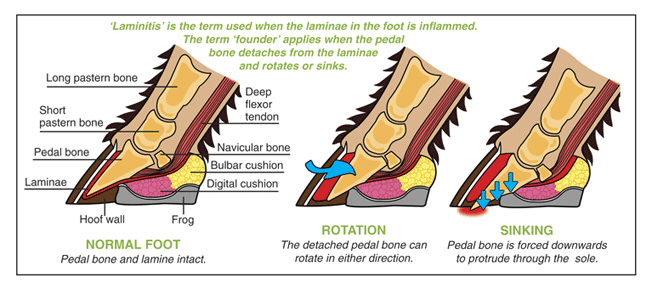
Laminitis is inflammation of the laminae of the horse’s foot.

the normal hoof

Laminae make up the delicate, accordion-like tissue that attaches the inner surface of the hoof wall to the coffin bone - the bone in the foot.

The sensitive laminae cover the bone and interlock with the insensitive laminae lining the inside of the hoof wall to keep the coffin bone in place within the hoof.

A horse suffering from laminitis experiences a decrease in blood flow to the laminae, which in turn begin to die and separate.

The final result is hoof wall separation, rotation of the coffin bone and extreme pain.

foundered hoof with rotated coffin bone

Laminitis is a word no horse owner wants to hear associated with her horse.

It is a crippling disorder that takes weeks or even months for the horse to recover from, and that is if all causative factors are removed and the best equine husbandry is provided.

It can be permanently debilitating if not dealt with properly and promptly, leading to much pain and suffering for the horse.

In severe cases, the coffin bone can actually rotate through the sole of the horse’s hoof where it becomes infected and usually results in the death of the horse.

Laminitis is triggered by a variety of causes, including repeated concussion on hard ground (road founder); grain overload; retained placenta; hormonal imbalance (Cushing’s disease or metabolic syndrome); certain drugs (corticosteroids); obesity; and lush grass.

Veterinarians and nutritionists have known for some time that plants store energy in their seeds in the form of starch that can cause laminitis if the horse is introduced to grain too quickly or eats too much grain.

Only recently have researchers discovered that grasses not only store energy in their seed heads as starch, they also store energy as sugar.

In the spring, as grass is growing rapidly, it stores more sugar than it needs for growth, and horses consume the sugar as they graze.

Later in the year, when the daylight and nighttime temperatures are more consistent and grass growth rates decrease, the plant uses up most of the sugar produced during the day each night.

Here are some tips for avoiding grass founder:

• Keep horses off lush, fast-growing pastures until the grass has slowed in growth and produces seed heads.

• Graze horses on pastures containing a high percentage of legumes. Legumes, such as alfalfa or clover, store energy as starch, not sugar.

• Avoid grazing horses on pastures that have been exposed to bright sunny days followed by low temperatures, such as a few days of warm sunny weather followed by a late spring frost.

• Avoid grazing horses on pastures that have been grazed very short during the winter and are growing rapidly.

• Keep overweight horses in stalls or paddocks until the pasture’s rate of growth has slowed, then introduce them to pasture slowly.

• Turn horses out on pasture for a few hours in the early morning when sugar levels are low, not at night when levels are at their highest.

• Allow horses to fill up on hay before turning them out on grass for a few hours.

At Risk

Horses that are over the age of 10, “easy keepers,” overweight or those with crested necks seem especially vulnerable to grass founder and should be the focus of your preventive program.

After the horses are turned out on pasture, check them often for early signs of laminitis such as heat in the feet and a pounding pulse at the back of the pastern.

Foundered horses also assume a characteristic “sawhorse” stance with their hind feet up under their body and their front feet placed farther forward than normal.

This is because the horse is trying to shift its weight off its painful front feet to its hind legs.

Grass-foundered horses also move gingerly, as if walking on eggshells, and are often unwilling to turn or move at all.

In severe cases, the horse may refuse to stand. If your horse demonstrates these signs after being turned out on grass, immediately pull him off the pasture and call a veterinarian.

If you have horses that are prone to grass founder, visit with your veterinarian or equine nutritionist to develop a strategy for introducing them to spring grass.

This is truly a situation where an ounce of prevention is worth a pound of cure.

Laminitis vs. Founder

What is the difference between acute laminitis and chronic laminitis, or founder?

If my horse has laminitis, does that mean he has foundered?

The term laminitis is often used interchangeably with founder, but technically the two are different, though related, phenomenon.

Laminitis is inflammation of the laminae in the hoof.

The laminae are the velcro-like connections that attach the coffin bone to the inner hoof wall, holding the foot together; because the laminae are trapped between a rock (the coffin bone) and a hard place (the inner hoof wall and sole), any inflammation is painful for the horse.

Chronic inflammation over time, or a catastrophic laminitis episode, will lead to degeneration of the blood vessels that feed the laminae and necrosis of the laminae themselves.

This breakdown of the laminae results in the coffin bone separating from the hoof wall and “rotating”; this stage of laminitis is properly called founder.

In very advanced cases of founder, it is possible for the entire hoof to slough off, or the coffin bone to penetrate the sole.

Acute laminitis usually lasts for only a few days.

External causes, like concussion on hard footing (commonly called “road founder”), chemicals like nitrate fertilizer, infections, colitis, pneumonia or retained placenta in a mare can all cause laminitis.

But those cases often heal and don’t result in chronic laminitis. A horse can have laminitis, heal and not founder.

When the laminae in the foot become so inflamed and damaged that they no longer support the coffin bone, which then rotates and sinks, the condition is then called chronic laminitis or founder.

That is when a long-term maintenance program provides the best possible outcome for the horse living with laminitis.


The signs

The signs can be subtle and confused for something else, like laziness, muscle soreness or arthritis.

Remember, laminitis is usually associated with the horse not wanting to bear weight on the front hooves and rocking his weight back on his haunches.

Not only do the hooves hurt terribly, but this posture quickly becomes painful as well; the horse was designed to bear more standing weight on the forelimbs, and extended periods of weight bearing on the hindquarters stress the joints and create chronic muscle tension.

What isn’t as well recognized is that there are usually early warning signs that a horse is developing laminitis; unless the horse broke into a fifty pound bag of grain, most cases develop over a few days, weeks, or even months.

For example, in early stage laminitis, a good footed horse will start to mince on gravel and walk slowly on concrete for no apparent reason.

A horse with a Grand Prix trot may begin to shuffle like a peanut-rolling pleasure horse.

Another horse may not want to pivot on his front feet.

A horse that would normally race out to pasture now walks or jogs.

While many laminitic horses exhibit the classic signs of heat in the feet and a bounding digital pulse, there are some horses, and especially early stage laminitics, that don’t present these symptoms.

Things to remember

Most laminitis cases are preventable, as they are related to the horse’s diet. Grain overload and too much pasture are very common culprits.

Most all grain products are very high in sugar content, and pasture can fluctuate from moderate to high sugar levels.

This leads to the reason for writing this article at this time of year; many horse owners realize the potential for grass founder in the spring, but don’t know that fall grasses can be just as problematic, as the climatic conditions that produce such rich forage are basically identical in spring and fall.

What is even less known is that some hays may be causing laminitis problems as well, as many of the hays commonly available have been hybridized for maximum sugar content to meet the demands of the dairy industry.

Horse owners wanting to understand the effects of sugar on the horse’s metabolism and how difficult it is to predict sugar content in a particular grass or hay should understand that whether its from grain, grass or hay, this diet rich in sugar triggers the inflammation, and therefore pain, in the hoof.

Other laminitis triggers are not quite as obvious.

Some horses react to certain medications, vaccines and wormers.

Infectious diseases or a retained placenta are also possible causes.

Metabolic disorders such as Cushing’s and insulin resistance can cause chronic laminitis and can be particularly difficult to treat.

And laminitis is not just for obese horses. While obesity may make a particular horse an easier target for a laminitis attack, a thin horse can still be susceptible.

If your horse is suddenly moving differently, and there’s no evidence of injury, take note of what may have changed in the last few weeks.

Is she being fed a different hay?

Has she been put out on pasture?

Has there been any other change in the feeding routine?

Have any medications been administered?

Provide this information to your veterinarian, as these may be clues that the horse is dealing with laminitis.

If laminitis is suspected, contact your veterinarian immediately, remove any identifiable triggers, and make sure the horse is transitioned to a low sugar diet.
An ounce of prevention goes a long way, attacking laminitis before it gets a foothold will save a lot of agony for horse and owner.

Every day veterinarians across the country see hundreds of cases of laminitis, a painful disease which affects the horse's feet.

What's especially alarming is that some cases are preventable. In fact, it may be that we are killing our horses with kindness.

Consider that a common cause of laminitis is overfeeding, a management factor that is normally within our control.

By learning more about laminitis, its causes, signs and treatments, we may be able to minimize the risks of laminitis in your horse, or control the long-term damage if it does occur.