Sunday, November 17, 2013

The BLM, Wild Horses & Burros


Dear Readers,

Since some of you have written asking about the Bureau of Land Management (BLM) and their administration of the Wild Horses and Burros on America's public lands, I figured that I'd look it up and get what I could regarding this subject.

A lot of the facts below come from the National Academy of Sciences and the BLM, as well as a few more sources.

Controversy over roundups of wild horses roaming the ranges in 10 Western states is reaching a boil, with ranchers, horse advocates and even the government itself in agreement that the Bureau of Land Management's Wild Horse and Bureau Program is "out of control."

The National Academy of Sciences released a review almost earlier this year on the BLM’s controversial wild horse program, saying “continuation of business-as-usual practices will be expensive and unproductive for BLM and the public it serves.”

Does the Interior Department and BLM intend to embrace the reforms included the report and if so when-- or would they not?

Since 1971, the Bureau of Land Management (BLM) of the U.S. Department of the Interior has been responsible for managing the majority of free-ranging horses and burros on arid federal public lands in the western United States.

In the Wild Free-Roaming Horses and Burros Act of 1971, the U.S. Congress charged the BLM with the “protection, management, and control of wild free-roaming horses and burros on public lands.”

BLM was charged to protect America's Wild Horses because, the legislation noted, “wild free-roaming horses and burros are living symbols of the historic and pioneer spirit of the West … and [they] are fast disappearing from the American scene.”

In the mid-20th century, horse and burro populations were affected by competing uses for the land, including livestock grazing, and by roundups, from which the animals were often sold for slaughter.

The protection provided in the 1971 legislation built on the "Wild Horse Annie Act" (P.L. 86-234), passed in 1959, which prohibited the use of motorized vehicles, including aircraft, to hunt free-ranging horses and outlawed the poisoning of watering holes on public lands.

The agency was also tasked with managing and controlling the population because of the multiple uses of public lands.

Public lands provide habitat to horses and burros, but they are also used for recreation, mining, forestry, grazing for livestock, and habitat for wildlife, including mule deer, pronghorn, and bighorn sheep.

Because of that, although the act stipulated that free-ranging horses and burros were "an integral part of the natural system of the public lands" and were to be managed "as components of the public lands"  -- it limited their range by definition to “their known territorial limits” in 1971.

Such public lands were to be "devoted principally but not exclusively to [horse and burro] welfare in keeping with the multiple-use management concept of public lands."

In addition, horses and burros were to be managed at "the minimal feasible level."

BLM management of the Wild Horse and Burros should "achieve and maintain a thriving natural ecological balance on the public lands, protect wildlife habitat, and prevent range deterioration."

That goal is been giving the BLM fits!

Population:

Free-ranging horses and burros have successfully sustained populations in North America for over 300 years, and no large predator widely overlaps with their territory.

Horses became domesticated about 4,000 to 5,000 years ago in the region of the Black Sea. Once man tamed the horse, horses performed many duties.

Horses are herd animals. They live in groups and help one another survive.

The word mustang comes from the Spanish word "mustengo," which means “ownerless beast.”

The American mustangs originally came from the Spanish stock of horses brought to America in the beginning of the 16th century.

Besides living in Western states: California, Nevada, Wyoming, Utah, Oregon, Colorado, Idaho, Arizona, Montana, North Dakota and New Mexico, America's Wild Horses also live on islands off the Atlantic coast, as well as on the mainland.

Small populations of horses live on Sable Island (Canada), Assateague Island (coast of Maryland and Virginia), Shackleford Island (off the coast of North Carolina) and Cumberland Islands (off the coast of Georgia).

Over 100 years ago there were an estimated 2 million mustangs roaming the range. While the number varies depending what source is used, between 42,000 and 25,000 mustangs roam the United States today.

The BLM estimates that 40,605 wild horses and burros (about 33,780 horses and 6,825 burros) are roaming on BLM-managed range-lands in 10 Western states, based on the latest data available, compiled as of February 28, 2013.

Wild horses and burros have virtually no natural predators and their herd sizes can double about every four years.

As a result, the agency must remove thousands of animals from the range each year to control herd sizes.

The estimated current free-roaming population exceeds by nearly 14,000 the number that the BLM has determined can exist in balance with other public range-land resources and uses.

The maximum appropriate management level (AML) is approximately 26,677.
Off the range, as of October 2013, there were 49,103 other wild horses and burros fed and cared for at short-term corrals and long-term pastures.

Specifically, there were 14,269 horses and 1,261 burros in corrals - for a total of 15,530 animals] and 33,573 horses in pastures.

The combined figure of 49,103 animals in holding compares to the BLM's total holding capacity of 52,909.

All wild horses and burros in holding, like those roaming Western public range-lands, are protected by the BLM under the 1971 Wild Free-Roaming Horses and Burros Act.

Acreage:

In 1971, when Congress passed the Wild Free-Roaming Horses and Burros Act, these animals were found roaming across 53.8 million acres known as Herd Areas of which 42.4 million acres were under the BLM's jurisdiction.

Today the BLM manages wild horses and burros in 179 subsets of these Herd Areas - known as Herd Management Areas - that comprise 31.6 million acres, of which 26.9 million acres are under BLM management.

"So what happened to the 'missing' 22.2 million acres on which wild horses and burros were found roaming?"

Good question. What happened to the 22.2 Million Acres?

In 1971, wild horses and burros were found roaming across 53.8 million acres of Herd Areas, of which 42.4 million acres were under the BLM's jurisdiction.

Today the BLM manages wild horses and burros in 179 subsets of these Herd Areas (known as Herd Management Areas) that comprise 31.6 million acres, of which 26.9 million acres are under BLM management.

So what happened to the 22.2 million acres on which these animals were originally found roaming?

The answer may surprise you, or make you angry!

Fact is, no specific amount of acreage was “set aside” for the exclusive use of wild horses and burros under the 1971 Wild Free-Roaming Horses and Burros Act.

The Act directed the BLM to determine the areas where horses and burros were found roaming and to manage them "in a manner that is designed to achieve and maintain a thriving natural ecological balance on the public lands."

The law also stipulated in Section 1339 that "Nothing in this Act shall be construed to authorize the [Interior] Secretary to relocate wild free-roaming horses or burros to areas of the public lands where they do not presently exist."

Of the 22.2 million acres no longer managed for wild horse and burro use:

  • 6.7 million acres were never under BLM management.
Of the 15.5 million other acres of land under BLM management:

  • 48.6 percent (7,522,100 acres) were intermingled ("checkerboard") land ownerships or areas where water was not owned or controlled by the BLM, which made management infeasible;
  • 13.5 percent (2,091,709 acres) were lands transferred out of the BLM's ownership to other agencies, both Federal and state through legislation or exchange;
  • 10.6 percent (1,645,758 acres) were lands where there were substantial conflicts with other resource values (such as the need to protect habitat for desert tortoise);
  • 9.7 percent (1,512,179 acres) were lands removed from wild horse and burro use through court decisions; urban expansion; highway fencing (causing habitat fragmentation); and land withdrawals;
  • 9.6 percent (1,485,068 acres) were lands where no BLM animals were present at the time of the passage of the 1971 Act or places where all animals were claimed as private property.
These lands in future land-use plans will be subtracted from the BLM totals as they should never have been designated as lands where herds were found roaming; and

  • 8.0 percent (1,240,894 acres) were lands where a critical habitat component (such as winter range) was missing, making the land unsuitable for wild horse and burro use, or areas that had too few animals to allow for effective management.
And of course, the problem with laws is that they have to be followed as written, and no common sense be applied, for example: Under the 1971 Act, horses and burros may not be re-located to other public lands where they were not found roaming when the law was passed.

Pretty sad isn't it.

Budget:

Congress appropriated $74.9 million to the Wild Horse and Burro Program in Fiscal Year 2012, which ended September 30, 2012.

Of that year's expenditures of $72.4 million, holding costs accounted for $43 million or 59.3 percent of the expenditures.

Gathers and removals cost $7.8 million (10.8%); adoption events cost $7.1 million (9.8%).

The $2.5 million difference between appropriations and expenditures is the amount of money “obligated” to certain activities but not actually spent.

Removing Wild Horses and Burros from the Range and Placing Animals in Adoption

To help ensure that herd sizes are in balance with other public range-land resources and uses, the BLM removed 8,255 animals (7,242 horses and 1,013 burros) from the range in Fiscal Year 2012, which ended September 30, 2012.

The Bureau placed 2,583 removed animals into private care through adoption in FY 2012 -- down from 5,701 in FY 2005.

Since 1971, when Congress passed the Wild Free-Roaming Horses and Burros Act, the BLM has adopted out more than 230,000 horses and burros.

Population Growth-Suppression Treatments

The BLM is tasked with the job of monitoring the population size to determine where there is an excess of horses and burros - such a situation is to be identified when “a thriving natural ecological balance and multiple-use relationship” is threatened.

It is BLM’s responsibility to determine when that relationship is under threat and to remove animals to achieve balance.

Legislation allows for the destruction of old, sick, or lame animals, but excess animals removed from the range may be adopted.

By law, those for which there is no adoption demand are to be "destroyed in the most humane and cost efficient manner possible" - however, the destruction of healthy, unadopted free-ranging horses and burros has been restricted either by a moratorium instituted by the director of BLM or by the annual congressional appropriations bill for the Department of the Interior in most years.

The BLM applied 1,051 PZP (porcine zona pellucida) fertility-control treatments to mares in FY 2012.

They released 180 more stallions than mares back into herds during gather operations, for a grand total of 1,195 population growth-suppression treatments in FY 2012.

With regard to a call by advocacy groups for a moratorium on all BLM gathers of herds?

This is said to be untenable for a couple of reasons:
  • Given the fact that herds grow at an average rate of 20 percent a year and can double in size every four years.
  • The ecosystems of public range-lands are not able to withstand the impacts from overpopulated herds, which include soil erosion, sedimentation of streams, and damage to wildlife habitat.
Sale Authority

About 8,400 wild horses and burros immediately became eligible for sale under the December 2004 sale-authority law (the so-called "Burns Amendment").

This law directs the BLM to sell "without limitation" to any willing buyers animals that are either more than 10 years old or have been passed over for adoption at least three times.

Since 2005, the Bureau has sold more than 5,400 horses and burros.

It has been and remains the policy of the BLM, despite the unrestricted sales authority of the Burns Amendment, not to sell any wild horses or burros to slaughterhouses or to "kill buyers."

The proceeds from the sale of the eligible animals are used for the BLM’s wild horse and burro adoption program, as directed by Congress under the sale-authority law.


Since 1989, adoptions have seldom exceeded the number of animals removed from the range.

In the 2000s, the discrepancy neared a 2:1 ratio of animals removed to animals adopted.

Because of that, the BLM’s effort to control horse and burro numbers by removing animals from the range has led to the stockpiling of “excess” horses and burros in holding facilities.

In fiscal year 2012, more than 45,000 animals were in holding facilities, and their maintenance consumed almost 60 percent of the Wild Horse and Burro Program’s budget.

BLM’s Legal Mandates

The BLM manages the nation’s public lands for multiple uses, in accordance with the 1976 Federal Land Policy and Management Act.

The Bureau manages wild horses and burros as part of this multiple-use mandate.

The BLM manages, protects, and controls wild horses and burros under the authority of the 1971 Wild Free-Roaming Horses and Burros Act (as amended by Congress in 1976, 1978, 1996, and 2004).

This law authorizes the BLM to remove excess wild horses and burros from the range to sustain the health and productivity of the public lands.

The problem is that there are those who see America's Wild Horse as a nuisance. Those people believe that Wild Horses and Burros should be eradicated, and access to the land shut off to ranchers.  

As for the 1971 Wild Free-Roaming Horses and Burros Act, Section 1333 of that law mandates that once the Interior Secretary "determines...on the basis of all information currently available to him, that an overpopulation exists on a given area of the public lands and that action is necessary to remove excess animals, he shall immediately remove excess animals from the range so as to achieve appropriate management levels."

So with the majority of the horses being in the West, and most likely a political appointee who doesn't know the situation of the problems will be in charge of their destiny, one can only wonder if the remaining horses have a chance at survival.

The Wild Horse situation in America is a problem that bureaucrats in Washington won't be able to figure out.

And sadly, some of those in the field know their jobs are on the line if they voice opposition to some of the relocation and/or removal policies that will lead to the destruction of our Wild Horses.

The goal is supposed to be protecting free-ranging horses and burros while managing and controlling them to achieve a vaguely defined thriving natural ecological balance within the multiple-use mandate for public lands.

This goal has challenged the BLM’s Wild Horse and Burro Program since its inception. And to many today, the BLM is failing to meet the challenge.


by Tom Correa


Friday, November 15, 2013

What's happened to 1,700 Wild Horses?


The case of the missing mustangs; what happened to 1,700 wild horses?

Story by Lisa Myers and Michael Austin
NBC News

The semis would rumble down country roads packed full of wild horses.

Truckload after truckload, sometimes 36 horses at a time, all with the same destination: a ranch in the small town of La Jara, Colo.

Records show that for years, the Bureau of Land Management sold and shipped more than 1,700 wild horses from its animal holding facilities to just one rancher.

Now federal investigators are trying to figure out: What did he do with all those mustangs? And did any of them ultimately end up being butchered in the slaughter plants of Mexico?

Wild horse advocates fear the worst.

They want to know the truth about the fate of the horses and whether the U.S. government looked the other way as the federally protected animals seemingly disappeared.

“I want to know where the horses went,” said Laura Leigh of the group Wild Horse Education, which advocates on behalf of the wild mustangs.

“It’s disgusting, it’s abhorrent. Whoever signed that slip to approve those sales, I want to look them in the eye and say, ‘What were you thinking?’”

Federal investigation

The BLM is charged with protecting wild horses under federal law and has confirmed that the Interior Department Office of Inspector General is investigating the agency’s sale of mustangs to rancher and livestock hauler Tom Davis.

The Davis investigation comes amid a growing controversy over the BLM’s Wild Horse and Burro Program.

The agency faces a dire situation: Nearly 50,000 horses captured during frequent roundups, so-called “excess animals,” are living in government holding facilities that are nearing capacity.

Horse adoptions are down, so the BLM has turned to selling the animals.

The government says Davis, who paid just $10 per head, was the biggest buyer ever of wild horses.

Its sale of the animals to Davis from 2008 to 2012 was uncovered by writer Dave Philipps in a September 2012 story, “All The Missing Horses,” for the nonprofit news organization ProPublica.

The story questioned whether Davis sent the horses to so-called “kill buyers,” middle men who export livestock to meat packing plants in Mexico, but reached no firm conclusion.

At the time, BLM issued this response to the ProPublica story: “The BLM condemns any sale of wild horses for slaughter. We care deeply about the well-being of wild horses, both on and off the range, and the BLM does not sell and has not knowingly sold or sent horses or burros to slaughter.”

Davis did not respond to repeated attempts by NBC News to contact him for comment and his lawyer, former federal prosecutor William Taylor, declined to answer questions about the federal investigation of his client.

But Taylor provided NBC News with a statement criticizing the government for not following part of the Wild Free-Roaming Horses and Burros Act.

While the 1971 law was enacted to protect wild horses, Taylor said, “Congress specifically amended the Act in 2005 to remove ‘excess’ animals from the Department of Interior’s protection, and to force the government to sell those animals without condition. … How does the government have any power under the Act to bring a case based on the sale of excess animals?”

The BLM acknowledges on its website that it is “not in compliance” with that part of the federal law which directs the agency to sell excess animals “without limitation” to any willing buyer, even to those who would slaughter the animals.

Last year, ProPublica reported that Davis is a proponent of slaughtering wild horses in the BLM’s holding system and that he had tried unsuccessfully to obtain funding to open a slaughter plant in Colorado.

“Hell, some of the finest meat you will ever eat is a fat yearling colt,” Davis was quoted as saying, “What is wrong with taking all those BLM horses they got all fat and shiny and setting up a kill plant?”

But Davis denied to ProPublica that he ever knowingly resold any wild horses for slaughter, saying he found “good homes” for the mustangs he purchased from BLM.

Who needs 1,700 horses?

According to BLM sales documents obtained by ProPublica under the Freedom of Information Act, Davis told government officials he wanted the animals to “put on oil fields ... to keep grass controlled” and to “use for movies.”

Horse advocate Leigh said neither of those explanations should have withstood the government’s scrutiny.

“You know, I haven’t seen any Westerns coming out of Mexico with wild horses being stampeded in front of a camera,” she said.

“It’s a joke and it’s not a funny one.”

So-called State Brand Certificates issued by the State of Colorado and obtained by NBC News indicate Davis shipped many of the animals he bought from the BLM to small towns near the Mexican border.

The Colorado brand commissioner says approximately 431 horses shipped from Davis’ property “appear to be BLM horses” that were sent to unspecified addresses in towns in different parts of New Mexico and Texas, including Spofford, Texas, 36 miles from the Eagle Pass border crossing into Mexico.

“It doesn’t take a rocket scientist to know that there are Mexican slaughterhouses across that border,” said Ginger Kathrens of The Cloud Foundation, a wild horse advocacy group.

“So it’s not a stretch to think that those horses ended up going to slaughter.”

Another advocacy group, the American Wild Horse Preservation Campaign, has called for the investigation of both Davis and the BLM.

The organization’s director, Suzanne Roy, said, “I think the government looked the other way at what was happening to these horses. ... I think it was willful ignorance on the part of the government.”

Joan Guilfoyle, chief of BLM’s Wild Horse and Burro Program, told NBC News she does not know what happened to the horses that were sold to Davis, but denied the agency did anything wrong.

“We have no knowledge of him being a person who has ill intent toward the horses,” she said, “so there was no reason to question the purchase of these (animals) because he has to sign the paper that says what his intention is.”

Criticism of roundups is not limited to wild horses.

The BLM also annually removes "excess" wild burros from public lands, mainly in Arizona, Nevada and California.

In this video, wild burro advocates document "aggressive" roundup practices.

As with horse roundups, the BLM defends the operations as humane and says such incidents are isolated and contrary to guidelines.

In fact, 50 BLM bills of sale reviewed by NBC News indicate Davis agreed not to resell the wild horses for slaughter.

On a BLM sales questionnaire, Davis’ name was signed on this declaration: “I agree to provide humane care and to not sell or transfer ownership of any listed wild horse or wild burro to any person or organization with the interest to resell or trade or give away animals for processing into commercial products.”

An official familiar with the Davis investigation told NBC News that investigators are not only trying to determine what happened to the horses, but whether Davis violated any of the conditions of his purchase.

Loyola Law School professor and former federal prosecutor Laurie Levenson said that, based on the bill of sale language, investigators could be trying to determine if there is evidence of a felony violation such as lying or making a false statement to a federal official.

In January 2013, BLM responded to public criticism of its sale of wild horses to Davis by announcing new rules for the agency’s sales program.

In an effort to prevent future large sales of wild horses, the agency issued a memorandum stating: “Without prior approval from the (BLM) assistant director, no more than four wild horses and/or burros may be purchased by an individual or group within a six-month period.”

Horse advocacy groups immediately criticized the new rules as “window dressing.” Laura Leigh of Wild Horse Education said,

“It changes nothing, especially when they add a little fine print in there. There is no change. It creates a press release so BLM can look responsible, like they’re listening to the American public.”

One month later, U.S. Rep. Raul Grijalva, D-Ariz., and 20 other members of Congress signed a letter to then-Secretary of Interior Ken Salazar, who oversaw BLM, citing the “substantial public outcry” over the ProPublica story on Davis.

The February 13th, 2013, letter said the co-signers were “troubled by your department’s lack of response to the legitimate concerns raised” by horse advocates and demanded an update about the Inspector’s General investigation.

Grijalava’s office said Salazar never responded to the letter.

Later this year, the Office of Inspector General is expected to present its findings to a U.S. Attorney, who will decide if any charges will be filed against Davis.

-- end news article

Editor's Note:

This article is being published here unedited as it was reported by NBC News so that the public may become more aware of what is taking place with the Wild Horse and Burro care programs under the Department of the Interior Bureau of Land Management.

Controversy over the BLM 's roundups of wild horses and burros ranging over 10 Western states is coming to a head, with ranchers, horse advocates and even the government acknowledging that the program is heading toward crisis.

I know that we are all being bombarded with more than our share of worries these days.

I know with scandal after scandal coming out of the White House, Democrat politicians screwing us every chance they get, and Obama proving himself a crook and a liar - we have a lot on our plate these days.

Americans have absolutely no trust in our Federal Government, and all for good reason.

Knowing what the BLM is doing and failing to do is one more thing that we as Americans need to be concerned with.

We really have to stop the incompetence coming out of Washington and these government agencies.

We have to do something about Political Appointees who don't know what they are doing and only screwing things up for our future.


Thursday, November 14, 2013

Tom Cruise compares Acting to Fighing in Afghanistan

The headline read:

“How F*cking Dare You”, Mark Wahlberg Unloads on Tom Cruise About Veteran Comment

This is one of the biggest lash outs from one actor to another actor in Hollywood. 

TMZ reported that Mark Wahlberg went on a rant and some what directly targeted Tom Cruise and other actors who compare their jobs as entertainers to serving in our nation's military.

Here’s where it all started:

It all happened at an AFI festival last night in L.A., when he was asked about the story regarding Tom Cruise comparing acting to serving in the military in Afghanistan.

Wahlberg simply unloaded saying, “For actors to sit there and talk about ‘oh I went to SEAL training? I don’t give a f**k what you did.”

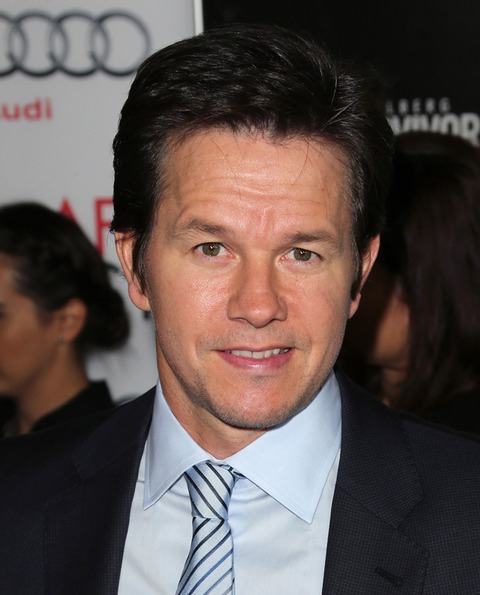
Mark Wahlberg
“For somebody to sit there and say ‘my job was as difficult as being in the military.’ How f**king dare you, while you sit in a makeup chair for 2 hours!”

In his latest film, "Lone Survivor," Mark Wahlberg plays a Navy SEAL.

In 2012 he visited several soldiers in a surprise trip to Afghanistan. But Wahlberg - who plays Navy SEAL Marcus Luttrell in his latest flick - doesn't buy what Tom Cruise is selling.

"You get to go home at the end of the day," Mr Wahlberg said, speaking to how actors have it easy compared to what our troops have to do.

"I don't give a shit if you get your ass busted," he said during a Q&A after the flick. "You get to go home at the end of the day. You get to go to your hotel room. You get to order f*cking chicken. Or your steak. Whatever the f**k it is!"

The only similarity, Mr Wahlberg said, was bonding with his fellow actors - Ben Foster, Taylor Kitsch and Emile Hirsch - whom he calls "brothers" in the similar way that servicemen and women are able to bond during their tours.

Mark Wahlberg's response to a statement from actor Tom Cruise - who touched a lot of nerves when it was reported that he believes his job as a professional actor is as grueling as fighting the war in Afghanistan - is not uncharacteristic for Mark Wahlberg who is a huge supporter of our troops at home and overseas.

Millionaire Tom Cruise really is full of shit!

"That’s what it feels like," Cruise reportedly said in a deposition in the custody battle over daughter Suri. "And certainly on this last movie, it was brutal. It was brutal."


Besides Mark Wahlberg, actor John Stamos took Tom Cruise to task saying, "Acting isn't as tough as getting mani-pedi."

It is said that Tom Cruise has a short man's attitude of thinking he's more important than he really is - this sort of statement speaks to just how full of shit Tom Cruise really is.

Tom Cruise comparing his time away from daughter Suri on movie sets to a soldier's tour in Afghanistan, "That's what it feels like. ... Certainly on this last movie, it was brutal" might fly in Hollywood with those who bow down to actors like Cruise.

Mark Wahlberg and John Stamos show that it doesn't fly with them, they have the class to salute those in harm's way and support their mission.

While our troops need all of our support, they'd probably be the first to say that they can do just fine without the support of someone as classless as Tom Cruise.


Tom Cruise agreed that being away from his daughter on movie sets 'feels like' serving in Afghanistan.

by Tom Correa

Wednesday, November 13, 2013

Jack Nicholson is "Positively Against" Abortion

Dear Readers,

Facebook has been really a help for me while I check the news headlines of my favorite websites.

But, just as with anything, since we shouldn't believe everything posted, one picture with an editorial had me doubting whether it was true or not?

It seemed to go against the Hollywood norm, the Liberal mindset of the Hollywood folks who have been pushing an agenda of making things like abortion, drug use, anti-Christian immorality, the gay lifestyle, and even pedophilia acceptable in American society today.

As far as I've seen, those that I've just listed appears to be the Hollywood agenda today.

So yes, when I saw the following picture with the editorial that accompanied it, I simply couldn't believe it.

Man has integrity. Rare in Hollywood.

After doing some research and reading the news story below for my self, I forwarded it along on Facebook with this comment:

"Wow, for some reason I didn't expect this from someone in Hollywood. I have the impression they all "like" killing babies as a form of Birth Control.

This report is from September 4th, 2013, by Michael W. Chapman.

Jack Nicholson on Abortion: "I'm Positively Against It -- I Never Would Have Gotten to Live"

(CNSNews.com) -- Hollywood legend Jack Nicholson, 76, who is retiring from movies it was reported today, is, unlike many liberals in Tinseltown, a staunch pro-lifer who said in a 1984 interview about abortion, “I’m positively against it. I don’t have the right to any other view."

He added that it was the moral character of his mother and grandmother that ensured he himself had not been aborted.

The Academy Award-winning Nicholson was born on Apr. 22, 1937 to a woman named June Frances Nicholson, who was 17 years old at the time and a showgirl dancer.

Jack was raised by his maternal grandparents, John Nicholson and Ethel May, believing they were his real parents and that June Frances was his sister.

Jack Nicholson did not find out until 1974, after his mother had died of cancer, that June Frances was his real mother.

In the 1984 Rolling Stone interview, Jack Nicholson described his mother and the life she had lived and also talked about abortion.

He said, “I’m very contra my constituency in terms of abortion because I’m positively against it. I don’t have the right to any other view.”

June Frances Nicholson, mother of actor Jack Nicholson.

“My only emotion is gratitude, literally, for my life,” said Nicholson. “[If June and Ethel had been] of less character, I never would have gotten to live. These women gave me the gift of life.”

“It’s a feminist narrative in the very pure form,” said Nicholson. “They trained me great, those ladies. I still, to this day, have never borrowed a nickel from anybody and never felt like I couldn’t take care of myself. They made the imperative of my self-sufficiency obvious.”

Nicholson disclosed that he never learned who his father was because the only people who really knew were his mother, June Frances, and his grandmother, Ethel May, and they had died before he even learned, in 1974, the true identity of his mother.

"[T]hey never told anybody," said Nicholson.

June Frances had married showman Donald Furcillo (in October 1936) six months prior to the birth of her son, John Joseph “Jack” Nicholson.

But Furcillo was already married and, also partly because of Furcillo’s reported drinking, the marriage to June Frances did not work out.

In further describing his mother in the interview, Nicholson said, “June and I had so much in common. We both fight hard. It didn’t do her any good not to tell me, but she didn’t because you never know how I would’ve reacted when I was younger. I got a job in Mexico when June was dying. First time with a studio, a lot of weeks. Sandra [Jack’s wife 1962-68] was pregnant with Jennifer [Jack’s daughter], and June was in a terminal state. She looked me right in the eye and said, ‘Shall I wait?’ In other words, ‘Shall I try and fight this through?’ And I said no.”

Nicholson was raised a Roman Catholic, the religion of his mother, and grew up in Neptune City, New Jersey.

He has won three Academy Awards, including best actor for his role in the 1975 film “One Flew Over the Cuckoo’s Nest,” and the 1997 film “As Good as It Gets.”

RadarOnline.com reported on Sept. 4 that Jack Nicholson was retiring from the movie business apparently, at age 76, because of memory loss problems.

Jack Nicholson has starred in at least 65 films since 1958.

-- end of article.

For me, it is nice to find out that I'm wrong in that not all of Hollywood is for the killing of babies.

I connect Liberals, and especially Hollywood Democrats, with abortion simply because that's who "normally" supports abortion.

What makes me angry are the Liberals who come out after a shooting like say what took place at Columbine or at Sandy Hook Elementary, and blame God.  Or use the tragedy to infer that since God "allowed" that to happen, that there must not be a God.

It seems almost like clockwork that some liberal will ask where was Jesus Christ in those situations, why didn't my Christian God do something to prevent that sort of thing from taking place?

It bothers me because of something that I was told once upon a time by an old man who believed in God and fate.

He told me this:

"With every child that is born, a coin is tossed as to whether that child will be good or bad. If bad, than he or she could come to no good and may end up running with a bad crowd or ending up in prison.

If good, than he or she could possible be the one who will stop a senseless killing, save a child from a burning building, rescue a  stranded hiker, raise good children him or herself, or even be the one to find a cure for cancer.

With every abortion, we kill the one that God may have sent to do his good work to stop things like Columbine and Sandy Hook from happening  - or from maybe finding the cure to AIDS or cancer or some other evil that takes people before their time.

So when someone says, 'where was Jesus?' or 'Why didn't God stop this from happening?' ask yourself if maybe God had tried but we aborted the ones he sent to stop it?"

The old man's logic always seemed right to me.

And yes, Jack Nicholson reaffirms that very thing.

If he were aborted, look at what sort of entertainment, what great acting, we would have missed out on.  Look at what good we would have never gotten.


by Tom Correa