Monday, December 2, 2013

Some of America's Great Banned Books - Part Two


As stated in Part One, the Library of Congress created an exhibit entitled "Banned Books that Shaped America."

The exhibit explores books that "have had a profound effect on American life" yet have been banned in one way or another.

Below are some of my favorites from the list of books from that exhibit that have been banned because of subject matter - or has had its language content challenged because of "political correctness."

One of the very interesting part of this is that some of these works are considered some of America's greatest literary treasures.

These are not all of the banned books from that exhibit listed, these are just my personal favorites which I found to be great reads.

And yes, these are books that I have read. Why did I repeat that? Well, for a person who has a hard time getting through a novel because they lose my interest - my saying that is a big deal to me.

Something written really has to hold on to my interest for me to get through, that is the reason I love Short Stories instead of Novels.

As in Part One, here's a fair Warning, the titles of what has been banned might surprise you.

The Call of the Wild, Jack London, 1903

Published in 1903, The Call of the Wild is Jack London’s most-read book, and is generally considered his best, hailed as the masterpiece of his “early period.”

Critic Maxwell Geismar, in 1960, referred to The Call of the Wild as “a beautiful prose poem,” and Editor Franklin Walker said that it “belongs on a shelf with Walden and Huckleberry Finn.”

But, as one might expect, such a classic work of American literature would find itself on the American Library Association’s list of the 100 most-frequently challenged classics at #33.

Generally hailed as Jack London’s best work, The Call of the Wild is commonly challenged for its dark tone and bloody violence.

Because it is seen as a man-and-his-dog story, it is sometimes read by adolescents and subsequently challenged for age-inappropriateness.

Not only have objections been raised here, the book was banned in Italy, Yugoslavia and burned in bonfires in Nazi Germany in the late 1920s and early 30s because it was considered "too radical."

It's true, in 1929, Italy and Yugoslavia banned The Call of the Wild for being "too radical".

For Whom the Bell Tolls, Ernest Hemingway, 1940

Shortly after its publication the U.S. Post Office, which purpose was in part to monitor and censor distribution of media and texts, declared the book non-mailable.

In the 1970s, eight Turkish booksellers were tried for “spreading propaganda unfavorable to the state” because they had published and distributed the text.

This wasn’t Hemingway’s only banned book – A Farewell to Arms and Across the River and Into the Trees were also censored domestically and abroad in Ireland, South Africa, Germany and Italy.

The Grapes of Wrath, John Steinbeck, 1939

As shocking as it might seem Kern County, California, has the great honor both of being the setting of Steinbeck’s novel and being the first place where it was banned (1939).

Objections to profanity - especially "goddamn" and the like - and sexual references continued from then into the 1990s.

It is a work with international banning appeal: the book was barred in Ireland in the 1950s and a group of booksellers in Turkey were taken to court for “spreading propaganda” in 1973.

It is interesting to note that this book, which was written 10 years into the Great Depression, actually started Congressional hearings to see if this were actually the plight of the American people - and that it was taking place in our country at the time.

Politicians were so out of touch that they didn't believe things were that bad in the nation at the time.

Some even tried to cover it up saying that the New Deal policies had fixed everything by 1939, when in fact it had not.

Moby-Dick (or The Whale), Herman Melville,1851

In a real head-scratcher of a case, a Texas school district banned the book from its Advanced English class lists because it “conflicted with their community values” in 1996.

Community values are frequently cited in discussions over challenged books by those who wish to censor them.

The Red Badge of Courage, Stephen Crane, 1895

Restricting excess and refusing to allow teachers to teach books is still a form of censorship in many cases.

Crane’s book was among many on a list compiled by the Bay District School board in 1986 after parents began lodging informal complaints about books in an English classroom library.

To Kill a Mockingbird, Harper Lee, 1960

Harper Lee’s great American tome stands as proof positive that the censorious impulse is alive and well in our country, even today.

For some educators, the Pulitzer-prize winning book is one of the greatest texts teens can study in an American literature class.

Others have called it a degrading, profane and racist work that “promotes white supremacy.”

Imagine that? Makes me wonder if they ever read it?

What all of these books have in common are that they are novels depicting fictionalized people amid accurate historical events and the societal attitudes associated with that period of time in which it was written and published.

I agree with the writer who put it this way: "Today’s views of profanity may have changed, but the shame of slavery coupled with current politically-correct ignorance are once more being dealt with not by mature discussion and knowledgeable discourse, but by banning books and burying heads in the sands of time.

There continues to be this pandemic of parents and other self-righteous individuals who believe that they- and they alone- must shelter everyone from the realities of history and have the absolute authority to do so.

The most important thing about history, though, is that it is a mirror of not only our past; but of our present and our future.

We must understand the mistakes of the past if we are to have an enlightened and free society going forward.

We have a duty and a need to know that such behavior and atrocity did occur so that we can learn what we have overcome and how far we have to go.

So when people, for any reason, want to throw out books that they disagree with or are offended by it leaves me with a very annoyed and defiant disposition.

Their ignorance offends me, but that doesn’t mean I should attempt to ban their right to their opinion. I encourage them to explain in mature dialogue their reasoning."

To those who would ban the truth of what the world was like, who was in charge and who did what to who; to those who want to hide from the truth of history; to those who knowingly want to stop the free flow of thought; I feel sorry for you.

Because frankly, you are no better than the Nazi who burned books to keep them from being read in an attempt to keep their people ignorant and slaves to the state.

That's just how I see it!


Sunday, December 1, 2013

Thanksgiving: America’s Lesson on Why Socialism Doesn’t Work

Written by Matthew Givens

The story of the Mayflower, the Pilgrims, and Thanksgiving is widely taught in all our schools.

What is seldom taught, however, is what those Pilgrims learned, at great pain, about Free Enterprise versus Socialism.

That story stands as perhaps the clearest and starkest-ever comparison between those two rival systems for human interaction.

We all know how the Pilgrims landed at Plymouth Rock in November, 1620, and how they lost half their population to starvation, sickness, and exposure that first winter. 

We all know how a Native American named Squanto taught the survivors to fish, plant corn, use fertilizer, and hunt deer. 

William Bradford

And we know that following their first harvest, Governor William Bradford declared a day of Thanksgiving that we celebrate to this day.

What most of us never learned was that the original contract the Pilgrims brokered with their London sponsors required that everything the Pilgrims produced was to go into a common store, and every member was to be allotted one equal share.

Further, all the land they cleared and all the buildings they constructed were to belong the whole community.

It must have sounded like the ideal society.

Free of outside evil influences, greed and personal property were to be banished.

Everyone was to work for the common good, and altruism was to be its own reward.

How did it work out? Horribly.

In the three winters of 1621-1623, many died from starvation, pneumonia, or both.

Here is Governor Bradford’s own summary of the community’s results with what we now call Socialism:

"The experience that was had in this common course and condition, tried sundry years and that amongst godly and sober men, may well evince the vanity of that conceit of Plato’s and other ancients applauded by some of later times; that the taking away of property and bringing in community into a commonwealth would make them happy and flourishing; as if they were wiser than God.

For this community (so far as it was) was found to breed much confusion and discontent and retard much employment that would have been to their benefit and comfort.

For the young men, that were most able and fit for labour and service, did repine that they should spend their time and strength to work for other men’s wives and children without any recompense."

In other words, said the Governor, it simply didn’t work.

Wisely, in April, 1623, Bradford abruptly abandoned the idealistic [Socialist] practice of collectivism.

Instead, he assigned a plot of land to each family, permitting them to keep everything they grew or made and to market anything they didn’t consume themselves.

He actually harnessed all that awful ”greed” and put it to work in a Free Enterprise system.

Bradford had discovered that even these most idealistic of peoples had no reason to put in any extra effort without the motivation of personal incentives to do so.

So how did Capitalism work out for the same people in the same place under the same circumstances? Vunderbar!

The Pilgrims soon had more food than they could eat or trade amongst themselves. So they set up trading posts and exchanged goods with the Native Americans.

They paid off their debts to their London sponsors and soon attracted a great European migration.

As Bradford summarized the new approach:

"This had very good success, for it made all hands very industrious, so as much more corn was planted than otherwise would have been by any means the Governor or any other could use, and saved him a great deal of trouble, and gave far better content."

This was an essential and timeless lesson, learned the hard way.


So why isn’t this lesson featured in class after class straight up front in neon lights in American history classes? 

Why isn’t it the lead story of the Pilgrim experience?

Perhaps it’s because the people who write our history textbooks still don’t want to believe it.

Perhaps those authors still cling to the hope that some form of Socialism will one day triumph over Capitalism.

Unfortunately for those authors, the historical record couldn’t be clearer, and the Pilgrims’ experience is Exhibit One:

When it comes to bettering the life of the common man, Capitalism, good old fashion Free Enterprise works — and Socialism fails.

For more than 3000 years at Passover, Jews around the world have been re-telling the story of their deliverance from slavery, and for over 2000 years at Easter, Christians have been re-telling the story of their redemption.

So now, now that it’s been nearly 400 years since the Pilgrims landed in America, perhaps we could begin re-telling the real story of Thanksgiving every year.

Maybe it is about time that we headline those life-and-death lessons the Pilgrims learned about the differences between Socialism and Capitalism?

Maybe it's about time that we start talking about the benefits and advantages of the system called Capitalism which inspire people to progress and become self-reliant and self-sufficient?

Instead of praising Socialism and Communism in our schools, maybe we should be telling our children what really made America great!

And no, it was not greed and selfishness, it was hard word, drive, determination, and a will to be self-reliant and successful.


Compiled by Tom Correa


Friday, November 29, 2013

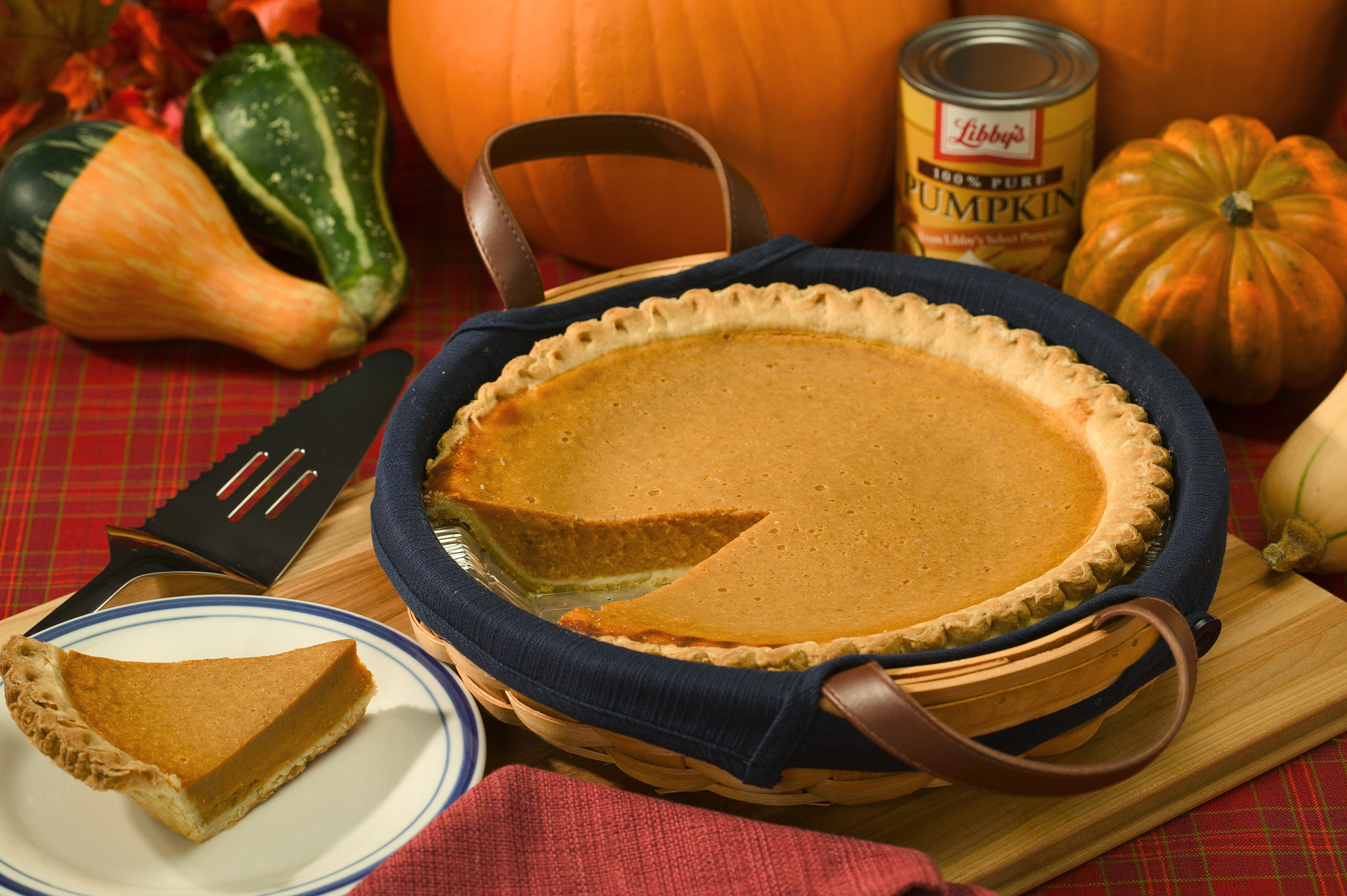
Pumpkins: A True American Wonder


Characteristics commonly used to define "pumpkin" include smooth and slightly ribbed skin, and deep yellow to orange color.

Around 2005, white pumpkins started to become increasingly popular in the United States.

Pumpkins, like other squash, are native to North America.

Pumpkins are widely grown for commercial use, and are used both in food and recreation.

While pumpkin pie is a traditional part of Thanksgiving meals in the United States, although commercially canned pumpkin puree and pumpkin pie fillings are usually made from different kinds of winter squash than the pumpkins frequently carved as Jack O'Lanterns for decoration around Halloween.

And yes, as is today, the pumpkin is a symbol of harvest time for at least 400 years in America.

Did you know that the Irish brought the tradition of carving gourds to America?

We all know of the importance of pumpkins for a Jack O'Lantern on Halloween, as Halloween has evolved from the Celtic tradition of All Hallow's Eve to what we know today.

Pumpkin carving evolved from the traditions of this annual event.

But, it wasn't pumpkins that were being carved in these ancient times. Pumpkins are native to America, and were not known to the Celtic people of Ireland. They carved turnips and rutabagas.

It's true! The tradition originally started with the carving of turnips.

When the Irish immigrated to the U.S., they found pumpkins a plenty and they were much easier to carve for their ancient holiday.

On the night which we call Halloween, glowing Jack O'Lanterns carved from turnips or gourds were set on porches and in windows to welcome deceased loved ones, but also to act as protection against malevolent spirits.

Burning lumps of coal were used inside as a source of light, later to be replaced by candles.

When European settlers, particularly the Irish, arrived in America they found the native pumpkin to be larger, easier to carve and seemed the perfect choice for jack-o-lanterns.

Halloween didn't really catch on big in this country until the late 1800's and has been celebrated in so many ways ever since!

What's in a Name?

Pumpkins are indigenous to the western hemisphere and were completely unknown in Europe before the time of Columbus.

In 1584, the French explorer Jacques Cartier reported from the St. Lawrence region that he had found "gros melons", which was translated into English as "ponpions," or pumpkins.

The name pumpkin originated from "pepon" – the Greek word for "large melon."

But, believe it or not, the term “pumpkin” has no agreed upon botanical or scientific meaning, and is used interchangeably with "squash" and "winter squash" in some areas.


Pumpkin refers to certain cultivars of squash, most commonly those of Cucurbita pepo, that are round, with smooth, slightly ribbed skin and deep yellow to orange coloration.

The thick shell contains the seeds and pulp. Some exceptionally large cultivars of squash with similar appearance have also been derived from Cucurbita maxima.

Specific cultivars of winter squash derived from other species, including C. argyrosperma, and C. moschata, are also sometimes called "pumpkin".

In New Zealand and Australian English, the term "pumpkin" generally refers to the broader category called winter squash elsewhere.

While pumpkins have been introduced to all corners of the world, pumpkins have been grown in America for over 5,000 years. Native Americans called pumpkins "isqoutm, or isquotersquash."

Native Americans used pumpkin seeds for food and medicine. American Indians used pumpkin as a staple in their diets centuries before the pilgrims landed.

When Pilgrims and other white settlers arrived, they saw the pumpkins grown by the Indians. That's when pumpkin soon became a staple in their diets as well.

Pilgrims took pumpkins, pies, and seeds back to England, and they quickly became popular.

Just as today, early settlers used pumpkins in a wide variety of recipes, from desserts to stews and soups.

And that's just some of the ways they found to eat pumpkin for themselves, they soon found out that livestock also took to pumpkins and there were others uses for pumpkins including also drying the shells and cut strips to weave into mats.

Did you know that pumpkins are not a vegetable - they are a fruit?

Pumpkins, like gourds, and other varieties of squash are all members of the Cucurbitacae family, which also includes cucumbers, gherkins, and melons - and surprisingly they are considered fruit.

The oldest evidence, pumpkin-related seeds dating between 7000 and 5500 BCE, has been found in Mexico.

Pumpkin Beer, Coffee, Ice Cream?

Yup! Several breweries produce a seasonal pumpkin ale, and the pumpkin spice latte is one of the most popular seasonal items sold during the Autumn months at Starbucks.

The largest "official" pumpkin ever grown weighed 1,340 pounds. The largest "unofficial" pumpkin ever grown weighed 1'458 pounds, but was not awarded due to damage.

The Connecticut field variety is the traditional American pumpkin.

Pumpkin Pies?

Pumpkin pie is a traditional sweet dessert, often eaten all year round.

But they are especially plentiful during the fall and early winter around Thanksgiving and Christmas in the United States and Canada.

So much so, that it is believed that has much as fifty-four percent of all Pumpkin Pie Spice sales occur in November.

Eighty percent of the pumpkin supply in the United States is available in October.

The largest pumpkin pie ever made was over five feet in diameter and weighed over 350 pounds - it used 80 pounds of cooked pumpkin, 36 pounds of sugar, 12 dozen eggs and took six hours to bake.

The first and simplest of all pumpkin puddings made by the Pilgrims, involved picking the pumpkin, washing it, hollowing it out, filling it with cream or milk, and baking it whole. This is what developed into pumpkin pie about 50 years after that first Thanksgiving.

In early colonial times, pumpkins were used as an ingredient for the crust of pies, not the filling.

Early colonists preserved pumpkins by drying them. First the skin was peeled and the insides scooped out. The pulp was sliced and placed on drying racks, or hung up to dry in the sun.

Colonists sliced off pumpkin tips; removed seeds and filled the insides with milk, spices and honey. This was baked in hot ashes and is the origin of pumpkin pie.

The pumpkin was an early export to France; from there it was introduced to Tudor England, and the flesh of the “pompion” was quickly accepted as pie filler.

During the seventeenth century, pumpkin pie recipes could be found in English cookbooks, such as Hannah Woolley's The Gentlewoman's Companion, which was published in 1675.

The recipes did not appear in American cookbooks until the early nineteenth century.
Pumpkin pie did not become a common addition to the Thanksgiving dinner until the early nineteenth century.

The Pilgrims brought the pumpkins and pumpkin pie back to New England, while the English method of cooking the pumpkin took a different course.

In the 19th century, the English pumpkin pie was prepared by stuffing the pumpkin with apples, spices, and sugar and then baking it whole.

Many companies produce seasonal pumpkin pie-flavored products such as ice cream, coffee, cheesecake, pancakes, candy, and beer.

Throughout much of the United States it is traditional to serve pumpkin pie after Thanksgiving dinner.

Commercially made pumpkin pie mix is made from Cucurbita pepo, Cucurbita maxima, and Cucurbita moschata. "Libbey Select" uses the Select Dickinson Pumpkin variety of C. moschata for its canned pumpkins.

Many recipes, among them Pie and Cheesecake, include eggs and whole milk or half and half. The end product is outstanding in taste!

As for pumpkins and Thanksgiving?

Well, there are reports and documentation that say pumpkins were a part of the first Thanksgiving meal of the Pilgrims and the Indians.

Pumpkins from that time forward, have been, and continue to be a tradition at the Thanksgiving feast.

Not only is it associated with the meal itself, but the pumpkin has adorned and decorated homes and communities in honor of this event for hundreds of years.

Pumpkin and your Health

Pumpkins are 90 percent water.  Pumpkins are rich in Vitamin A and potassium. And yes, they are also high in fiber.

Pumpkin, raw, Nutritional value per 100 g (3.5 oz), Energy 109 kJ (26 kcal):

Carbohydrates 6.5 g,  Sugars 2.76 g, Dietary fiber 0.5 g, Fat 0.1 g, Protein 1 g, Vitamin A equiv. 426 μg (53%), beta-carotene 3100 μg (29%), lutein and zeaxanthin 1500 μg, Thiamine (vit. B1) 0.05 mg (4%), Riboflavin (vit. B2) 0.11 mg (9%), Niacin (vit. B3) 0.6 mg (4%), Pantothenic acid (B5) 0.298 mg (6%), Vitamin B6 0.061 mg (5%), Folate (vit. B9) 16 μg (4%), Vitamin C 9 mg (11%), Vitamin E 0.44 mg (3%), Vitamin K 1.1 μg (1%), Calcium 21 mg (2%), Iron 0.8 mg (6%), Magnesium 12 mg (3%), Manganese 0.125 mg (6%), Phosphorus 44 mg (6%), Potassium 340 mg (7%), Sodium 1 mg (0%), Zinc 0.32 mg (3%)

Source: USDA Nutrient Database

The conclusion you should now be reaching is that they are therefore good for you. From a medicinal standpoint, pumpkins have been used for a variety of ailments - so go ahead and have that second piece of pumpkin pie, after all, it's good for you!.

Are Pumpkins a "Miracle Fruit"?

Pumpkins just might be a miracle fruit because researchers are working at figuring out just how good they are for us.

Preliminary research indicates that phytochemicals found in pumpkin may favorably affect insulin and glucose levels in laboratory diabetes models.

Two compounds isolated from pumpkin paste and then fed daily to diabetic rats over six weeks, trigonelline and nicotinic acid, caused significant reductions in blood glucose, cholesterol and triglycerides, indicating improvement in the diabetic condition.

And though we all know, bringing down cholesterol is combats heart disease, the benefits of pumpkins don't stop there.

As said before, pumpkins are considered fruit, but did you know that both pumpkin seeds and flowers are edible. Pumpkin seeds can be roasted as a snack and are good for your health.

The Native Americans found pumpkins to be good for us. And yes, today we are certain that pumpkin -especially the seeds - can help prevent prostate cancer in men.

Pumpkins were also once recommended for removing freckles and treating snake bites. I guess, after you're bit, just kick back and have a slice and all will be fine - or maybe not!

Other uses of pumpkins?

Well, its said that canned pumpkin is often recommended by veterinarians as a dietary supplement for dogs and cats that are experiencing certain digestive ailments such as constipation, diarrhea, and even hairballs.

As for us humans, the high fiber content helps to aid proper digestion.

Raw pumpkin can be fed to poultry, as a supplement to regular feed, during the winter to help maintain egg production, which usually drops off during the cold months.

Did you know that pumpkins are now grown all over the world?

Yes, since its discovery in America, it is a fact that six of the seven continents can grow pumpkins.

Antarctica is the only continent that they won't grow in. Pumpkins even grow in Alaska!

Did you know that the "pumpkin capital" of the world is Morton, Illinois?  Yes, this self proclaimed pumpkin capital is where you'll find the home of the Libby corporation's pumpkin industry.

As one of the most popular crops in the United States, 1.5 billion pounds (680,000,000 kilograms) of pumpkins are produced each year. The top pumpkin-producing states include Illinois, Indiana, Ohio, Pennsylvania, and California.

According to the Illinois Department of Agriculture, 95% of the U.S. crop intended for processing is grown in Illinois.

Nestlé, operating under the brand name Libby's, produces 85% of the processed pumpkin in the United States, at their plant in Morton, Illinois. In the fall of 2009, rain in Illinois devastated the Nestlé crop, resulting in a shortage affecting the entire country during the Thanksgiving holiday season.

Pumpkins are a warm-weather crop that is usually planted in early July.

And how about Pumpkin Chucking?

Yes, it is a competitive activity in which teams build various mechanical devices designed to throw a pumpkin as far as possible.

Catapults, Trebuchets, Ballistas and even Air Cannons are the most common mechanisms.

Believe it or not, there are Gamers in every sport, and in Pumpkin Chucking some pumpkin chuckers breed and grow special varieties of pumpkin under specialized conditions to improve the pumpkin's chances of surviving a throw.

So when is "pie" a bad thing? Well, in pumpkin chucking, when a pumpkin doesn't hold together on launch - that's called "pie"! For chuckers, a pumpkin coming apart and turning into pumkin haze in the air is the worse site there is.

Pumpkin Festivals? 

About 20 years ago, I waded through the mob over on the California coast at one of my favorite places on earth, Half Moon Bay, California - which on normal days is only about an hour from where I used to live in the San Francisco Bay Area.

On the weekend of the Annual Pumpkin Festival, its bumper to bumper over the hills to the tiny town, and that hour trip may take two or more. And yes, once there, it's a mad house sort of festival of fun and good foods.

Pumpkin growers in the area compete to see whose pumpkins are the most massive. And yes, the ffestival is a time for this to take place.

Half Moon Bay's annual Pumpkin Festival draws over 250,000 visitors each year and includes the World Champion Pumpkin Weigh-Off.

The Weigh-Off is where farmers from all over the US compete to determine who can grow the heaviest pumpkin. The winning pumpkin regularly tops the scale at more than 1500 pounds.

Leonardo Urena, from Napa, California, grew the winner of the 2011 Weigh-Off with a 1,704-pound Atlantic Giant, setting a new California State record.

The record for the world's heaviest pumpkin was broken on September 30, 2012, at the Topsfield Fair in Massachusetts when Ron Wallace of Greene, Rhode Island, entered a pumpkin weighing 2,009 pounds.

And yes, as expected, Guinness World Records is always recording who is the newest winner.

So besides using pumpkins to make my favorite pies, feed livestock, and cut up at Halloween, pumpkins are used to make soups, breads, beers, coffees, ice creams, and they are good for us medically.

Oh, and yes, they are also people who love to chuck them.

But for me, as much fun as pumpkin chucking looks, I take my pumpkin in pies.

The way I look at it, I'm tired of people telling me what's bad for me. Let me be an adult, and yes, trust me that I'm smart enough to know what is good for me and waht's not.

With everything being labeled as being bad for us, it seems that there really aren't that many things anymore that people will not slap a WARNING labe on. And no, I don't really know if they have gotten to pumpkin pies or not!

But I do know this, they taste great and are really good for us. Besides being nutritious, they taste wonderful and are good for the soul!

So my friends, now that we know just how wonderful and healthy pumkins are for us, this information can be used as a great excuse to our really needing that second piece!

File:Pumpkin Pie.jpg

Story by Tom Correa

Thursday, November 28, 2013

Whom To Thank When There’s No Recipient?

The Atheist’s Thanksgiving Dilemma

Written by John F. MacArthur

November 21, 2012

Thankfulness is one of the distinguishing traits of the human spirit. We sense the need to say thanks, and we realize we ought to be more grateful than we are.

We furthermore perceive that we are indebted to (and accountable to) a higher power than ourselves — the God who made us. According to Scripture, everyone has this knowledge, including those who refuse to honor God or thank Him.

Ingratitude is dishonorable by anyone’s reckoning, but to be willfully ungrateful toward the Creator is to deny an essential aspect of our own humanity.

The shame of such ingratitude is inscribed on the human conscience, and even the most dogmatic atheists are not immune from the knowledge that they ought to give thanks to God.

Try as they might to suppress or deny the impulse, “what may be known of God is manifest in them, for God has shown it to them,” according to Romans 1:19.

During a November 2009 debate in England sponsored by a rationalist group known as Intelligence Squared, Richard Dawkins admitted that when he looks at the Milky Way or the Grand Canyon, he is overcome by a profound feeling of thankfulness.

“It’s a feeling of sort of an abstract gratitude that I am alive to appreciate these wonders,” he said. “When I look down a microscope it’s the same feeling. I am grateful to be alive to appreciate these wonders.”

To whom does an atheist like Mr. Dawkins express such gratitude?

I’m by no means the first person to point out this conundrum.

In fact, the Internet is peppered with failed attempts to justify an atheistic celebration of Thanksgiving.

Atheists insist they are not ungrateful. They confess that they feel thankful, and they clearly sense a need to avoid the ignominy of brazen ingratitude on a cosmic scale — especially at Thanksgiving.

One atheist has practically made a hobby of writing articles to explain why atheists feel the need to be thankful and to answer the question of whom they might thank. His best answer?

He says atheists can be grateful to farmers for the food we eat, to doctors for the health we enjoy, to engineers for the advantages of modern technology, to city workers for keeping our environment clean and orderly — and so on.

Here’s the problem with that: Tipping the waitress or tipping one’s hat to sanitation workers doesn’t even come close to resolving the problem of whom Mr. Dawkins should thank when he looks at the stars, stands at the edge of the Grand Canyon, or studies the world of countless wonders his microscope reveals in a single drop of pond water.

Of course, we ought to be thankful on a human level to people who help make our lives better.

But if thanking people exhausts your sense of blessedness and satisfies that “sort of … abstract gratitude” you feel when pondering the vastness of the universe, you have already suppressed your own conscience to a frightening degree.

Your worldview is spiritually bankrupt.

Another atheist writer, acknowledging this problem, says the answer is easy for her: She is grateful to her lucky stars.

“What it comes down to,” she writes, “is that an atheist is generally thankful for good luck, serendipity.”

That’s an odd and ironic answer from a point of view that repudiates theism on the grounds that it is not “rational” to believe in God.

After all, the starting point for atheistic materialism is the equation nobody times nothing equals everything. What could possibly be more irrational?

Furthermore, chance (luck, fortune, happenstance, fate—whatever label you want to put on it) is not a force or intelligence.

“Chance” has to do with mathematical probability. Flip a coin and there’s a 50-50 chance it will come up tails. But “chance” has no power to flip the coin, much less design an ordered universe.

Nevertheless, that’s how atheistic materialists have trained themselves to think.

Chance is the ultimate creator. In the words of one Nobel Prize-winning atheist, “Pure chance, absolutely free but blind, is at the very root of the stupendous edifice of evolution.”

Fortune has thus been personified — imbued with the power to determine, order and cause everything that happens.

That’s mythology, not science.

At the end of the day, the atheist is no more rational and no less superstitious than the astrologist who thanks impersonal “lucky stars” for good fortune.

On some level, atheists themselves surely realize this.

Proof of their internal angst is seen in the fact that so many of them are not content merely to disbelieve.

They are militant in their opposition to God. They hate the very thought of God and would love to have every mention of Him removed from public discourse — as if that would somehow remove the burden of their own ingratitude and relieve the pangs of a guilty conscience.

But as Scripture says, it is the ultimate folly to try to suppress our own innate sense of obligation to our Maker.

“The fool says in his heart, ‘There is no God’” says Psalm 14:1. In short, to deny God is to debase one’s own mind and dehumanize the whole person.

That’s why we remind ourselves to give thanks to God — specifically, the one true God who has revealed Himself in Scripture as a God of grace and forgiveness, who so loved the world that He gave His Son as an atonement for sin, so “that we might die to sin and live to righteousness,” according to 1 Peter 2:24.

He graciously compels us to thank Him, and He himself should top the list of things we are thankful for.

-- end article.

Editor's Note:

Reprinted here on American Cowboy Chronicles unedited and with pleasure.

John F. MacArthur is president of The Master’s College and Seminary, host of internationally-syndicated radio show “Grace to You,” and author of nearly 400 books and study guides.


God Bless You and Yours!