Sunday, August 25, 2013

Horses - Eight Hoof Care Tips

These hoof care tips will help keep your horse's hooves healthy and strong.

anatomical drawing of horse leg bones
#1: Pick A Day

Yes, pick out your horse's feet.

This may sound pretty basic, but it's the single most important thing you can do for your horse's hooves.

Some folks have a herd and I certainly don't expect that anyone will be picking out every horse they have, but as for my riding horse Captain Jack - well, I try to take a few minutes to pick out my horse's hooves whenever I check him in the morning.

Hook picks are great because they are real easy to use and you get a chance to take early action on many common hoof problems.

Of course, it is very important to pick your horse before each ride, to remove any stones or small objects lodged in his feet before you add your weight to the situation.

For me, since I'm a big believer in "No Hoof, No Horse," it just gives me a minute to check on the condition of his shoes and frog.

After a ride, I have been known to check for objects in his feet before putting him up or turning him back out.

When picking out your horse, thake a few seconds and check for heat and pulse, remove manure, and check for signs of thrush.

Each time you clean your horse's hooves, remove any packed debris and gently clear the crevice of the frog, and scrape any remaining bits of matter off the sole, with the tip of the pick.

You want to be able to see the sole's entire surface. Some folks even finish the job with a stiff brush.

And yes, some hoof picks come with brush attached. If your Hoof Pick is like mine and doesn't, you can buy a brush separately and inexpensively.

#2: Establish What's Normal For Your Horse

While handling your horse's feet to pick them out, establish what is your horse's normal.

Take notice of their temperature when everything's OK and they are at ease, they'll feel very slightly warm.

Take a moment to locate the digital pulse with two fingers pressed against the back of his pastern. You should be interested not so much with the rate of the pulse, but in its strength under normal conditions.

Check the frog, which has about the texture and firmness of a new rubber eraser when it's healthy.

Don't be alarmed, though, if everything else looks OK but the frog appears to be peeling off.

I remember the first time I saw a frog come off. I was a kid and didn't know that most horses shed the frog at least twice a year. And sometimes, some horses do more often than that depending on weather and soil conditions.

Your farrier's regular trimming of the frog may have prevented you from noticing this natural process before.

#3: When picking out the feet, look for signs!

Here are some things to look for:

Thrush:

The first clue to this bacterial condition which is usually caused by prolonged standing in manure, mud, or other wet, filthy conditions, or even by prolonged use of pads, is a foul smell and dark ooze from the cleft of the frog. Later, the frog becomes cheesy in texture.

Although thrush can eventually cause lameness and significant hoof damage, its early stage is simple to treat.

Use an over-the-counter remedy recommended by your farrier or veterinarian - follow directions carefully - and make sure your horse's stall is clean and dry.

If you normally bed with straw, consider a change to much more absorbent shavings.

Some horses, especially those with upright, narrow feet with deep clefts that tend to trap more dirt, debris, and manure, are predisposed to thrush even when well cared for.

If you think your horse has an early case, ask your farrier to check during your next shoeing and ask what he recommends.

Remember, hours of standing in mud may encourage thrush or scratches which is a skin infection in the fetlock area that can cause lameness.

Mud is hard on shoes, too.

Most horse owners already know that suction of deep mud can actually pull a shoe already loosened by alternating wet and dry conditions.

Mud also makes picking up his feet a harder job. If your horse is slow about getting his front feet out of the way, he may end up pulling off the heels of his front shoes because he's stepping on them with his back toes.

Punctures:

If a nail or other object pierces your horse's sole and then falls out, the entry wound will probably be invisible by the time you pick his feet and you'll be unaware of it until it causes an abscess.

But remember, we can't always assume that the nail or whatever has fallen out, and in some cases the nail might still be in place.

If you find it, the book rule is "DON'T PULL IT OUT" - call a vet instead.

It is recommended that we put our horse in his stall, protect the punctured foot, and help the foreign object stay put, with wrapping and duct tape, or with a slip-on medication boot, and call our veterinarian right away.

The book says that an X-ray of the foot can show how far the object has penetrated and which structures are involved.

If you pick your horse's feet out regularly, you'll find the problem within a few hours of its occurrence. Then your veterinarian can remove the object and advise a course of treatment.

OK, that's what the book says. And no, I'm not advising differently to anyone.

But with that said, I've removed sharp objects from horses hooves simply because I was worried that the horse was going to put weight on that hoof and send it in deeper.

That's just me, the book says that I should have called a vet - but I just couldn't wait knowing that I can help my horse a lot sooner than the hour or so it would take for a vet to come out.

This is a real conflict with me because I cannot recommend that anyone do what I do, yet I know the worry and the chances, and that I'll most likely do exactly what the vet will do.

And no, I've never seen a vet X-ray a foot to see how far it went in before they pull a nail. They can usually determine that after the nail is out. Just my experience.

Cracks:

Cracks in the hoof wall happen. They just do. Some cracks are superficial while others can be worse involving sensitive hoof structures.

I've found that without appropriate shoeing, cracks come more often. Again, that's just my experience.

One cause of a crack is a hoof abscess. In that case, it breaks out through the coronet band at the top of the hoof creating a weak spot in the hoof wall that must be attended to as it grows out.

If you notice a crack in your horse's hoof, call your farrier and describe its location and size so he can decide whether it needs attention now or can wait until the next regular shoeing.

Abscess:

If your horse's digital pulse feels stronger than usual and/or his foot is warmer than normal to the touch, the cause could be an abscess inside the hoof from a badly placed shoeing nail, a bruise, or an overlooked sole puncture.

This is where picking comes in. Your routine check can alert you to the problem and get your veterinarian or farrier involved before your horse, which is probably in a pain from the pressure of increased blood flow to the infected area, is in even greater pain.

If you find increased heat and a stronger-than-usual digital pulse in both front feet, and if he's shifting uncomfortably from foot to foot, call your veterinarian immediately.

These are signs of laminitis, an inflammatory condition that can cause severe hoof damage if not treated promptly.

#4: Regular Shoeings

Schedule regular shoeings according to your horse's individual needs if at all possible.

Although six to eight weeks is the average, there's really no standard interval for trimming and shoeing.

If your farrier is correcting for a problem such as under-run heels, a club foot, or flare in the hoof wall, your horse may benefit from a shorter interval.

If everything looks fine but you notice that he begins forging, which is striking the back of a front hoof with the toe of a back hoof which you'll be able to tell when you hear a metallic sound, in the last few days before his next shoeing, ask your farrier whether a shorter schedule might avoid the problem.

Regualr scheduled shoeing help both horse and rider by providing protection, correction, action, and good traction.

Routine therapeutic shoeings reduce discomfort from underlying pathology of the hoof.

Horse shoes, which may be made of various materials including steel, aluminum or plastics, eliminate the contact of the hoof wall with the ground surface, thereby protecting the hoof wall from excess wear.

Horses that have developed unbalanced hooves through deferred hoof maintenance, or less than ideal conformation, can have the hooves reshaped to a certain degree, and then have shoes applied to protect the newly shaped hoof and at least partially correct problems related to poorly shaped hooves.

For my horse Murphy, before I lost him, he was eight weeks like clockwork. Captain Jack seems to grow faster so seven weeks weeks is his standard schedule.


#5: Check his shoes

If your horse is shod, than checking his shoes each time you pick out his feet is not a bad idea.

You'll need to look for:

Risen clinches: The ends of the nails your farrier trimmed and clinched are bent flush with the outer hoof wall at his last shoeing are now sticking out from the hoof.

This is a sign the shoe is loosening, probably because it's been in place for several weeks. If this is the case, your horse can injure himself if the risen clinches on one foot brush the inside of the other leg.

A sprung or shifted shoe: When, instead of sitting flat on your horse's hoof, the shoe is pulled away and perhaps even bent, it's sprung. If it's moved to one side or the other, it's shifted.

In either case, the nails in the problem shoe can press on sensitive hoof structures when he places weight on the foot.

My recommendation is to either remove the shoe, reset the shoe, or call your shoer over for coffee and hit him or her up with a "By the way, Captain jack has a sprung shoe, can you take a look?"

#6: Learn how to remove a shoe

After thinking about it, I can see where some folks wouldn't know how if they never had the need to pull a shoe. Many farriers are glad to teach clients how to do this.

Some folks like myself have my own tools, but many may even have used tools that you can buy inexpensively.

If you can remove a sprung or shifted shoe, you may save your horse unnecessary pain and hoof damage and make life easier for your farrier or veterinarian. Learning to do this is a real good idea.


#7: Help your horse grow the best possible hooves.

Some horses naturally have better hooves than others. Your horse may already be producing the best hoof he's capable of. But if not, than the following steps may enable him to do better:

Diet: It is fairly well known that adding a biotin supplement to his feed will help build stronger hoof walls.

For me, when I first got Murphy back in 1996, his hooves were ugly and cracked.

It took me between 3 to 4 months of supplements and regular trimmings before he had enough wall to hold a shoe. Then 5 to 6 months before I was at a point where I felt comfortable where his hooves were and where I'd tray to maintain them.

Biotin supplements benefited my horse Murphy in a big way when I didn't know what to try and was willing to try almost anything. And yes, even his shoer at the time was amazed at the new hoof growth in a relatively short time.
Exercise: Give him consistent and routine exercise activates the blood to pump better in the hooves. Of course, as with Murphy, working him on good surfaces and not rocky ground helped a great deal.

The object is to increase circulation to your horse's hooves, that's what helps promote growth.

#8: Trailering

Yes, trailering can be tough on a horse. Step ups, or stepping out can be a real chore for them. Because of that, try to protect your horse's hooves during hauling.

Without covering for his heels, he can easily step on the edge of a shoe and pull it partially loose. 

Once that happens, he may end up spending the remainder of the outing standing on the nails of the sprung or shifted shoe. And that's especially true, if you don't know how to pull a shoe.

Another vulnerable area is the coronet band: the rim of tissue at the top of each hoof that generates new hoof-wall growth.

Injury to this area, for instance, if he steps on himself while struggling to keep his balance in a moving trailer, can interrupt hoof growth in the area below the affected spot.

Another area is the heel of the hoof. Injury occurring for the same reason of struggling to keep his balance coming in or out of a trailer can sideline a horse. 

The solution: We can either use old-fashioned shipping bandages and bell boots large enough to cover the bulbs of your horse's heels and the backs of his shoes, or say use over-reach boots like my boy Murphy used to use so he wouldn't clip his heel, or use good quality full-coverage Velcro-fastened shipping boots to reduce the likelihood of these problems.

As said before, no hoof means no horse for us to enjoy. Besides as their owner, we took on the job of doing what we can to take care of them in every way we know how and than some.


Saturday, August 24, 2013

Little Known Old West Gunmen & Outlaws - Part One


Yes, here are the Outlaws who never made it big in the minds of the public.

The reasons are many, but basically some did the crime but didn't have the name recognition that Dime Novelists wanted.

As most know, others of course simply didn't live long enough to find their own biographer and rewrite their own history - like say how Wyatt Earp did his.   

Jim Cummings Clark

Born in Missouri, Jim Cummings Clark was christened Jim Cummings, but his name soon was changed when his widowed mother married a man named Clark. At the age of seventeen Clark stole a mule from his stepfather and fled to San Antonio, where he and a friend sold the animal, stole fourteen hundred dollars from a rancher, and then returned to Missouri.

Clark met William Quantrill, and when the Civil War broke out, he became one of the guerrilla leader's most trusted lieutenants. After the war he again turned to thievery for a time before moving to Leadville in the 1870's.

There he fought a champion prizefighter for a one-hundred-dollar fee, flirted with outlawry again, and left for Telluride in 1887. Clark worked at digging a pipeline into town, then secured an appointment as city marshal.

He enforced the law by clubbing ruffians with his fists, and he was widely rumored to have continued his criminal activities from time to time even as a law enforcement officer. He was finally fired, but then began making threats to kill members of the city council "for fifteen cents, or two for a quarter."

Clark remained in Telluride and was shot to death there in 1895.

James Copeland

James Copeland terrorized parts of Southern Mississippi during the 1830s and the 1840s. So infamous was Copeland that he became a household name from Mobile Bay to Lake Pontchatarain as a man of violence, a robber and a killer who created trouble wherever he went.

Like many of his kind, Copeland was born to respectable folk, his father a veteran of the War of 1812. He was born in the Pascagoula River Valley near the Mississippi Gulf Coast, about ten miles from the Alabama border.

Copeland began his life of crime at the tender age of twelve. Copeland claimed that his mother upheld his so-called "rascality" when he was accused of stealing pigs from a neighbor. She and a man named Gale H. Wages, a notorious character from Mobile, convinced the boy that if the local courthouse were burned down, evidence against him would no longer exist!

From then on, Copeland, aided by Gale Wages, turned to crime.

Those were the days before Colt's revolvers were readily available, and great reliance was placed upon single-shot pistols, shotguns and knives. But the lack of firepower did not impair Copeland's rise to infamy.

In 1841, accompanied by Wages and some other companions, he took a trip to Texas. From there the gang moved to Ohio, Louisiana and back to Mississippi, following a lucrative tour.

In the winter and spring of 1848, Wages and another gang member were shot by a man named James A. Harvey, who was himself murdered by Copeland.

In 1849 Copeland was arrested and charged with larceny and sentenced to four years in the Alabama penitentiary. On his release in 1853, he was promptly re-arrested by the Mississippi authorities and charged with grand larceny.

Following two years in the state pen, he was then handed over to the sheriff of Perry County, who placed him in jail to await trial for the Harvey murder.

Two years later, in 1857, he was put on trial, found guilty and sentenced to hang.

Bob Hays & Jess Williams

Bob Hays was one member of Black Jack Christian's outlaw gang which attempted to rob the International Bank of Nogales, Arizona, on August 6th, 1896.

Hays and fellow bank robber Jess Williams were inside the bank when newspaperman Frank King accosted gang members stationed outside.

When King began firing, Hays and Williams were forced to abandon their efforts and flee. Despite the failed attempt, the gang was pursued by an eight-man posse and was cornered at a hideout in San Simon Valley.

In an exchange of gunfire, Hays was shot to death by lawman Fred Higgins.

The Tom Bell Gang

Reared in Rome, Tennessee, Thomas Hodges enlisted at the outbreak of the Mexican War as a medical orderly. Following the war he moved to nearby Nashville and began practicing medicine, but within a few years he was attracted to California by the gold rush.

Prospecting proved unsuccessful, and he assumed the alias "Tom Bell" and became a thief. He was arrested in 1855 and sentenced to the state penitentiary on Angel Island at San Francisco, but he soon managed to escape.

Assisted by a notorious criminal named Bill Gristy, Hodges formed the Tom Bell gang and began to prey regularly upon gold rush area stagecoaches and teamsters.

Bill Gristy, alias "Bill White," was a notorious criminal who became the chief lieutenant in the bandit gang. A known thief and arsonist, Gristy met Hodges while awaiting trial on a murder charge. Gristy, Hodges, and several other men escaped jail, and Hodges and Gristy organized a band of thieves.

After killing a woman in an unsuccessful robbery attempt, however, the gang was tenaciously pursued. The gang was active throughout 1856, but in September, Gristy was captured, and, extracting promises of leniency, he informed on Hodges and then was imprisoned.

Before that there were violent escapes from the clutches of justice, but because of Gristy's information Hodges was finally captured by a posse near the Merced River.

Hodges wrote letters to his mother and to Elizabeth Hood, his mistress and partner in crime. Then on October 4, 1856, at around 5 pm, local vigilantes strung him up to strangle to death.

John Joel Glanton

John Joel Glanton, soldier of fortune, outlaw, and notorious bounty-hunter and murderer, was born in Edgefield County, South Carolina, in 1819. According to reports he was an outlaw in Tennessee before his arrival in Texas.

In 1835, he was living with his parents at Gonzales, Texas. His fiance may have been killed by Lipan Apaches that year. During the Mexican War, Glanton scouted as a free ranger with Colonel Hays for Gen. Zachary Taylor.

In 1849 he rode out of San Antonio for California with thirty well-armed gold-seekers, leaving his wife, Joaquina Menchaca Glanton, called "the most beautiful woman in the Republic of Texas," whom he had married in 1846, and a daughter.

His campaigns during the remainder of 1849 were widespread, successful, and financially rewarding.

By 1850, however, it became increasingly difficult for the Glanton gang to find hostile Indians, and they began to attack peaceful agricultural Indians in the vicinity of Fort El Norte.

Finally they turned to taking Mexican peon scalps for profit. As a result the Chihuahua government drove Glanton and his company into Sonora and put a bounty on his scalp.

There he contracted with the authorities to fight the Indians, traded Indian scalps for bounties, and again resorted to taking Mexican scalps to increase his profit.

He and his gang seized and operated a river ferry controlled by the Yuma Indians. While operating the ferry, they killed Mexican and American passengers alike for their money and goods.

Finally, they schemed to kill a party of Mexican miners who used the ferry, but before they carried out their plot, the Yumas attacked the ferry and killed Glanton and most of his men in mid-1850.

Glanton was scalped.

Jim Reed

Jim Reed was born eight miles from the Missouri hamlet of Rich Hill, where his father was a large landholder. When Jim was seventeen his family moved to Carthage, where he met a thirteen- year-old girl named Myra Belle Shirley, later to be known as Belle Starr.

The two adolescents courted, and after a clash with her father, Reed had a bloodless shootout with John Shirley. By this time the Civil War had broken out, and Reed joined a group of guerrilla raiders. This taste of lawless plunder set the tone for the remainder of his life.

After the war Reed became embroiled in a Missouri feud and killed two men. He fled the state and went to Texas. where he again encountered Myra Belle.

Her family had moved to Scyene, near Dallas, and she became his concubine. She already had a daughter named Pearl, whom she claimed was sired by Cole Younger.

Reed, Belle, and Pearl now migrated to Dallas, and the lovers soon produced a son they christened Eddie. After pulling a couple of holdups out of the state, Reed and his "family" returned to Texas, where he bought a farm near Scyene.

On November 30, 1873, Reed, Belle, Dan Evans, and another thief ventured into Oklahoma and went to the cabin of Watt Grayson on the North Canadian River.

Grayson was a Creek Indian chief who handled government subsidies for his tribe, and Reed's gang tortured him until he revealed where they could find thirty thousand dollars. For this and a variety of other misdeeds Reed soon was hotly pressed by the law, and he was forced to leave Belle.

On April 7, 1874, Reed and two other holdup men robbed a stagecoach near Blanco, Texas, and rewards totaling four thousand dollars were posted for him. Within a few months a close acquaintance killed him for the bounty on his head.

Judd Roberts

Judd Roberts first achieved notoriety in 1885 when he led a gang of four men in robbing and killing a rancher named Brautigen in Fredericksburg. Texas.

Texas Rangers captured Roberts and one of his confederates, and since lynching fever was high in Fredericksburg, the two outlaws were transferred to the new, "escape-proof" jail in San Antonio. 

A short time later a Fredericksburg posse captured a third member of Roberts' gang, and the local jail "immediately and mysteriously" burned down, roasting the desperado alive.

After four months Roberts and his cohort escaped from the San Antonio jail, and Roberts soon was stealing horses in the Texas Panhandle.

He periodically visited Williamson County to see relatives and friends, and Texas Ranger Ira Aten was dispatched to intercept him.

After several clashes and near misses, Aten and future Ranger John Hughes killed Roberts in the Panhandle.

John Sontag

During the 1890's John Sontag and his brother George owned a quartz mine near Visalia, California.

In 1891 they ventured east and were responsible for train holdups in Minnesota and Wisconsin. Within months they had returned to California, where they robbed a train at tiny Collis Station.

Wells, Fargo and Pinkerton detectives were hot on the trail of the Sontags, and their efforts resulted in the capture of George. For nine months there was a widespread manhunt during which John and accomplice Chris Evans wounded a total of seven posse members.

But in September there was a final confrontation which resulted in a marathon gun battle. Two deputies were killed, and both outlaws were finally shot and captured. John died of his wounds, and when his brother heard the news in Folsom Prison -- he went berserk and was killed by guards.

Burt Alvord

Burt Alvord came West with his father, a justice of the peace, at an early age. As a teenager he worked as a stable hand at Tombstone's OK Corral, where he witnessed the famous shootout and, three years later, the lynching of John Heath.

When John Slaughter was elected sheriff of Cochise County in 1886, the twenty-year-old Alvord became his deputy and right-hand man.

For the next four years Alvord helped Slaughter track down numerous thieves and rustlers, and, as an amiable frequenter of bars, he was particularly adept at ferreting out information concerning the whereabouts of various fugitives.

During the mid-1890's Alvord drifted into Mexico and rustled cattle for a time, but soon he returned to the right side of the law as constable first of Fairbank and then of Willcox, Arizona.

Although respected as a lawman, Alvord used his position to mastermind a band of train robbers. After arrests in 1900 and in 1903, Alvord and Billy Stiles, his deputy and accomplice, managed to escape.

Alvord spread a rumor that he and Stiles had been killed, and he sent two coffins to Tombstone. Though it would have been great for them if it had, their scheme didn't work. Soon Arizona peace officers continued the search for the two bandit leaders.

Alvord was recaptured in 1904, but after two years in prison at Yuma he was released and went to Latin America. He reportedly turned up in Venezuela, in Honduras, and in Panama as a canal worker. Supposedly, he died about 1910.

Reuben Houston Burrows

Born in Alabama, Reuben Houston Burrows married and moved his small family to Texas in the 1870's. He became a member of the Masonic Lodge and was noted as a cracker-barrel philosopher.

For fourteen years he lived quietly while working for the railroad, but in the late 1880's he became the leader of an outlaw band.

His wife and two children returned to Alabama, while Rube, his brother Jim, and four other hard cases began holding up trains. Jim was captured in 1888, but Rube continued to stage train robberies until he was killed a year later.

Will and Bob Christian

Will and Bob Christian were Oklahoma outlaws who broke jail in 1895 after a killing and after two months of thievery headed west.

They passed through New Mexico and stopped in Arizona's Sulphur Springs Valley, where Will, using the alias Ed Williams, broke horses and mules and later punched cows.

His friends nicknamed him "202" because of his weight and also called the swarthy cowboy "Black Jack." Soon Will returned to robbery, and his gang, the "High Fives," plundered stagecoaches, trains, and banks, throughout 1896 and 1897.

There was a series of battles and escapes from lawmen, and Will was chased down and killed by Deputy U.S. Marshal Fred Higgins.

For more information of Little Known Old West Gunmen & Outlaws, don't hesitate to visit:

Little Known Old West Gunmen & Outlaws - Part Two

Little Known Old West Gunmen & Outlaws - Part Three

This information was compiled from multiple sources.

Thanks for visiting!

Tom Correa


Thursday, August 22, 2013

Stop Obama From Giving Away $$$ BILLIONS!


If It Is Not Illegal Already, Then We Need A Law That Stops The President From Giving Away Taxpayer Money Whenever He Wants To - But Especially When It Is Needed At Home!

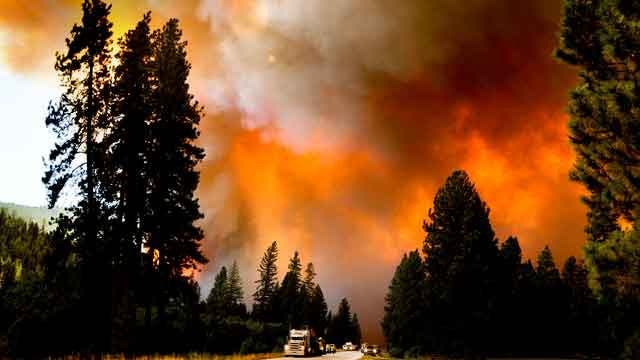
For example, the Federal Government is running out of money to fight wildfires.

It's true, the Feds are running out of money to fight wildfires at the peak of the season and the U.S. Forest Service is diverting $600 million from timber, recreation and other areas to fill the gap.

So as the nation burns, and runs out of needed dollars to fight the fires, America needs a new law right now to stop Obama or any other president from giving away BILLIONS of dollars whenever he gets the itch to do it!

This morning, it was reported that the nation's top wildfire-fighting agency was down to $50 million after spending $967 million so far this year on wildfires - that's according to Forest Service spokesman Larry Chambers in an email.

Chambers says the $50 million the Forest Service has left is typically enough to pay for just a few days of fighting fires when the nation is at its top wildfire preparedness level, which went into effect Tuesday.

There are 51 large uncontained fires burning across the nation, making it tough to meet demands for fire crews and equipment.

Forest Service Chief Thomas Tidwell sent a letter Aug. 16 to regional foresters and other top officials telling them to come up with the cuts by Friday.

"I recognize that this direction will have significant effects on the public whom we serve and on our many valuable partners, as well as agency operations, target accomplishments and performance," he wrote. "I regret that we have to take this action and fully understand that it only increases costs and reduces efficiency."

It was the sixth time the Forest Service has had to divert funds since 2002, Chambers said.

The step comes as the Obama administration has been cutting spending on thinning national forests to prevent wildfires, and despite Congress creating a special wildfire reserve fund in 2009, known as the FLAME Act.

Congress dedicated $413 million to the reserve in fiscal 2010, but cut it to $290 million in 2011 and raised it to $315 million in fiscal 2012, according to Forests Service documents.

This year it dropped to $299 million after sequestration.

"The Forest Service, when it lobbied for the FLAME Act, said, `Look, if you give us this reserve fund for large fires, we won't need to raid other parts of our budget,"' said Andy Stahl, director of the watchdog group Forest Service Employees for Environmental Ethics. "The Forest Service instead used up the FLAME money and is now using other parts of its budget. That is giving the agency a blank check and it just keeps putting more zeros on it."

The mandatory budget cutting measure known as sequestration reduced the Forest Service budget by 5 percent, forcing cuts of 500 firefighters and 50 engines.

Wildfire spending by other federal agencies takes the total to $1.2 billion so far this year, according to the National Interagency Fire Center in Boise, Idaho. That is more than half last year's total of $1.9 billion, and fast-approaching the 10-year average of $1.4 billion. There have been 33,000 fires that have burned more than 5,300 square miles -- an area nearly the size of Connecticut.

But wait a minute, how can we be out of money?!

The mandatory budget cuts did not stop President Obama from taking a $100 million vacation in Africa.

The "Sequestration" did not stop Obama from handing out checks to every country he's visited - especially during this last vacation.

Yes, his vacations cost the American taxpayer MILLIONS of dollars every few weeks because he takes "vacations" every few weeks.

He is the laziest President we've ever had. If he's not raising money for his political party, he's on the golf course on vacation somewhere handing out our money!

He gave $7 BILLLION dollars to Kenya. Yes, he gave $7 BILLION dollars to a country that is in the midst of a Civil War so that they can build a power plant that would be outlawed from being built here.

He gave $20 BILLION to Indonesia so students there can go to college. Imagine the gaul here!

I can't help but wonder if someone promised him a statue outside his old Mosque!

Yes, everywhere he goes, he gives away our money.

And since the Congress is the only branch of government that can legally spend our money - according to our pesty Constitution - how can the president get away with this crap when we are having money problems of our own here at home?

How can Obama get away with this?

The Hazardous Fuels Reduction Program was $500 million last year, went down to $419 million this year under the automatic budget cuts, and has been proposed to go to $292 million next year.

"The fires that are ripping through Oregon and Idaho and California and the West are just proof that the fire prevention policy is broke," Sen. Ron Wyden, D-Ore., chairman of the Senate Natural Resources Committee, said from Lincoln City.

"There are nears of neglect. The fuel load builds up and it gets hotter and hotter on the forest floor. Then you get something like a lightning strike and a big inferno. Then the bureaucracy takes money from the prevention fund to put the fires out and the problem gets worse. The cycle just repeats itself again and again."

Wyden said he and other senators would be working hard this fall to overcome pressures to cut spending in order to restore funding for wildfire prevention.

Christopher Topik, a director of Restoring America's Forests for The Nature Conservancy, said he could not fault Tidwell for diverting money to wildfires.

"We can't allow our towns and forests to all burn down," he said. "It's also irresponsible not to fund (prevention efforts) because it is an expected disaster."

You would think so!

But guess what, freak'n Obama have given all the money away!

So yes, why not pass a law that says we take from these BILLIONS of dollars, those bullshit feel-good ego boasting Obama checks that he has written, and cancel them until after we take care of our towns being burned to the ground!

Maybe it's time that he gets off his ass, as well as the golf course, and start helping Americans in need!!


Story by Tom Correa

Wolves Kill 176 Sheep - Most Ever Recorded!

Wolves killed 176 sheep near Fogg Hill - and the Forest Service says stay out of area. 

176 sheep were killed early Saturday morning near Fogg Hill in the Pole Canyon area.

It's true, a southeastern Idaho rancher lost 176 sheep as the animals ran in fear from two wolves that chased through a herd of about 2,400 animals just south of Victor.

Sheepherders for the Siddoway Sheep Company heard the wolves at about 1 a.m. Saturday, but didn't know the extent of the damage until they saw the sheep piled up on each other at daybreak.

Wolves kill 176 sheep near Victor, greatest loss recorded in Idaho

J.C. Siddoway of Terreton says almost all of the sheep died from asphyxiation. About 10 died of bite wounds and one was partially consumed.

Idaho Wildlife Services State Director Todd Grimm says it's the greatest loss by wolves ever recorded in one instance in the state. About nine years ago, wolves killed 105 sheep on one night.

Grimm says a dozen wolves have been removed from the Pine Creek area this year.

At first Wildlife officials said only one animal seems to have been eaten in the attack.

The other sheep died after it was believed the wolves had them running then they piled up on each other and died from suffocation.

Now the U.S. Forest Service officials are asking people to stay out of an area.

Jay Pence, Teton Basin District ranger, said the sheep kill could attract a lot of people hoping to see predators coming to feed on the carcasses.

Ranchers and others are trying to deal with the situation, and visitors can hamper their activities.

"There are a lot more fun things to look at than dead sheep," said Pence.

Idaho Wildlife Services confirmed they were killed during a wolf.

The animals belonged to the Siddoway Sheep Company and were grazing in the area about six miles south of Victor, according to a release from Siddoway.

The attack, they said, occurred around 1 a.m.

Todd Grimm, director of the Wildlife Services Program, said his office confirmed the depredation Sunday. Many of the animals died from suffocation, since some apparently fell in front of the rest, resulting in a large pile-up.

“This was a rather unique situation,” said Grimm. “Most of the time they don’t pile up like this, but the wolves got them running.”

Only one animal seems to have been eaten in the attack, according to the Siddoway release.

“The sheep are not fenced,” said Billie Siddoway, in an email interview. “They move every few days to a new pasture within a designated area. The sheep are herded and monitored by two full-time herders, four herding dogs and at least four guard dogs.”

Grimm said there is already a “control action” in the area. Since July 3, 12 wolves have been lethally trapped, including nine pups. The goal is to take them all, he said.

“We expect that bears and other scavengers will soon locate the kill site,” said Billie Siddoway.

From the time of the first American colonists, wolves have killed domestic livestock.

One of the first wolf bounty laws was passed in Boston in 1630, but it wasn't until the 1930s that wolves were significantly reduced in number to prevent livestock depredation in the U.S.

What used to be a very agriculture friendly nation is now changing - and some people say it's not for the good of Americans and the world constantly in need of good healthy food.

As folks wrestle with the different concepts of acceptable "change" depending on what side of politics you are on, I can't help but wonder about the problems that wolves bring to the livestock producers in those region affected.

And yes, livestock producers faced with the burdens of over-regulation and the reintroduction of predators are barely scratching out a living.

While those on the left such as Environmental extremist call for the need to reintroduce predatory species, they just might want to ask themselves where's the compassion for those who provide us food?

It appears that Environmentalists have no compassion for people other than themselves and what they want.


Story by Tom Correa