Tuesday, June 4, 2013

RANDOM SHOTS - Obama Admin Will Sign UN Small Arms Treaty, Bill Killian Re-Writes The Constitution, and More!

FIRST SHOT!
Obama Administration Will Sign The UN Small Arms Treaty In Violation Of U.S. Laws

Will the UN small arms treaty infringe on the Constitution of the United States? Yes, but why should that matter to Barack Obama?

He doesn't give a damn if it does violate U.S laws.

Secretary of State John Kerry said Monday that the Obama administration would indeed sign the extremely controversial U.N. small arms.

Despite being in direct violation of U.S. laws as well as there being bipartisan resistance in Congress from members concerned that the U.N. agreement will lead to unlawful gun control measures in the U.S., President Obama is authorizing the signing of the U.N. treaty on small arms regulation.

Speaking for the Obama administration and certainly not the American people, John Kerry released a written statement saying that the U.S. "welcomes" the next phase for the treaty - which the U.N. General Assembly approved on April 2nd against the wishes of the American People.
Kerry called the treaty "an important contribution to efforts to stem the illicit trade in conventional weapons, which fuels conflict, empowers violent extremists, and contributes to violations of human rights."

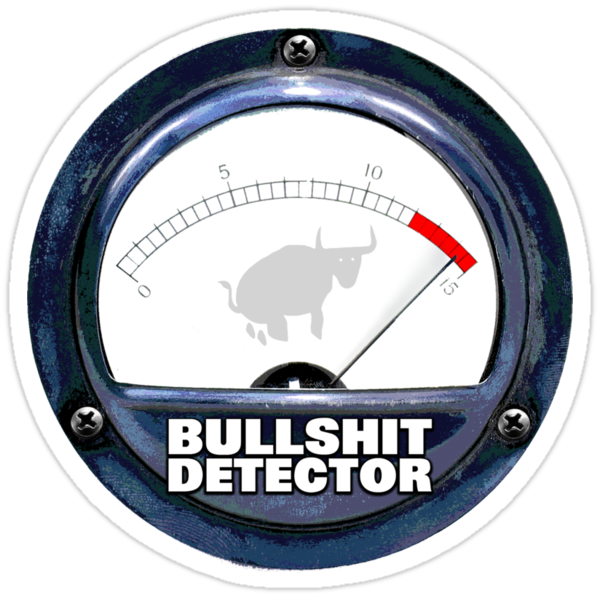
Don't you just hate it when you read something like that and your Bullshit Detector goes off!

You see, Kerry saying that this is "an important contribution to efforts to stem the illicit trade in conventional weapons, which fuels conflict, empowers violent extremists, and contributes to violations of human rights" is not what Americans think it means.

Fact is, yes it fuels conflict and empowers violent extremist. But those conflicts and violent extremist are fighting human rights violations by nations like Cuba, Iran, Syria, Kenya, Vietnam, and China.

Fact is, yes it is easier to enslave people when they are disarmed.

The treaty supposedly covers tanks, armored vehicles, artillery systems, combat aircraft, attack helicopters, warships, missiles and missile launchers, also covers small arms.

The treaty would require countries that ratify it to establish national regulations to control the transfer of conventional arms and components and to regulate arms brokers. "Conventional arms" includes pistols, rifles, and shotguns. "Components" include magazines, gun parts, and ammunition.

In other words, this treaty means disarming the people of the world so that they cannot fight for freedom against oppression.

Dictatorships and Despots Rejoice!

While hard line dictatorships and tin-horn despots rejoice over the idea that the U.N. is now going to ensure that their political enemies will be disarmed, the Obama administration sees this as a good thing for the world.

Am I in favor of revolution, you ask? In the 1776 spirit of the word revolution? You damn right! Especially when it comes to people fighting to be free. 

What is wrong with people in countries like Cuba, Iran, Syria, Egypt, or even England having arms to take back their government if the government acts against the freedoms and liberties of their people.

Communist China's chairman Mao once said, "Political power grows out of the barrel of a gun."

This may be why only the Chinese government is allowed to keep and bear arms against it's citizen slaves.

Fact is, throughout history, only free people are able to keep and bear arms while slaves are not. Defenseless citizens are called slaves, and must obey any command of their owners. Disarming them is a means of control.

Why should only governments be armed and their people not? Why would a government worry about an armed insurrection by the people if they are not doing anything wrong?

Supposedly, the U.N treaty explicitly says that it is not against controlling the domestic use of weapons in any country - but how could that be?

Fact is that the U.N. treaty could be used as the basis for additional gun regulations inside the U.S. if it is ratified.

Last week, 130 members of Congress signed a letter to Obama and Kerry urging them to reject the measure for this and other reasons.

"As your review of the treaty continues, we strongly encourage your administration to recognize its textual, inherent and procedural flaws, to uphold our country's constitutional protections of civilian firearms ownership, and to defend the sovereignty of the United States, and thus to decide not to sign this treaty," the lawmakers wrote.

The chance of adoption by the U.S. is slim, even if Obama goes ahead and signs it - as early as Monday, or possibly months down the road.

A majority of Senate members have come out against the treaty. A two-thirds majority would be needed in the Senate to ratify.

What impact the treaty will have in curbing the estimated $60 billion global arms trade remains to be seen. And honestly, why does it need curbing?

The question needs to be asked, which governments are in favor of stopping the flow of guns to their citizens? Do they want them curbed because they fear their citizenry?

The U.N. treaty will take effect after 50 countries ratify it, and a lot will depend on which ones ratify and which ones don't, and how stringently it is implemented.

The United Nations has organized a high-level signing ceremony at U.N. headquarters on Monday - a sign that they want to give the treaty a global importance - and several dozen countries are expected to sign, the first step to ratification.

The Control Arms Coalition, which includes hundreds of non-governmental socialist organizations in more than 100 questionable countries that promoted an Arms Trade Treaty, said it expects many of the world's top arms exporters - including Britain, Germany and France - to sign alongside emerging exporters such as Brazil and Mexico.

It said the United States is expected to sign later this year.


SECOND SHOT!

Federal U.S. Attorney Bill Killian Says Anti-Muslim Speech Can Be Punished As A Criminal Offense

Bill Killian, U.S. attorney for the Eastern District of Tennessee, recently suggested that offensive speech about Islam may be punishable under U.S. law.

Killian and Kenneth Moore, special agent in charge of the FBI’s Knoxville Division, are scheduled to speak next week at a special meeting in Manchester, Tennessee, to increase awareness among citizens that American Muslims are not terrorists.

"This is an educational effort with civil rights laws as they play into freedom of religion and exercising freedom of religion. This is also to inform the public what federal laws are in effect and what the consequences are," said Killian.

He also mentioned that Coffee County Commissioner Barry West had posted a photo of a man aiming a shotgun with the caption "How to wink at a Muslim."

"If a Muslim had posted ‘How to Wink at a Christian,’ could you imagine what would have happened?" Killian told The Tullahoma News on Tuesday. "We need to educate people about Muslims and their civil rights, and as long as we’re here, they’re going to be protected."

Killian said Internet postings that violate civil rights are subject to federal law.

"That’s what everybody needs to understand," Killian added.

"He’s just wrong," said Floyd Abrams, a First Amendment attorney, told Politico.com.

"The government may, indeed, play a useful and entirely constitutional role in urging people not to engage in speech that amounts to religious discrimination. But it may not, under the First Amendment, prevent or punish speech even if it may be viewed as hostile to a religion."

"And what it most clearly may not do is to stifle political or social debate, however rambunctious or offensive some may think it is."

So no, as hard as Bill Killian tries to get away with saying something is against the law when it in fact isn't - there are people out there like Floyd Abrams who will put Obama political appointees like Killian in their place.


THIRD SHOT!

Recall looms for Colorado Lawmaker who supported Gun Restriction Laws

A group of gun-rights activists seeking to oust a top Democratic state lawmaker in Colorado over the passage of strict gun control legislation on Monday turned in double the signatures needed to force a recall election.

KDVR reports the group turned in over 16,000 signatures, more than double the 7,178 valid signatures needed, to the Colorado Secretary of State's office in the effort to recall Colorado Senate President John Morse.

"This sends a strong message," Rob Harris, who delivered three boxes full of petitions to the office, told KDVR. "We’ve obtained enough signatures to recall a state legislator for the first time in the history of Colorado."

The Secretary of State’s office now has 15 days to determine whether enough of the signatures are valid, and then Morse's office has another 15 days to contest the validity of the signatures.

Morse tells KDVR he is going to fight the recall effort.

“We’ll go through these signatures with a fine-toothed comb,” Morse told the station. “And we’ll file some protests with the Secretary of State’s office because we know a lot of these signatures were gathered based on misinformation and lies.”

He also insisted he will not resign his seat to avoid a recall election.

"This is a hill worth dying on," Morse said. "This is a fight worth having; it’s a fight we’ve already had on the floor of the Senate; it’s a fight worth winning."

Last week, the non-profit America Votes, which lists New York City Mayor Michael Bloomberg among its backers, released a video in support of Morse.

The recall effort is also receiving financial help from national non-profits. However, Harris claims it was a grassroots effort.

"I ran this recall," he told KDVR. "Not the N.R.A. It sends a message to Denver and Washington, DC that we, the people, are watching and that we will do something about it."

The effort against Morse has become a national focus of efforts to push back against lawmakers from moderate districts who support ratcheting back gun rights.

Gun-rights activists are seeking to recall another Democrat, a senator from Pueblo. Signatures in that effort aren't due until next week.

But they are coming!


FOURTH SHOT!

The Flashbang Bra Holster

HOUSTON, TX - MAY 04:  A bra with a built in c..."So you pull up your shirt, and flash ‘em, and then you pull out the gun, and bang."

That’s how Lisa Looper, 33, an Oklahoma City mom to three young boys, describes her Flashbang bra holster, a hit at the NRA convention in Houston, Texas, earlier this month.

A one-time manicurist, Looper got the idea after marrying into a family that produces leather goods for law enforcement officers and picked up a gun herself.

"After I started shooting, and I had my first kiddo, I realized I wanted to carry a gun to protect him," she explains. "I couldn’t just run away anymore if something bad happened."

The holsters she found didn’t fit her frame. "I started looking around, and I found this little spot under the bust line. Anything will hide right there."


Lisa Looper demonstrates the Flashbang. (Image credit: Kimberly Arington)

The Flashbang debuted at the 2011 NRA convention, where she sold 42 holsters.

Today, she has a full “Pin-up” line of women’s holsters, including the Marilyn, the Betty, and the Ava, and, she says, she sells 42 women’s holsters, ranging in price from $49.99 to $59.99, every hour of the average 40-hour work week.

According to Looper, the market for women’s self-defense products is "growing like crazy."

At this year’s NRA convention, men were interested, too.

"There’ll be a big crowd of men standing around watching us demo," she recounts. "I think at one point they think there’s going to be a flash, and it never comes. If you take boobs and guns and combine ‘em, there’s some sex appeal, whether you mean there to be or not."


Watching a video of the bra holster, I wonder if it’s possible to shoot yourself in the boob.

Looper reassures me that’s not the case. "You can’t. Because of the way the holster sits. It covers up the trigger and the slide."

Business is so brisk, she’s launched a line of Prohibition Holsters for men, featuring the Capone, the Lucky Luciano, and the Baby Face.

As for what’s next, she says her top request is for garter holsters.


LAST SHOT!

Thought For The Day


That's how I see it!


Sunday, June 2, 2013

Riding The Overland Stage, 1861

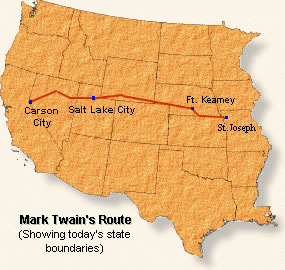
In 1861, Samuel Clemens' brother Orion was named Secretary of Nevada Territory. Samuel Clemens joined his brother for the trip west.

Eleven years later Samuel Clemens, under his pen name Mark Twain, described his journey in the book Roughing It.

Although its approach is humorous, the book's descriptions are accurate.

As Mark Twain, he notes in his preface, "...there is information in the volume; information concerning an interesting episode in the history of the Far West, about which no books have been written by persons who were on the ground in person, and saw the happenings of the time with their own eyes."

The movies create an idyllic impression of riding the overland stage. It's most aways, smooth travel in roomy comfort.

Twain paints a much different picture with passengers crammed together with mailbags, jostled by every bump, breathing dust, all at the mercy of Mother Nature.

Though it was tough way to get from one point to another, we should keep in mind that for its time, the stagecoach offered the latest technology in travel. We have to remember that the stage carried its passengers across the Western Plains at speeds greater than any other transport available.

Starting Out

Twain's ticket from St. Jo. to Carson City cost $150, equivalent to approximately $2660 in today's dollars. That, my friends, is by any measure a lot of money - yesterday or today.

The trip from St. Jo to Sacramento, California could take from 15 to 17 days.

Twain begins his journey in St. Joseph, Missouri, the starting point for the overland route to Sacramento, California. Twain and his brother discover that passengers are limited to only 25 pounds of baggage.

After shedding much of their luggage, the intrepid travelers are on their way across the plains of Kansas.

Twain writes:
"Our coach was a swinging and swaying cage of the most sumptuous description - an imposing cradle on wheels. It was drawn by six handsome horses, and by the side of the driver sat the 'conductor,' the legitimate captain of the craft; for it was his business to take charge and care of the mails, baggage, express matter, and passengers. We three were the only passengers this trip. We sat on the back seat, inside. About all the rest of the coach was full of mail bags - for we had three days' delayed mail with us. Almost touching our knees, a perpendicular wall of mail matter rose up to the roof. There was a great pile of it strapped on top of the stage, and both the fore and hind boots were full. We had twenty-seven hundred pounds of it aboard, the driver said - 'a little for Brigham, and Carson, and 'Frisco, but the heft of it for the Injuns, which is powerful troublesome 'thout they get plenty truck to read.' But as he just then got up a fearful convulsion of his countenance which was suggestive of a wink being swallowed by an earthquake, we guessed that his remark was intended to be facetious , and to mean that we would unload the most of our mail matter somewhere on the Plains and leave it to the Indians, or whosoever wanted it.

We changed horses every ten miles, all day long, and fairly flew over the hard, level road. We jumped out and stretched our legs every time the coach stopped, and so the night found us still vivacious and unfatigued."

Traveling

The average stagecoach could squeeze 18-20 passengers into it. They averaged 8 mph over good terrain and horses were changed every 12 to 15 miles. Each cost over $1,500 to build.

The next day, the stage suffers a breakdown forcing its passengers to evacuate while repairs are made. The conductor lays the blame for the mishap on the extra weight of too many mailbags. After throwing half the mail onto the prairie, the stage resumes its journey. Orion's large Unabridged Dictionary causes trouble along the way.

Twain writes:
"Whenever the stage stopped to change horses, we would wake up, and try to recollect where we were - and succeed - and in a minute or two the stage would be off again, and we likewise. We began to get into country, now, threaded here and there with little streams. These had high, steep banks on each side, and every time we flew down one bank and scrambled up the other, our party inside got mixed sowewhat. First we would all lie down in a pile at the forward end of the stage, nearly in a sitting posture, and in a second we would shoot to the other end and stand on our heads. And we would sprawl and kick, too, and ward off ends and corners of mail-bags that came lumbering over us and about us; and as the dust rose from the tumult, we would all sneeze in chorus, and the majority of us would grumble, and probably say some hasty thing, like: 'Take your elbow out of my ribs! Can't you quit crowding?'

Every time we avalanched from one end of the stage to the other, the Unabridged Dictionary would come too; and every time it came it damaged somebody. One trip it 'barked' the Secretary's elbow; the next trip it hurt me in the stomach, and the third it tilted Bemis's nose up till he could look down his nostrils - he said. The pistols and coin soon settled to the bottom, but the pipes, pipe-stems, tobacco, and canteens clattered and floundered after the Dictionary every time it made an assault on us, and aided and abetted the book by spilling tobacco in our eyes, and water down our backs."

The Way Station

Each evening, the stage announces its approach to a way station by the driver blowing a bugle. The way station offers sparse comfort.

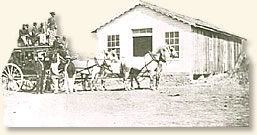
The stage makes a stop at a way station circa 1869.
The soldiers riding on top provide protection.
Twain writes:

"The station buildings were long, low huts, made of sun-dried, mud-colored bricks, laid up without mortar (adobes the Spaniards call these bricks, and Americans shorten it to 'dobies.)The roofs, which had no slant to them worth speaking of, were thatched and then sodded or covered with a thick layer of earth, and from this sprang a pretty rank growth of weeds and grass. It was the first time we had ever seen a man's front yard on top of his house. The buildings consisted of barns, stable-room for twelve or fifteen horses, and a hut for an eating room for passengers. This latter had bunks in it for the station-keeper and a hostler or two.


You could rest your elbow on its eaves, and you had to bend in order to get in at the door. In place of a window there was a square hole about large enough for a man to crawl through, but this had no glass in it. There was no flooring, but the ground was packed hard. There was no stove, but fire-place served all needful purposes. There were no shelves, no cupboards, no closets. In a corner stood an open sack of flour, and nestling against its base were a couple of black and venerable tin coffee-pots, a tin teapot, a little bag of salt, and a side of bacon.

By the door of the station keeper's den, outside, was a tin wash-basin, on the ground. Near it was a pail of water and a piece of yellow soap, and from the eves hung a hoary blue woolen shirt, significantly - but this latter was the station-keeper's private towel, and only two persons in all the party might venture to use it - the stage-driver and the conductor."

The Pony Express Rider

The Pony Express began in 1860 and ended in 1861. Mail was carried in 40-mile relays from St. Jo. to Sacramento in 10 days. The passengers eagerly await the spectacle of an encounter with a Pony Express rider racing his load of mail to its next transfer point.

Twain writes:

Presently the driver exclaims, 'HERE HE COMES!'

Every neck is stretched further, and every eye strained wider. Away across the endless dead level of the prairie a black speck appears against the sky, and it is plain that it moves. Well, I should think so! In a second or two it becomes a horse and rider rising and falling, rising and falling - sweeping toward us nearer and nearer and still nearer - growing more and more distinct, more and more sharply defined - nearer and still nearer, and the flutter of the hoofs comes faintly to the ear - another instant a whoop and a hurrah from our upper deck, a wave of the rider'' hand, but no reply, and a man and horse burst past our excited faces, and go winging away like a belated fragment of a storm!

The Mormon Emigrant Train

The Mormon Trek from the East to Utah began in 1845. Near Salt Lake City, the stage passes a wagon train filled with Mormons making the trek westward.

Twain writes:

"Just beyond the breakfast-station we overtook a Mormon emigrant train of thirty-three wagons; and tramping wearily along and driving their herd of lose cows, were dozens of coarse-clad and sad-looking men, women, and children, who had walked as they were walking now, day after day for eight lingering weeks, and in that time had compassed the distance our stage had come in eight days and three hours - seven hundred and ninety-eight miles! They were dusty and uncombed, hatless, bonnetless and ragged, and they did look so tired!"

Twain's personal account of overland stage travel in the early 1860s is true to fact.

However, it is said that the 1939 Hollywood Western Stagecoach, directed by John Ford and featured a very young John Wayne, probably did more than anything else to promote the modern perceptions of stagecoach travel as being both romantic and adventurous.

Louis McLane, once head of Wells Fargo and Company, the most famous name in overland stagecoach travel, wrote to his wife in 1865 about artistic depictions of travel by coach, "I thought staging looked very well to the lithographer, but was the devil in reality."

Many intrepid travelers who crossed the West by stagecoach would have surely agreed with him.


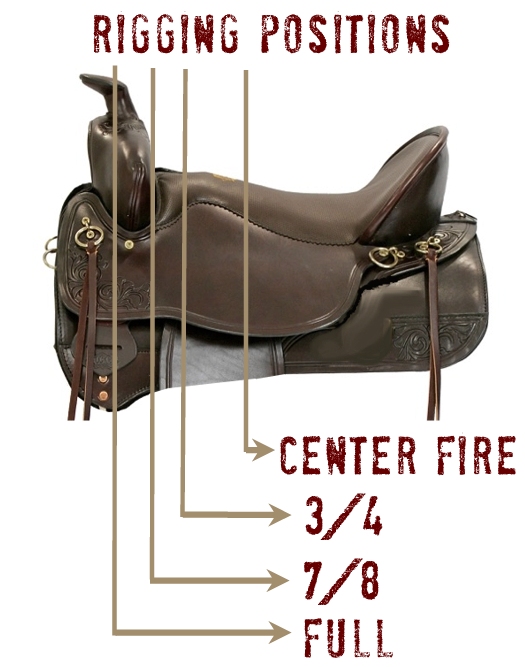
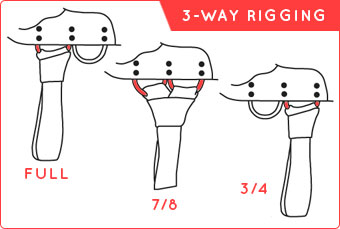
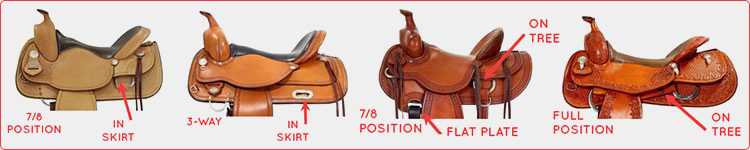
Western Saddle Diagrams


Saturday, June 1, 2013

Horse Checks - The Basic Physical Exam

Horse checks? No. its not a breakfast cereal!

Basic horse checks are what we should be doing each day as part of our care for our horses.

Whether riding a lot or not, knowing how to do a basic physical exam on our horses can help us detect the early signs of an illness or injury.

Doing this will ultimately help us catch a potential problem before it becomes a big problem.

Here a list of what to look for.

The Routine Basic Check

Some things that we should look for during a routine check are:

General Temperment

Always observe your horse for normal behavior. Their demeanor and behavior can tell us a lot about how they're feeling. Our horses should be alert, interested and curious about their surroundings, responsive to other horses, other animals and people.

They should move easily without pain. They should eat almost continously if given the opportunity. No appetite or desire to eat is not a good sign.

Hoof Condition

I normally check my horses hooves everyday. Sure I miss a day here and there, but on the overall I go by the old saying, "No hoof, no horse."
Because of that philosophy, my horse check includes checking my horses hooves for:

1) Thrush by being alert to a foul smell and dark ooze from the cleft of the frog.
2) Punctures to see if a nail or other object pierces my horse's sole.
3) Cracks that are either superficial or worse. If I notice a crack in my horse's hoof, I usually call my farrier and describe its location and size so he can decide whether it needs attention now or can wait until the next regular shoeing.
4) Abscesses are something that could be inside the hoof from a badly placed shoeing nail, a stone bruise, or an overlooked sole puncture. A routine check can alert us to the problem and get your veterinarian or farrier involved before your horse - probably at least slightly lame already on the abscessed foot, which throbs from the pressure of increased blood flow to the infected area - is in even greater pain.

If you find increased heat and a stronger-than-usual pulse in both front feet, and if he's shifting uncomfortably from foot to foot, call your veterinarian immediately. These are signs of laminitis, an inflammatory condition that can cause severe hoof damage. This needs to be treated promptly.

Wounds and Injuries

I always check my horses for open wounds such as lacerations, punture wounds, bites and abrasions. I also check for lumps and swelling. If I'm not real sure if there is swelling going on, I simply complare the area to its counterpart on the other side.

Checking the legs and other areas for heat could indicate the presence of an injury.

I do this because my horses are usually paired up with my other horses. And yes, that means that injuries can take place even if I don't expect it.

Pain

Watch for signs such as lameness. restlessness, inappropriate sweating, anxiousness, tooth grinding, startling or shying when touched in certain areas, looking at their side such as when colic is present, or squinting when eye pain is present.

Discharges

In a healthy horse, tears and mucus from the eyes and nose is supposed to be fairly inconspicuous. Excessive amount of these discharges or any amount of pus or blood from the eyes or nose is not considered normal.

Excretions

Urine, which is normally cloudy, should pass easily in a steady stream with no evidence of pain. Manure should be solid and be formed and passed without straining.

So OK, that it. That's the basic check. But if you want to do more, there are other things to look for a more detailed in-depth exam. Such as:
The Detailed Exam

Temperature

To take a horse's temperature, use a rectal thermometer either glass or electonic. A normal temperature in adult horses is 98 to 101.3 degrees Fahrenheit, and 100 to 102 for foals.

To avoid losing the themometer during use, attach an alligator clip to it with an 8 to 10 inch piece of string and chip it to your horse's tail. I saw a friend do that once and thought it a pretty good idea.  Especially if you're going to be taking their temperature often during an illness.

Apply a lubricant, such as petroleum jelly or K-Y Jelly to the thermometer, and insert it nearly all the way into the rectum so that the protruding end will not poke the tail and will not break off.

Attach the clip to the tail hairs to prevent loss.

The normal rectal temperature of a horse is 98 to 101.3 F. It is typically higher in the evening than in the morning. The temperature also is influenced by the horse’s activity at the time the temperature is measured. Measure your horse’s rectal temperature at various times of the day and determine its normal range.

If your horse’s temperature is over 101.5 F, shake down the thermometer and take another reading. A common cause of an apparently elevated temperature is a “hot”, unshaken thermometer.


To estimate your horse’s body temperature without use of a thermometer, use your finger to assess the temperature of the mucous membrane inside the lips, at the corner of the mouth.

Compare your estimated reading with a thermometer reading twice on 10 different horses. This will "educate" your finger to help you estimate the temperature by feel.

If your horse resists temperature measurement using a rectal thermometer, gradually train your horse to tolerate having its tail lifted and moved side to side and then to accept the touch of your hand near the anus and finally to have the thermometer inserted.

Taking the temperature may eventually be important in monitoring a life-threatening medical condition or may be necessary as a part of competition.

Mucous membranes

For us to check mucous membrane color, we do this by locking at our horse's gums. They should be pale pink.

Check capillary refill time - a way of evaluating the cardiovascular function - by pressing on the gum with your finger. The pink color will lighten but should return to normal in 1 to 2 seconds.

Heart Beat You can use a stethoscope to hear the heart beating. If that is, you have a stethoscope on you.

You can use a stethoscope to determine your horse’s heart rate. You can purchase an inexpensive one at a drug store.

A stethoscope is the easiest, safest and most accurate way to count the heart rate. Stand on the left side of the horse at the shoulder and find the point of the elbow.


To make sure the stethoscope is working, tap very gently on the diaphragm while the earpieces are fixed in your ears. Press the bell of the stethoscope into the chest wall and listen carefully. To determine the point of loudest heart sound intensity, move the bell around the chest wall while continuing to press firmly.

The main cause of an increased heart or respiratory rate is excitement. Therefore, it is best to make repeat counts after the horse has become less excited.

A normal resting heart rate is 32 to 44 beats per minute (bpm) in adult horses and 60 to 110 bpm in foals.

To arrive at the correct beats, count the heart rate for 15 seconds and multiply the result by four to get the bpm.

Something to keep in mind, a pulse represents a wave of blood propelled through an artery by a heart beat. Counting your horse’s pulse takes practice; try it twice on 10 different horses.
You will need a watch with seconds displayed. As said before, you can count the pulse rate for 15 seconds and multiply that number by 4.

If the horse has a rapid pulse rate, you can count the rate for 6 seconds and add a 0 (multiply by 10).

Remember that the normal pulse rate ranges from 32 to 44 beats per minute. The pulse rate of horses is much slower than that of people by approximately 50%.

It is advised that you take your horse's pulse at the facial artery where it crosses the jawbone directly in front of the cheek. It's actually visible on many horses.

Bottom line is that to check your horse’s pulse rate, find an artery, partially compress it with a fingertip and wait for the pulsating sensation. If you compress the artery too much, you obstruct the blood flow and will not be able to feel a pulse.

The mandibular artery is located just to the inside of the lowest (largest) part of the jaw bone. The artery runs perpendicular to the bone and can easily be compressed against the jaw bone.

The palmar digital artery is located at the posterior (back) groove behind the suspensory ligament, just in front of the sesamoid bones in the middle of the fetlock. This pulse is more intense when there is increased blood flow to the foot - normally from exercise or abnormally from pain or inflammation.

This artery is not commonly used to determine the pulse rate but it is very important in assessing foot problems, such as abscesses, laminitis, or other causes of foot inflammation.


These 2 arteries feel like firm, cooked noodles about 1/8 inch in diameter. Move your finger back and forth over the area and the artery will bounce back as your finger passes over it.

Consider your own safety when evaluating a horse’s temperature, pulse and respiration, especially when the horse is abnormal.

Be prepared to avoid kicking, being hit in the head with the horse’s knee when you are bending to check the digital pulse, and throwing of the head during assessment of the mandibular pulse.

Respiratory Rate

Count the respiratory rate first, before the horse is stirred up and excited. The respiratory rate is best counted when the horse is unaware of your presence. Don’t walk up to the horse and put your hands over both nostrils and start to count!

It is best to watch flank excursions, as the flank moves in and out with each breath. One in and out excursion counts as one breath. Watching the flank area also provides the best evaluation of the quality of breathing, such as pushing with the abdomen, an overly rapid rate, etc.
Look at the flank excursions through the stall window before opening the door. The normal respiratory rate is 8 to 16 breaths per minute in adults, and 25 to 60 in foals.

You can also count the respiration rate for 15 seconds and multiply that number by 4.

Gut Sounds:

Using that stethoscope that you purchased from a local drug store, place it over your horses abdomen to listen for gut sounds.

These sounds should always be present. Sometimes, gut sounds can be herd without stethoscope - unless of course your hearing is as bad as mine.

So now, here we go!

Does your horse breathe hard, sweat excessively, lie down at unusual times? How about weight loss related to worms, nutrition, or conditioning?

Has your horse experienced weight gain from overeating or decreased exercise? How is your horse’s coat for this time of year?

Are there changes in the manure, urine spots, bedding, feed bucket, or quantity of hay eaten? And how about its water supply, is the container full or empty?

There's so much to learn that it may seem impossible to learn it all. From the daily care of hooves to maintaining our horse's teeth, we are responsible for a lot of animal.

Keeping our horses healthy involves choosing the right feed, watching out for colic and other digestive problems, paying attention to foot and leg issues, riding with the proper tack, regular vaccinations and deworming, and much more.

These things are all just part of our responsibility as horseowners. But all in all, as you probably already know, the work is worth the benefits.