James Cagney went on to talk about his boyhood idol, a boxer by the name of Patrick "Packey" McFarland. He said, "Have you heard of Packey McFarland? Of course not, you haven't because that was so long ago. He was my idol. He was a hell of a boxer. He was a real fighter because he did it all and never even got a black eye. Which was great of course because of the hero worship I felt for him."
Since James Cagney was born in 1899, and brought up in New York City during the early 1900s, it makes total sense that he would have heard of the turn-of-the-century Irish boxer Packey McFarland. By the early 20th century, a lot of young men, especially those in the cities of the times, started to see boxing as a way out. Boxing, as I guess Basketball is today to youngsters in the inner cities, was looked at as a path to making big money and gaining a sort of greater social acceptance.
Let's remember that the Potato Famine in Ireland brought thousands of Irish to the United States. And, since it was at that time that professional boxing really took off in the United States, by the early 1900s the Irish had become a major force in professional boxing. So as for the hero worship of a boxer, at the time boxing was growing in popularity. And since many saw it as profitable, I see admiring another Irish American who is making something of himself as normal as can be.
It's also as American as apple pie. Combined with its hero-making potential, boxing is custom-made to symbolize American resolve and resilience. It's all about fighting the good fight, giving all you have, and if you're knocked down, get up and keep fighting. Yes, that's as American as can be. Even if we've been knocked down a time or two, we keep getting back up.
As for Patrick "Packey" McFarland, he was born on November 1st, 1888, in Chicago, Illinois. He made his debut as a professional boxer on January 1st, 1904. He was just 15 years old and his first opponent was Pete West who he knocked out in the second round. As amazing as that might sound today, he had 12 fights that same year.
As for Patrick "Packey" McFarland, he was born on November 1st, 1888, in Chicago, Illinois. He made his debut as a professional boxer on January 1st, 1904. He was just 15 years old and his first opponent was Pete West who he knocked out in the second round. As amazing as that might sound today, he had 12 fights that same year.
As for his career in boxing? Between 1904 and 1915, Packey McFarland fought in 113 fights. Because 38 of those fights are listed as "NWS," his official boxing record is 75 fights. His official record has him down for 75 fights, with 0 wins, no losses, and 5 draws. Of his wins, he had 50 wins by knockouts, 19 by decision, and 1 by disqualification. As for having no official losses in those 113 fights, his ninth fight was his one-and-only loss -- but it was designated "NWS." That loss came against boxer Dusty Miller on July 13, 1904, when he lost the bout as an "NWS" or Newspaper Writers decision.
What's an "NWS," or "Newspaper Writers Decision," or "Newspaper Decision," in boxing, you ask? Well, Newspaper Writers' decisions, "NWS," were a type of decision in professional boxing that is thankfully no longer used. The result of who won or lost or if it ended in a draw, the decision of a fight, was made by a consensus of the Sportswriters who attended the bout. If that took place then that decision was designated "NWS."
What's an "NWS," or "Newspaper Writers Decision," or "Newspaper Decision," in boxing, you ask? Well, Newspaper Writers' decisions, "NWS," were a type of decision in professional boxing that is thankfully no longer used. The result of who won or lost or if it ended in a draw, the decision of a fight, was made by a consensus of the Sportswriters who attended the bout. If that took place then that decision was designated "NWS."
It was something that was done when a fight ended with a "no decision" in some regions of the country back in the day. If a "no decision" was reached by the judges or referee, then it was up to the Sportswriters who were covering the fight to say who won or lost -- or if it were a draw. Believe it or not, as shady and open to payoffs as that was, newspapermen would be asked to give their opinion and declare who won, lost, or if it was a draw.
Because it was their decision, it was printed in their publication the next day as an "NWS" decision. That told fans that they made the call and not a judge or referee. Because of the fact that such decisions were open to all sorts of favoritism, and crooks, an "NWS" decision by Sportswriters was not official. It was not part of the fighter's official record.
And by the way, imagine if you would that someone asked a Sportswriter who won while knowing that he either hates one of the boxers or has put money down on a bet? That's why, thankfully, boxing eliminated the use of the practice of Sportswriters making such decisions. That's also why boxing went from using the referee and two judges to score each round, to today's system of using three judges with the ten-point system. It's much harder to cheat.
So in Packey McFarland's case, the one loss that he was given by the Newspaper Sportswriters, is listed as an "NWS," but it does not count on his official fight record. That means, his unofficial record is 113 fights, 106 wins, and 1 loss. His wins are 50 by knockout, 55 by decision, 1 by disqualification, and 6 by draw.
It should be noted that in 1908, though the fight wasn't a title fight, Packey McFarland actually beat the Lightweight World Championship Jimmy Britt in a TKO (technical knockout). Jimmy Britt and boxer Freddie Welsh had a disputed claim to the Lightweight World Championship title. While at the same time that those two were disputing who rightfully had a claim to the Lightweight World Championship title, Packey McFarland fought both and won against both.
It's true. Packey McFarland defeated Lightweight World Championship Freddie Welsh in their non-title bout in February of 1908, then defeated Lightweight World Championship Jimmy Britt in their non-title fight in April. Packey McFarland then fought Freddie Welsh to a draw in July of that same year. In 1910, Packey McFarland fought Freddie Welsh again for the British version of the Lightweight Championship title. That bout ended in another draw. Of course, with the fight ending in a draw, Freddie Welsh retained his British title.
During Packey McFarland's career as a boxer, he fought from coast to coast throughout the Midwest and in Europe a staggering number of bouts each year. Today, professional boxers who have built a name for themselves tend to limit their fights to 1 to 3 times a year. Amature fighters can box a lot more simply because they are trying to build their name and gain recognition.
So in Packey McFarland's case, the one loss that he was given by the Newspaper Sportswriters, is listed as an "NWS," but it does not count on his official fight record. That means, his unofficial record is 113 fights, 106 wins, and 1 loss. His wins are 50 by knockout, 55 by decision, 1 by disqualification, and 6 by draw.
It should be noted that in 1908, though the fight wasn't a title fight, Packey McFarland actually beat the Lightweight World Championship Jimmy Britt in a TKO (technical knockout). Jimmy Britt and boxer Freddie Welsh had a disputed claim to the Lightweight World Championship title. While at the same time that those two were disputing who rightfully had a claim to the Lightweight World Championship title, Packey McFarland fought both and won against both.
It's true. Packey McFarland defeated Lightweight World Championship Freddie Welsh in their non-title bout in February of 1908, then defeated Lightweight World Championship Jimmy Britt in their non-title fight in April. Packey McFarland then fought Freddie Welsh to a draw in July of that same year. In 1910, Packey McFarland fought Freddie Welsh again for the British version of the Lightweight Championship title. That bout ended in another draw. Of course, with the fight ending in a draw, Freddie Welsh retained his British title.
During Packey McFarland's career as a boxer, he fought from coast to coast throughout the Midwest and in Europe a staggering number of bouts each year. Today, professional boxers who have built a name for themselves tend to limit their fights to 1 to 3 times a year. Amature fighters can box a lot more simply because they are trying to build their name and gain recognition.
A top-ranked professional boxer fighting every month, nevertheless every few days is something unheard of today -- but apparently was commonplace for boxers in those days. It's true. It might amaze folks to know that his fights were in most cases less than a month apart. And it's a fact that at the height of his professional boxing career, his fights were only just a few days apart.
For example, he fought 2 bouts in January and in February, and 3 in March of 1905. In 1906, he fought 3 bouts in February just a few days apart. He fought 2 bouts that June and 2 in July that same year. In 1911, he fought a total of 17 fights in that year alone. It's true, in 1911 he fought 4 bouts a few days apart in January, 2 bouts in February, 2 bouts in March, 3 bouts in April, and 3 in November. The only two months that he didn't have bouts were August and September of that year.
In 1912, Packey McFarland beat what he did in 1911 by fighting 21 fights in one year. So besides having a bout in January, he had 3 bouts in February, 3 bouts in March, 2 bouts in April, 4 fights in May, 2 fights in June, a bout in August, 3 in October, 2, in November, and 2 in December of 1912. The only two months in 1912 that he wasn't in a ring somewhere were July and September.
His 111th fight was a win against Harry Trendall on December 4th, 1913. He was 25 years old. He fought and won two more times that year, but both were classified as "NWS" newspaper decisions. Those wins were his last professional fights. While he did not fight in 1914, Packey McFarland decided to retire from professional boxing in 1915.
After leaving the ring, he worked with the U.S. Army during World War I. Besides seeing boxing as a way to keep soldiers fit and develop warfighting skills, the U.S. Army used boxing as a training tool was used to build courage and good character traits. For the Army, Packey McFarland was just what they were looking for. They utilized his talents in the ring to teach boxing to soldiers. In fact, during World War I, he was assigned as the boxing instructor at Camp Zachary Taylor.
Although he never fought for a world title, Packey McFarland made a lot of money. In fact, in 1912, it was reported that he had earned $200,000 since becoming a professional boxer a mere eight years earlier. According to some sources, he made $110,000 from his bouts and $90,000 from being asked to appear in theatric shows. So for him, boxing enabled him to become a fairly wealthy man for the times. And along with his investments in the building-contracting and brewing businesses, he was able to comfortably retire from boxing.
After World War I, he managed his sizable investments, he volunteered to teach boxing to kids also to build good character traits, and he even served for a time as director of the Joliet National Bank. As for boxing, it is said that Packey McFarland tutored Barney Ross who defeated Tony Canzoneri in 1933 to win the World Lightweight and Junior Welterweight Championships.
On January 27th, 1933, he was appointed to the Illinois Athletic Commission by Governor Henry Horner. Then, on September 22, 1936, after being ill for two months, Packey McFarland died at his home in Joliet, Illinois, of a streptococcus infection that attacked his heart. He was 47 years old. He was survived by a widow, three daughters, and a son.
On June 7, 1992, Patrick "Packey" McFarland was inducted into the International Boxing Hall of Fame in Canastota, New York.
During his tenure as a fighter, Packey McFarland squared off against some of the greatest boxers of all time. The list of outstanding fighters McFarland defeated includes Benny Yanger, Freddie Welsh, Jimmy Britt, Phil Brock, Leach Cross, Cyclone Johnny Thompson, Jack Goodman, Jack Britton, Tommy Kilbane, Young Ahearn, Tommy Devlin, and Mike Gibbons. That's why today, Patrick "Packey" McFarland is ranked as one of greatest fighters of all time -- and possibly, the best boxer never to have become a World Champion.
I certainly hope you enjoyed this story of a great American boxer.
Tom Correa




/https://static.texastribune.org/media/files/9e6609a33ef37dfb5f568cb9b3b528c7/Dimmit%20Explosion%20TT%2001.jpg)


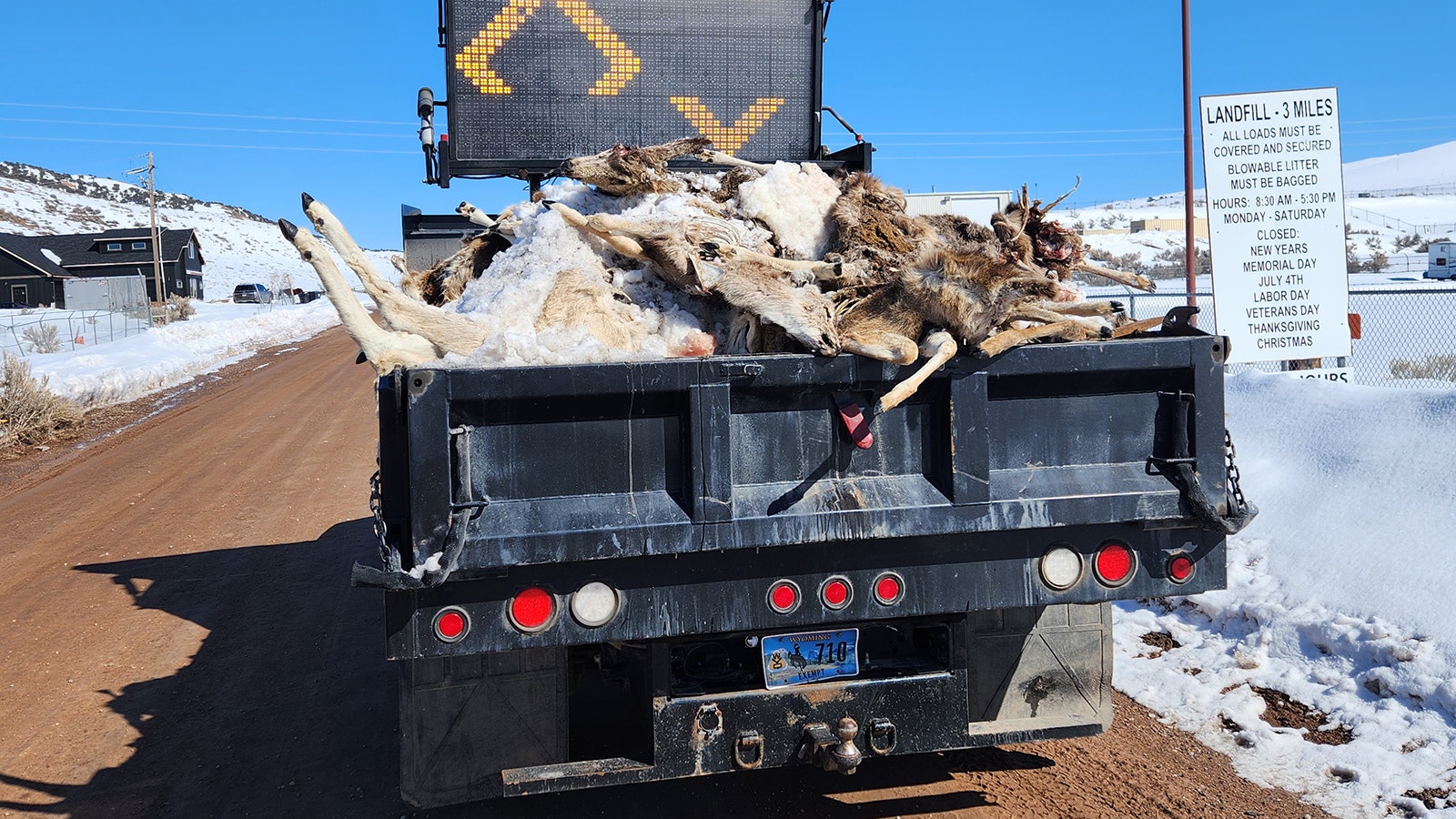
 Antelope in southcentral Wyoming are dying in large groups from lack of food this winter. (Photo Courtesy Larry Hicks)