Sunday, November 3, 2024

Ex-USDA Official blasts 'Mind-Boggling' Biden-Harris Regulations on Farming, menthol: 'Doesn't seem very American'

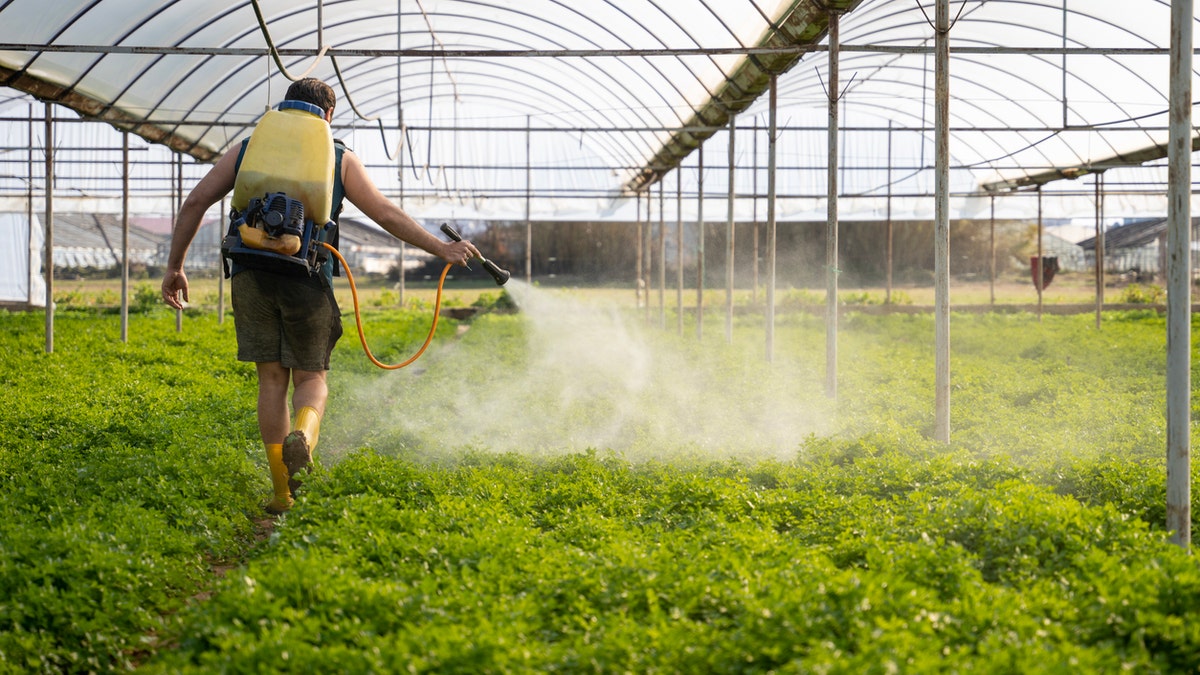
A young farmer sprays his garden of fresh lettuce, cabbage, and parsley against pests. (iStock)

Ray Starling previously advised President Trump as top aide to then-Secretary of Agriculture Sonny Perdue

Story By Andrew Mark Miller 
Fox News

Former AG Dept official: Biden regulations crushing farming industry, ‘backbone’ of America

A former USDA official is speaking out about Biden administration regulations he believes are harming the farming industry and also warned about a proposed ban on menthol cigarettes he says has already been tried and failed that will deal a significant blow to tobacco farmers.

Ray Starling, who served as chief of staff to U.S. Secretary of Agriculture Sonny Perdue, told Fox News Digital that the lives of farmers have become more difficult since Biden took office for a variety of reasons, including water policy, issues with the guest worker visa program, and burdensome regulations particularly related to the FDA that he says are putting the agriculture industry as a whole in peril.

"I couldn't start the conversation without starting with water and water policy," Starling said. "When you think about all the different states around the country, water presents different challenges and different opportunities for different parts of the country, but at the end of the day, anybody involved in agriculture needs it, needs access to it, needs to be able to manage it and probably the biggest thing we've seen in the water space is that this administration seems very determined to maximize the EPA's jurisdiction over land that has some kind of water on it."

Starling explained that EPA regulations regarding water, which farmers and ranchers have labeled an "attack on farmers," have not subsided as a threat simply because the Supreme Court issued a ruling last year narrowing the federal government's authority to regulate bodies of water and effectively upended a Biden administration policy that recently went into effect.

"Ironically, they've only chosen to change their approach at a minimal amount," Starling said.

"The holding is the EPA can only regulate you if there is a continuous surface water connection to a relatively permanent body of water and so EPA took very serious that question of continuous surface water connection," Starling explained. "But now they're trying to read expansively, the second part of that limitation, which is there has to be a relatively permanent body of water to which it is connected, and they are obviously trying to maximize use of the phrase' relatively permanent,' and so EPA is a great example of something we have to keep our eye on."

Starling continued, "The United States continues to grow, particularly in states like North Carolina, we're seeing a lot of land use pressure from needs and desires in the community besides farming, and so, if you're going to continue to limit the amount of land that I have to farm, that's obviously going to make me less productive in some ways, and so I think water is a big one."

Another issue, Starling said , is the Biden administration making it more difficult for farmers to access labor through the guest worker visa program, also known as the H-2A program.

"I recognize people have different views about this program, but American agriculture is absolutely dependent on our guest worker visa program," Starling said.

"This involves workers that come from foreign countries, primarily from Mexico, primarily from southern Mexico," Starling said. "They come in with a work visa. They are cleared by the Department of Homeland Security to do that. There is a contract for work waiting for them here. What's interesting about this program is farmers that use it have to advertise those jobs to Americans first. They have to agree that they will pay Americans as much as they will the foreign worker. They have to offer the American worker the same benefits that they have to offer, that they are offering the foreign worker. So, we're not supplanting American jobs in this process. Frankly, we are supporting them. And … it just feels like this current administration wants to make that program harder and harder and harder to use. It's already incredibly expensive."

Starling said the Biden administration has continued to make accessing foreign labor more expensive for farms by requiring them to pay for travel, housing for union representatives, pesticide safety and other regulations and has already had "eight different rule-makings" for farmers on the issue.

"It is mind-boggling that this is an American regulation in any sector, but particularly in agriculture, where it's pretty darn important to our country," Starling said. "It just seems that this administration is bound and determined to make the raising of that food harder and harder and less and less economical."

Starling acknowledged that the red tape involving foreign workers is even more perplexing given the backdrop of a record number of illegal immigrants being allowed to cross the southern border, for which the Biden administration has faced intense scrutiny for not doing more to prevent.

"It is mind-boggling that we are raising the cost for farmers to access legal labor that comes and goes, that is vetted through a security process that protects American workers and ensures that they are not displaced in the marketplace of employment, and yet this other problem has been unresolved down at the border," Starling said.

"In fact, I'm in meetings with farmers now who look around and say, you know, we've had this influx of 5 to 6 million people during the course of this administration and I have yet to see a single one show up on my farm in response to any of my advertisements to work. And so, I don't think there's a way to reconcile those two policies. I don't think there's a way to make that make sense."

Starling also pointed to regulations at the Food and Drug Administration, particularly regarding menthol, as something that has made life harder for farmers during the Biden years.

"In addition to more regulations on our fruit and vegetable production and fresh produce, tobacco is still an important crop in many places throughout the United States, principally here in North Carolina, it’s important, a $2.4 billion contributor to the US economy in terms of indirect economic impact of just tobacco production, meaning the farm part, not even thinking about all the manufacturing that goes into those products afterward," Starling, who serves as general counsel of the North Carolina Chamber of Commerce, told Fox News Digital. "And yet we've got a rule proposed by FDA that says we're going to take menthol cigarettes off the market. We're not going to allow American consumers to have that product."

Starling said the "interesting part" about the proposed menthol ban is that it’s a "policy that's been tried and failed already."

"In California, for example, they banned all flavorings and what that's led to is 40% of the market for cigarettes in that state are now black market. They are unregulated. They are untaxed at the state or the federal level and, ironically, there's a large percentage of them that's actually coming here from Russia … we're literally empowering the Russians with this kind of regulation. So, the menthol ban just seems counterintuitive to us. In addition to its economic impact, we feel like it will lead to more black market activity."

Starling also pointed to the government’s focus on limiting nicotine as adverse to the tobacco industry as well as a federal mandate ensuring that farmers grow a certain amount of GMOs.

Iowa farmer Ernie "George" Goebel pulls a corn planter behind his John Deere tractor on the farm where he was raised.

"The federal government has mandated that a farmer that grows other crops grow a GMO variety of that crop," Starling said. "I'm a believer in GMOs. I don't think there's any real risk to the population of mass consumption of GMOs. We've seen that in corn and soybeans over the years. But with that said, we've never seen the federal government say, I'm going to take the choice of that selection away. You have to grow this particular GMO product.' That's new."

"That doesn't seem very American to me and at the end of the day, you know, I hope there's some political consequences here, because I feel like that some of the very people this administration says they're trying to help and some of the very problems that they say they're trying to solve, they're actually making those problems more acute and more painful, particularly with regard to the cost of food and access to copious amounts of what has traditionally been the most abundant food supply in the world."

Starling told Fox News Digital that these regulations, along with others, are not just minor inconveniences for farmers but are slowly chipping away at their ability to stay in business.

"That is not an exaggeration because if you think about the pure agricultural economics of the environment we're in, of course, farmers have been subjected to the same inflationary increases in cost that everyone else has over the last couple of years," Starling said. "Their commodity prices have actually been pretty strong, we absolutely anticipate in 2024 that is not going to be the case."

"So, while they generally had gotten higher prices at the market, while absorbing higher prices for their inputs and their labor cost, for example, we are now seeing those prices at the market soften, and so, that delta is getting smaller or potentially going away or even going away. So, on one hand, yes, just the pure economics of making it harder means we will see people choose to exit the business."

Starling told Fox News Digital that "we're in a period of generational transfer in agriculture."

"We're in a period where a lot of our farmers that, you know, became really the backbone of the most efficient food production system in the world, they are aging out, and so, those farms are changing hands, and if we're going to make it harder for this next generation to farm and to make the use of that capital make sense, land in particular, we can't continue to pile on regulation after regulation," Starling said.

Starling, author of the Pulitzer Prize nominated book "Farmers versus Foodies," warned that "unintended consequences" of farming regulations will have more farmers "leaving the industry" in the next five to 10 years if nothing is done.

"I'm not going to tell you that I can predict all of the trade-offs," Starling said. "I think there are others and that we will rue the day that we've made it harder, harder to farm, particularly with … no real reason to do so."

In a statement to Fox News Digital, White House spokesperson Jeremy Edwards touted the efforts of the Biden administration to provide financial relief to farmers.

"The previous administration’s disastrous trade war hurt farmers, leading to an increase in farm bankruptcies and debt, and forcing President Biden’s predecessor to spend tens of billions of dollars to mitigate the fallout," Edwards wrote. "Fortunately, Bidenomics and President Biden’s Investing in America Agenda are delivering for rural communities and farmers nationwide. U.S. agriculture exports have seen the three highest years on record in 2021-2023, while 2024 is projected to be the fourth highest year on record."

Edwards continued, "Beyond providing over $56 billion in specific direct federal assistance programs to support American farmers who feed our country and the world, the President has taken unprecedented executive action to level the playing field so small and mid-sized farmers can get a fair price for their products, while making billions of dollars in transformative investments through the American Rescue Plan and Inflation Reduction Act to create new markets and new income opportunities for family farmers. This includes helping 36,000 farmers who were in distressed financial situations after the pandemic stay on their land, and helping those and others shore up their operations to keep farming viable for the next generation."

"President Biden will continue to ensure that American farmers have the tools and resources they need to be successful, which means better options — and prices — for farmers, ranchers, and ultimately, the consumer. And, it means creating a structure so farms of all sizes can survive and remain an integral part of rural economies."

About the Author:

Andrew Mark Miller is a reporter at Fox News. Find him on Twitter @andymarkmiller and email tips to AndrewMark.Miller@Fox.com.

Cattle Rancher Warns Climate Crisis "Anti-Meat Rhetoric"Threatening US Food Supply

According to U.S. cattle rancher Shad Sullivan, the supporters of an "anti-meat rhetoric" want production and consumption control. (Fox News)

Global leaders call for meat consumption reduction as the United States runs low on cows.

By Kristen Altus

FOXBusiness

Cattle rancher Shad Sullivan discusses how calls for a reduction in meat consumption could impact the nation on 'The Bottom Line.'

A worldwide "anti-meat rhetoric" is apparently putting America’s food security and farmers’ livelihoods at grave risk, according to Texas and Colorado-based cattle rancher Shad Sullivan.


"They've all teamed up in this anti-meat rhetoric that you see sweeping across the globe, to get control of the people. And that's all it amounts to, is total control," Sullivan said on "The Bottom Line." 

"The tyrants need a rally cry. And that rally cry is the climate crisis," the rancher continued. "Sustainability is nothing more than production and consumption control. It's any ‘ism’ except Americanism."

At the recent COP28 climate summit in Dubai, The UN's Food & Agriculture Organization (FAO) released a first-of-its-kind document that recommended nations that "over-consume meat" to limit their consumption as part of a broader effort to reduce greenhouse gas emissions, Bloomberg reported.

In addition to issuing guidelines for reducing meat consumption in the West, the FAO was allegedly expected to highlight how farmers should adapt to "erratic weather" and tackle their emissions produced from food waste and use of fertilizer.

According to U.S. cattle rancher Shad Sullivan, the supporters of an "anti-meat rhetoric" want production and consumption control. (Fox News)

Sullivan called the move an "attack on private property," and named specific public figures who he feels have influenced geopolitical groups.

"It starts with the global elite. People like Bill Gates and Soros and Klaus Schwab and the Rockefellers," the rancher said, "and they have employed their foot soldiers at the United Nations and the World Economic Forum, who both have said that the greatest threat to the planet right now is beef."


"So, in order to get control of that consumption and production, which is what they call sustainability, they have to come after our property rights," he explained.

Freedom Train International founder Jim Ferguson tells 'The Bottom Line' why farmers in France and Germany are protesting against government overreach.

At the same time, America is reportedly running low on cows, according to new numbers out earlier this month from the U.S. Department of Agriculture (USDA). The figures show ranchers have fewer cattle, which is contributing to the cost of beef being more expensive.

Agricultural economists say persistent drought over the last three years, along with high input costs and inflation, are putting pressure on both consumers and farmers.

"You have one set of ideologues that don't believe in eating any kind of meat or using animals as a renewable resource. And then you have the global corporations that are taking over our food supply at an alarming rate. It's beyond alarming now," Sullivan explained. "And then you have those two ideologies coming together, and it’s shown that it's a threat to, not only capitalism, but it's a threat to our food supply."

British farmer Gareth Wyn Jones discusses how German farmers are protesting the plan to end the diesel tax break for agriculture on ‘The Bottom Line.’

The cattle rancher likened the anti-meat mentality to Communism and Marxism.

"It's become a controlled market from top to bottom. In the United States, our government is from the bottom up, not the top down. And these regulatory aspects that they're wanting to implement are top-down. They come from the top and come down to the producer," he noted.

Mental health experts say drought conditions and other issues unique to farmers like geographic isolation have sparked a mental health crisis.

In hopes of keeping his ranch doors open, Sullivan encouraged everyday Americans to buy produce and meats sourced from the U.S. and urged regulators to reestablish country-of-origin labeling.

"The American consumer does not know where their beef and pork are coming from because we don't have [labeling]. They deserve the freedom to choose. And it is a liberty issue," he said. "You got to buy local. You got to buy American. You have to demand American-made. And we have to start supporting our producers across this country in any way."

About the Author:

Kristen Altus is an associate editor with Fox News Digital. Kristen joined Fox News in 2021 as a production assistant and previously worked as a news writer for Miami’s WSVN-TV.With FOX Business, she’s covered breaking news and exclusive interviews from shows like "Mornings with Maria," "Varney & Co." and "Cavuto: Coast to Coast."

Kristen has also interviewed public figures including former First Lady Melania Trump, Miami Mayor Francis Suarez, Sen. Eric Schmitt, R-Mo., Florida Chief Financial Officer Jimmy Patronis, Glenn Greenwald, Andrew Yang, Black Gun Matters founder Maj Toure, Nancy Grace, The Babylon Bee’s Kyle Mann and "Duck Family Treasure" stars Jase and Jep Robertson.

Following her first year with Fox News Digital, Kristen was recognized as the Rising Star at the 2021 Spotlight Awards, where her outstanding work efforts and achievements were celebrated for contributing to company success. Kristen graduated from the University of Florida in 2020 with a Bachelor of Science in Journalism. You can follow and send story tips to Kristen on Twitter, LinkedIn or email at kristen.altus@fox.com.

Biden-Harris Costly Environmental, Social, and Governance (ESG) Standards, Climate Policies Will Ultimately Reduce Food And Energy Supplies


The Biden-Harris Administration has pursued an aggressive climate agenda since taking office, targeting the power, manufacturing, transportation, and agriculture sectors over their carbon footprint. 

Texas agriculture commissioner says ESG policies 'will have a devastating impact on US agriculture and world food security'


Story by Thomas Catenacci 
FOX Business

FIRST ON FOX: Climate change policies and Environmental, Social, and Governance (ESG) standards will have an outsized negative impact on the U.S. agriculture industry, according to a new report shared with FOX Business.

The report — published by the free market think tank Buckeye Institute — is titled "Net-Zero Climate-Control Policies Will Fail the Farm" and outlines how farmers will see their operational costs rise by an estimated 34% as a result of net-zero ESG policies. While the report states its findings were "predictable and unsurprising," it added that U.S. policymakers seem "unwilling to address or even acknowledge them."

"Government climate-control policies ensconced in the Paris Climate Accords, the Inflation Reduction Act, and ESG-guided mandates carry a hefty price tag, especially for U.S. farms and the American consumer," wrote report authors Trevor Lewis and M. Ankith Reddy, who both serve as economic research analysts at The Buckeye Institute.

"Europe has tested many of these policies aggressively for years, and the results have been an unmitigated failure," they continued. "Despite these resounding warnings from European counterparts, U.S. policymakers have recommitted American industry to the same net-zero emissions standards and have imposed the same kinds of costly mandates on farms and businesses that will ultimately reduce food and energy supplies without achieving their intended benefits."

Net-zero ambitions — part of the broader environmental, social and governance (ESG) movement — could harm farmers, threaten America's food supply and lead to higher consumer prices. (JIM WATSON/AFP via Getty Images / Getty Images)

According to the report, The Buckeye Institute’s Economic Research Center developed a model for a hypothetical corn farm that must abide by new federal environmental regulations and standards.

As a result, diesel fuel prices needed for trucks, tractors and combines increased; propane needed for power grain dryers and heat barns increased in price; and prices for the nitrogen fertilizer needed to grow crops also rose. The report further modeled the impact those heavier cost burdens would have on consumer, showing the average American family of four’s household grocery bill would increase by roughly $1,300 per year.

Overall, the prices of common grocery items, including American cheese, would increase 78%, beef would increase by 70%, rice would tick up 56%, chicken would see a 39% increase and eggs would be 36% more expensive. Foods that require more carbon-intensive processes to produce saw the largest uptick in prices.

"Oil and gas producers, chemical companies and the American farm will likely shoulder the heaviest compliance burden, but they will inevitably share the cost with U.S. consumers as the government-induced high prices for fuel, fertilizer, and food ripple across the economic pond," the report concluded. "Misguided climate-control policies can and should be resisted at every level."

Among the regulations the report analyzed were the Biden administration's actions targeting the oil and gas sector and the petrochemical industry while simultaneously pushing green energy alternatives. The report states that green energy sources like wind and solar are unreliable, more expensive and intermittent.

Meanwhile, the report comes a week after a dozen Republican state agriculture commissioners joined together to warn six major financial institutions that their ESG commitments would negatively impact farmers. The officials wrote a letter on Jan. 29 to top executives of Bank of America, Citigroup, Goldman Sachs, JPMorgan Chase, Morgan Stanley and Wells Fargo, taking issue in particular with their collective membership in the Net-Zero Banking Alliance.

"Newly released research by the Buckeye Institute confirms our greatest fears about environmental, social, governance or ESG investing," Texas Agriculture Commissioner Sid Miller said in a statement Wednesday. "Last week, I joined 11 other state agriculture leaders to co-sign a letter that addressed this very issue. Imposing costly ESG requirements on America's farmers and ranchers will have a devastating impact on U.S. agriculture and world food security."


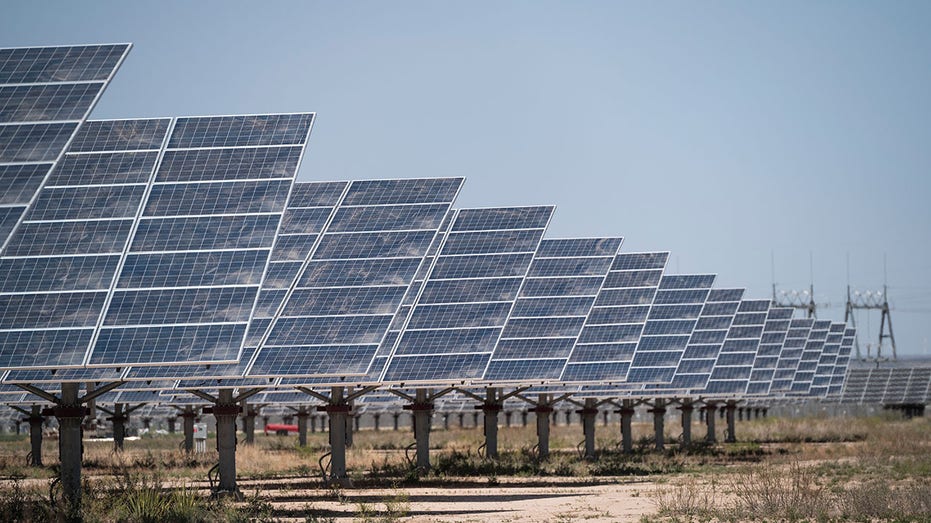
A solar farm produces electricity near Bakersfield, Texas, on April 10, 2021. The report Wednesday cast doubt on the ability of green energy sources to replace power for farmers. (Getty Images / Getty Images)

Will Hild, the executive director of watchdog group Consumers' Research, added that the report shows Americans are being victimized by the ESG movement.

"Farmers and ranchers lay out huge sums for everything from fertilizer, seeds, and feed to heavy machinery and pesticides to produce the food we eat," Hild told FOX Business. "Yet, the climate cult and ESG elites are causing these costs to skyrocket. That puts a heavier financial burden on agricultural producers and imposes higher food costs on hardworking Americans.

"The Buckeye Institute’s report shines a light on these facts. America’s farmers and ranchers’ livelihoods shouldn’t be at risk because of inflated operating costs or loss of access to capital from woke banks. Nor should the American people be victim to a crushing tax put on their groceries by climate extremists."

About the Author:

Thomas Catenacci is a politics writer for FOX Business. Thomas writes about energy and environment news for FOX Business and Fox News Digital. He has covered the ESG movement, the European energy crisis, the green transition and domestic fossil fuel production.

Thomas previously worked as the senior energy reporter at the Daily Caller News Foundation and in roles at CNBC, NBC News and local Boston media outlets. Thomas attended Northeastern University where he graduated from with a B.A. in Communication Studies in 2019.

Farmers "Brutalized" as Costs "Go Through The Roof' in Last Days of Biden-Harris America

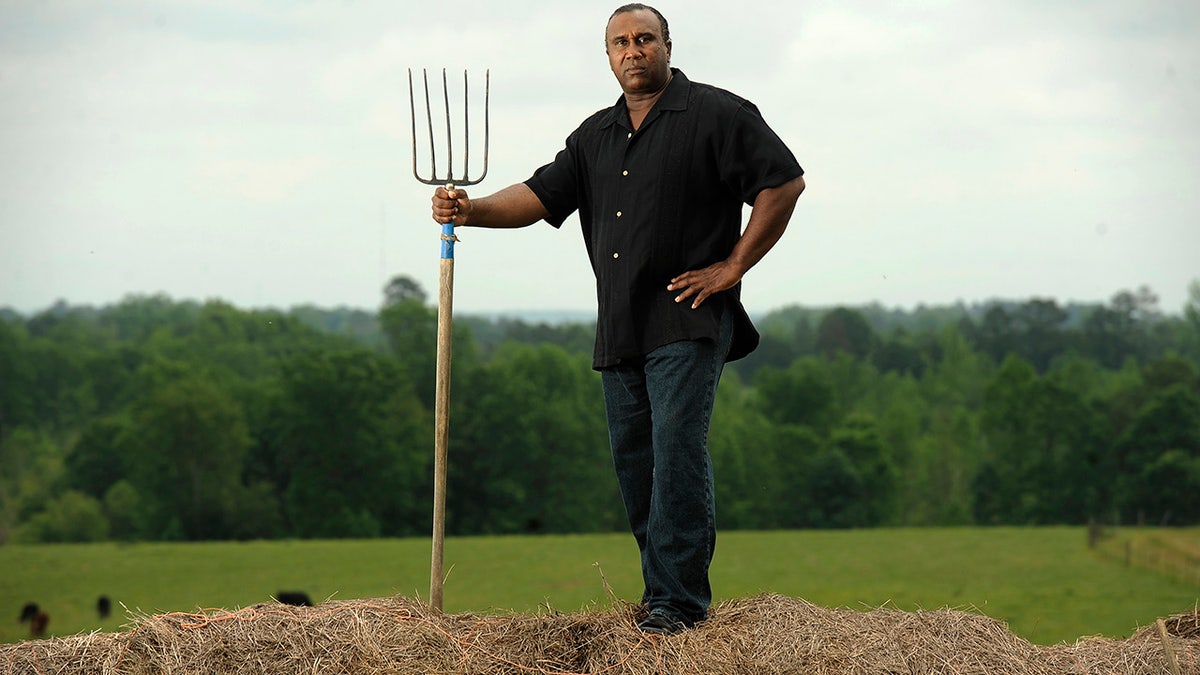
John Wesley Boyd Jr. at his farm in Baskerville, Virginia. Boyd is president and founder of the National Black Farmers Association. "We've got to do something to offset what’s been going on," he said. (Matt McClain for The Washington Post via Getty Images)

"We’re paying $5 a gallon for diesel and it was probably somewhere around $2 a gallon five years ago," he said. "All of these costs have gone through the roof, all the input costs — but the prices for corn and soybeans are down."

Story by Kerry J. Byrne 

'Very challenging' for farmers right now given soaring costs under the Biden-Harris administration.

Brent Johnson, president of the Iowa Farm Bureau, discusses the daunting challenges faced by family farmers across the United States: "We've seen a lot of job losses," said Johnson, who is also a farmer.

American agriculture appears to be wilting in the heat of inflation and the drought of sound economic policy under the Biden-Harris administration, some farmers told Fox News Digital in recent interviews.

"Within the agriculture sector, we're in a recession right now," Brent Johnson, a farmer and president of the Iowa Farm Bureau, said over the weekend.

"We've seen a lot of job losses. We're seeing negative balance sheets. It's become very challenging."


Soaring costs are crippling farmers while the international market for American-grown food has slowed to a crawl "with no new trade deals" under the current administration, said Johnson.

"It doesn’t take somebody with a PhD to figure out that the math isn’t working and that we've got to do something to offset what’s been going on," John Boyd, a Virginia farmer and founder of the National Black Farmers Association in Virginia, said in a phone interview.

Fertilizer, seed, feed, diesel and labor costs, said Boyd, have doubled since President Joe Biden and Vice President Kamala Harris were sworn into office in Jan. 2021.

The economics "make it very difficult to stay alive."

Harris now tops the Democratic ticket, with running mate Minnesota Gov. Tim Walz, in the race to control the White House against Republican challenger and former President Donald Trump plus Sen. JD Vance — and Trump has said on the campaign trail he will cancel every Biden administration policy that he described as "brutalizing our farmers" within hours of taking office if elected in November.

Boyd added that the economics "make it very difficult to stay alive. And then you have an administration that hasn’t been aggressive in helping us."

Boyd himself was instrumental in getting the administration to release $2 billion in direct assistance to Black and other minority owners from groups that suffered discrimination over the years in federal farm programs.

Trump has said on the campaign trail he will cancel every Biden administration policy that he described as "brutalizing our farmers" within hours of taking office if he's elected in November. (iStock)

"Today’s action will enable more farmers and ranchers to support themselves and their families, help grow the economy and pursue their dreams," the White House said in a July 31 statement about its most high-profile effort to aid farm owners.

Even so, said Boyd, "we’re struggling — and we’ve been losing farmers across the country, too."

About 6,000 farms closed in 2023 alone, according to the U.S. Department of Agriculture, though it is part of a larger trend dating back decades.


The troubles today, however, run deeper than just the basics of a business balance sheet.
Aging population of farmers

"You know that when farms go out of business," said Boyd, "there are not a lot of young people replacing those numbers."

An aging population of farmers is just one of the major issues that drove the recent formation of the Nebraska Farmers Network.

A farmer uses a barn to show support for Republican presidential candidate former President Donald Trump on August 10, 2024, near Charles City, Iowa. (Scott Olson/Getty Images)

"A whole generation of Nebraska farmers and ranchers have a median age of 56.9 years old, and the average age of a Nebraska landowner is 67 years old," the group states on its website.

The pool of farmers dwindled decades ago when young adults, now in middle age, saw college as a better opportunity than working in the family agriculture business.

"It doesn’t take somebody with a PhD to figure out that the math isn’t working."

"We skipped a whole generation of farmers," Nebraska Farmers Network co-founder Gabe Sanchez told Fox News Digital.

Younger adults now believe that a college education isn't worth the investment.

"There are now plenty of young people willing to do the work," Sanchez said. "What they’ve lost is the land to farm."

The Nebraska Farmers Network began operation last year as a grassroots movement to battle other major issues fueling the farm crisis. Its members argue those are the failures of big government and the greed, and potential threat, of global investment.

A consortium of interests, including foreign nations such as China, Saudi Arabia and even Canada, plus uber-wealthy investors like Bill Gates, have gobbled up millions of acres of farmland around the country, said Sanchez.

"They just see land as an investment and not for its production value," he said.

Those non-agricultural investments in the world's most productive soil lead to higher taxes, which make it even tougher to turn a profit and are pricing farmland out of the reach of, well, farmers.

"Farmers already operate on a slim margin and that margin is slipping away," said Sanchez.

A tractor with combine on farm field and chimney rock, Scotts Bluff National Monument, in Scottsbluff, Nebraska. (Hawk Buckman/Design Pics Editorial/Universal Images Group via Getty Images)

Negligent government, he said, is a big part of the problem.

"These outside entities are skirting vague and loosely enforced federal and state laws prohibiting foreign investment," said Sanchez.

"And nobody’s doing anything about it."

Farming's future

The widespread crisis in farming is causing a historically heavy Democratic voting bloc to consider another option, said Boyd of the National Black Farmers Association.

"My demographic group has historically voted all Democrat," said Boyd. "Maybe 90% or more Democrat."


He added, "But I don’t know if it’s going to be that way going forward. The Trump campaign has a chance to make a play here and I think they need to do it more aggressively."

He said he's hoping to hear plans for farming's future from both campaigns.

"We’re all facing trouble."

Sanchez said Nebraska farmers are solidly voting for Trump.

He fears all the foreign investment might be about more than just a desire to make money in real estate and demands a more aggressive defense of American farmers and farmland should Trump win back the Oval Office.

"Henry Kissinger once said that if you control the food, you control the people," said Sanchez.

Boyd said whoever’s in office needs to do right by American farmers.

"We’re the greatest country in the world, man, and that country was built off the backs of farmers," he said.

"The whole infrastructure of this country was built off farmers. And we’re all facing trouble. The numbers right now just aren't adding up."

About the Author:

Kerry J. Byrne is a lifestyle reporter with Fox News Digital.

Thursday, October 31, 2024

She Died In 1866, And Her Skull Found In 1978 Is Now Identified

An artist's rendition of 17-year-old Esther Granger, who died in 1866 in Merrillville, Indiana

Mystery of Her Skull Is Partially Solved

Esther Granger died in 1866. The mystery of who she was and how her skull got there began in 1978 when a homeowner in Batavia, Illinois, ripped down a wall and found a human skull inside. It's true. In 1978, her skull was found in a wall of a home in Indiana that was being remodeled. And in case you're wondering, the only part of her found in that wall was her skull. 

The headline read, Skull Found in Illinois Home Identified as Teen Victim of Grave Robbers who died 150 years ago.

Since there was no way of identifying her back in 1978, the skull went into storage at the Batavia Depot Museum. And yes, there it sat, forgotten until workers found it inside a box in 2021. Detectives retrieved DNA and eventually tracked down a great-great-grandson to confirm the skull belonged to Esther Granger. As it turns out, her life ended as a teenager. 

"Esther was born in 1848 in Indiana, got married at age 16, and died the following year from complications of childbirth after delivering a baby girl. The skull, originally found when an owner was renovating his home in Batavia, went forgotten until March 2021, when it was finally sent to the coroner’s office. The Indiana teen, identified as Esther Granger, 17, died more than 150 years ago," that's according to the Kane County Coroner’s office.
 
The Kane County, Illinois, Coroner's Office held a press conference where they revealed the identity of the skull's owner and how they were able to crack the case by building a DNA profile.

Coroner Bob Russell told the news conference, "Esther was born on Oct. 6, 1848, in Indiana. In 1865, at 16 years old, she married Charles Granger and after a few months became pregnant with their first child. In May of 1866, Esther gave birth to a baby girl but lost her life soon after due to complications from childbirth," he said. Granger was buried in Indiana and the baby was named Esther in her honor."

"So the question remains: If she died in 1866 in Indiana, how did she end up in a wall in a house in Batavia?" says Rob Russell, coroner of Kane County in Illinois. 

It's only speculation, and Detectives can't say for sure. But they have an educated guess: Grave robbers. At the time Esther died, the practice was relatively common because grave robbers could make a nice profit by selling remains to physicians who were trying to learn more about anatomy.

It is still unclear how the skull came to be in the home, but Russell has a theory. "We will never definitely know exactly, but with records and good reason, we've come to a common sense theory: we believe Esther was a victim of grave-robbing," Russell said.

"Grave robbing was quite common in that era as it was quite profitable. The grave robbers made the equivalent of three to four months' earnings for the average person working 60 hours a week," he added.


Kane County Coroner Rob Russell is pictured with an artist's rendering of the likeness of Esther Granger as he speaks during a press conference on Thursday, Oct. 24, 2024 in St. Charles, III. Investigators have determined that a skull discovered in the wall of an Illinois home in 1978 was that of an Indiana teenager who died more than 150 years ago, authorities announced Thursday. (Brian Hill/Daily Herald via AP)

Officials constructed a family tree and were able to find Granger’s great-great-grandson, Wayne Svilar, 69, a retired sergeant from Portland, Oregon, through a DNA sample, as well as illustrate an image of her possible appearance.

As for Esther Granger's relatives today, Esther's newly identified descendant, 69-year-old Wayne Svilar of Portland, Oregon, said, "There is this sense of closure. I wish my mom were here so I could tell her the story, she would have loved it."


A 3D printed reproduction of a skull that was found in a wall of a house being remodeled in 1978 is seen during a press conference on Thursday, Oct. 24, 2024 in St. Charles, Ill. Investigators have determined that a skull discovered in the wall of an Illinois home in 1978 was that of an Indiana teenager who died more than 150 years ago, authorities announced Thursday. (Brian Hill via ASSOCIATED PRESS)

Svilar said at the news conference that he was wary at first of the news. "To be completely honest, we didn't believe a word of it," he told the news conference. "I said, 'you can keep talking if you want, but I don't believe you.'"

He also claims that the sketch has a likeness to his own mother. Svilar traveled to the internment where he gave a eulogy. Granger was laid to rest in the West Batavia Cemetery, where she has an engraved stone tower.

One report stated, "There was nothing fishy about the death of Esther Granger in Indiana in 1866."

But wait a minute, think about that for a second or two, it's not exactly every day that someone finds a skull in a wall of a home being remodeled. In fact, I'd say there's definitely something fishy, something very odd and suspicious, about finding a human skull in the walls of your home. Fishy, doesn't begin to cover it. 

Besides the question of who the skull belongs to, which thanks to DNA we know it's Esther Granger, there's the question of how a human skull found its way to a wall in a house. And please, let's understand what we're talking about, we're not talking about digging on your property in rural America and finding human remains. 

We're also not talking about finding a grave under your garage as was the case that took place in San Francisco a few years back when some workers found the coffin and remains of a child under the floor of a garage they were digging up and redoing.  A Child's Century-old Coffin Found Under A San Francisco Home

And think about this, unlike accidentally finding someone's remains when you're digging a post hole out in some pasture, which happens more than we think, the only thing that was found of her in that wall was her skull. That means someone had to remove her head or her whole body from its grave, and at some point, her head became separated from the rest of her. Unless of course, those grave robbers only wanted her head. 

And think about this, when they were done with her head, for some creepy reason, instead of reburying it, some sick individual decided to hide her head in a wall. And yes, that's where teenager Esther Granger's skull was found. Talk about ghoulish.   

Tom Correa


Tuesday, October 29, 2024

I’m a Farmer – and Know Kamala Harris would be a Disaster for American Agriculture

The bottom line: America’s farmers and ranchers were better off when Trump was president.

Story by Kip Tom 
Fox News
Published October 18, 2024 

For eight generations, my family has been farming on the same land in northern Indiana. We have taken care of the soil and produced grain that has been used to feed and fuel others all across the globe.

But our ability to do so – and to pass the farm to future generations – will be put at risk if Kamala Harris is elected president. Her policy priorities – from taxes to trade – would be disastrous for American agriculture, and raise food prices for American consumers even more.

For the last four years, under the Biden-Harris administration, agriculture in the United States has been put on the back burner.

We have seen dwindling profits, increased input costs caused by rampant inflation, and billions pumped into a misguided green agenda. Farm income has declined – by some estimates as much as 43% – between 2022 and 2024. The financial risks and regulatory burdens have grown so much that I often wonder how my grandkids will be able to successfully farm.

These outcomes are to be expected. For four years, farmers and ranchers have been ignored. And we are suffering as a result.

American agriculture depends on access to foreign markets to succeed. But, under the Biden-Harris administration, the United States has become dependent on foreign agriculture. Next year, America is predicted to import $42 billion more in food than we export.

Meanwhile, the Biden-Harris administration signed no comprehensive trade deals, doing nothing to support U.S. farmers and ranchers in exporting their products. In an economic climate where prosperity and growth depend on our ability to reach new markets, the Biden-Harris administration has fallen abysmally short.

This is in stark comparison to former President Trump, whose administration negotiated more than 50 agreements that would boost exports of American agriculture products. Just this week, Trump said calling China’s President Xi Jinping to enforce the China Trade Deal would be a top priority when he is in office. This deal alone would enable $50 billion more in U.S. agriculture products to be sold to China.

It's not just trade policies that show Kamala’s lack of support for American agriculture. The Biden-Harris administration has increased the cost of regulation by $1.67 trillion every year. As a farmer, I experience the impacts of these regulations every day.

Our farms require new seed varieties and other tools to stay productive, but burdensome regulations have significantly slowed down innovation to get these tools to the market and on our farm. American consumers feel these impacts too, at the gas pump and in the grocery aisle.

Even Kamala’s plan to address those high grocery prices (if you consider three sentences posted on X a plan), would fail. Her proposal to stop price gouging would lead to shortages on the shelf, and lost profits for American agriculture. The plan, which she claims would help prevent food insecurity, would just make it worse. At every turn, it is a disaster.

In stark contrast, Trump’s Department of Agriculture removed more than $262 million in costs every year. This reduced regulatory burden got the government out of the way, allowing farmers and ranchers to create innovative new systems and products to increase efficiencies.

Instead of supporting America’s farmers and ranchers, Kamala would throw trillions into a misguided climate agenda. As a senator, Kamala co-sponsored the Green New Deal, a resolution that cost nearly $100 trillion. These climate initiatives would fundamentally change the way we produce food, impacting yields and further raising the price of food for Americans.

It wasn’t just through reduced regulations that Trump saved farmers and ranchers money. He also implemented historic tax cuts through the Tax Cuts and Jobs Act. Not only is this legislation at risk during a Kamala presidency, she would take it a step further. A Harris administration could eliminate stepped-up basis, strapping each farm family with a crippling $725,000 tax bill.

The bottom line is: America’s farmers and ranchers were better off when Trump was president. From trade to tax, Trump implemented policies to support American agriculture, making it easier for us to make a living raising products that feed the world.

From her homes in California and Washington, D.C., it is easy for Kamala to think she knows what’s best for farmers and ranchers. But she’s never been one.

She does not know what it is like to work long days only for your livelihood to be disrupted by nonsensical economic policies and out-of-control inflation. She does not know what it is to build a legacy for your family, only for a high tax bill and burdensome regulations to make it impossible for your children to make a career in agriculture.

We need a president that will make it easier – not harder – for America’s farmers and ranchers. We need a president who values family business and will put policies in place to ensure our farms will be successful for years to come. That president is not Kamala Harris.

About the author:

Kip Tom is a farmer from Leesburg, Indiana, and was ambassador to the United Nations for Food and Agriculture during the Trump administration.

Thursday, October 24, 2024

Mutiny Aboard the Sovereign of the Seas 1854


The Sovereign of the Seas was an American clipper ship built in 1852. It was a sailing vessel that set the world record for the fastest sailing ship with a speed of 22 knots. She was built by Donald McKay of East Boston, Massachusetts, and the Sovereign of the Seas was the first ship to travel more than 400 nautical miles in 24 hours. On the second leg of her maiden voyage, she made a record passage from Honolulu, Hawaii, to New York City, New York, in 82 days. 

She then broke the record from New York City to Liverpool, England, in 13 days and 13+1⁄2 hours. In 1853, she was chartered by James Baines of the Black Ball Line which ran from Liverpool to Australia. It was in 1854 while making the return passage from Australia to England, that she ran into trouble. 

During the last week of June in 1854, the clipper ship Sovereign of the Seas with Capt. Warner commanding arrived in London, England, from Melbourne, Australia, with 76 passengers aboard. What should have been an uneventful trip made several times in the past was certainly anything else but uneventful. 

On the 17th of March, the clipper ship Sovereign of the Seas had a mutiny on board while crossing the Equator. The mutiny was the result of a crewman being put in irons after he was involved in a quarrel with two of the steerage passengers below deck. 

The First Mate interfered in the quarrel and ordered the seaman on deck. When the seaman refused and became abusive, the seaman was put in irons. He was put in iron at the direction of the ship's Captain.

Shortly after the seaman was put in irons, the rest of the crew mustered aft and demanded that the Captain immediately release the seaman. If not, the crew said they'd take the ship. The crew made sure their demand was delivered to Capt. Warner. The ship's Captain didn't wait to respond. He immediately took action. 

Reports say that the Captain ordered the ship's junior officers to gather together a large number of the passengers. He then told them to arm themselves -- including having muskets and bayonets at hand. At the point of a bayonet, the Captain, ship's officers, and passengers drove forward to confront the mutinous crew. In fact, the Captain, officers, and passengers, all armed, fought the crew for possession of the ship. In the fight, four of the mutineers were wounded.  

With the crew still refusing to return to duty, six were picked out and placed on one side of the deck to be in chains. At that moment, a crewman named Hall stepped forward to urge the rest of the crew to make a stand and let their shipmates be put in irons. From there, it's said Hall moved toward the Captain. He was warned, and refusing to cease and desist, Hall was shot at by Capt. Warner. 

The round missed Hall but instead hit the First Officer. Passing through the First Officer's leg, it was said to be a severe wound. Of course, while Hall was not hit, the shot stopped Hall in his tracks. After that, he and the others were immediately seized, placed in irons, and dragged below. 

On their arrival in London, the British Government declined to grant the application of the American Consul to adjudicate in the case. There was a reason for that. While the Sovereign of the Seas was an American clipper ship, most of its crew of mutineers were English subjects. Because of that, the American Consul determined to send the American crewmen to New York with the next mail steamer to New York. But that didn't happen. 

The American Consul wanted to send the American mutineers back to the United States against the wishes of the friends of the prisoners. This didn't happen because a carpenter of the Sovereign of the Seas secretly set them free to escape the ship. According to the account of what happened after that, the escaped American prisoners stayed with friends in London while waiting for the American Consulate to help them retrieve their lost wages -- wages that they forfeited when they mutinied. 

Imagine that for a moment, American mutineers tried to get the American Consul, who knew they were escaped prisoners, to help them get paid for the work that they did before the mutiny. That's incredible when you think about it, the mutineers thought they should get paid even though they mutinied. Those mutineers were lucky that they weren't rotting away in an English prison.

According to the San Joaquin Republican newspaper published on June 26th, 1854, it said that "no attempt had been made to re-arrest the escaped American seaman, and it is very probable, owing to the disputed question of jurisdiction, that they will all be allowed to get off" -- albeit without pay.

As for the fate of the Sovereign of the Seas, the majestic ship of 2,421 tons, her length of 252 ft., her beam of 45.6 ft, and her draft of 29.2 ft, she ran aground on August 6th, 1859. On a run from Hamburg, Germany, to China, the Sovereign of the Seas ran aground on the Pyramid Shoal in the Strait of Malacca between the Malay Peninsula to the northeast and the Indonesian island of Sumatra to the southwest. She became a total loss. A sad end to a great ship.

Tom Correa


Monday, October 21, 2024

What Constitutes A Hostile Work Environment For Volunteers?


In my last post about Volunteering, Never Again Volunteer Yourself, I discussed how people can have different experiences when volunteering for various organizations. Using myself as an example, I talked about how I've volunteered for a therapeutic riding group that specialized in horse therapy for handicapped children, I've volunteered with PTSD groups, the Veterans Administration, the Pacific Islanders Cultural Association, the John Coffee Hays Club, with a local American Legion post, with a local Marine Corps League Detachment, and the Calaveras County Sheriff's Volunteer Unit.

Frankly, my post must have hit a nerve since some of you wrote that you couldn't believe how volunteering could turn out so bad. Others of you wrote to say how you've had to endure the same BS that I have. 

As for volunteering at the American Legion, some of you have written to describe how your American Legion post is nothing like what I experienced. Frankly, that's great to hear. Too bad it wasn't my experience. As a Veteran, it's tough to see people who have never served or didn't even make it through Boot Camp take over an American Legion post. But, I guess that happens. 

Some of you wrote to say how surprised you are to find out that I didn't quit volunteering at the American Legion long before I did. And of course, a few of you wrote to say that you're surprised that my experience with the American Legion didn't sour me and turn me against volunteering ever again.

As I said in my other article, it all depends on what you want to do, what you want out of the group, and what you're willing to put up with when dealing with petty politics and mean-spirited people. Some groups have more than others. Some groups are small enough that that sort of thing is almost non-existent. 

But, as in life in general, as most of us know, some people are easier to deal with than others. Mean-spirited is another way of saying someone is obnoxious, spiteful, contemptuous, and malicious. It's a way of saying someone is basically a prize-winning jerk. And yes, my friends, they are everywhere! 

And as for being a volunteer, some folks can get by without letting group politics affect them. For them, they will probably enjoy the group despite the petty politics and having to put up with mean-spirited jerks. Folks who are good at ignoring the petty politics of a group are usually better than most at focusing on the reason why they're there in the first place. 

As for mean-spirited people? I've dealt with a few over the years. And yes, I'm very glad that I haven't had to deal with some of them ever again. Some of them, well let's just say I'm hoping Karma comes around and bites them in the ass! 

One fairly mean-spirited woman who I've had the displeasure of dealing with fits the mold of someone who is just an unhappy person out to make the lives of others just as miserable as hers is. She's truly a nasty individual who seems to enjoy causing harm and turmoil -- especially if she doesn't get her way. 

She's the root cause of dissent within one of the groups I've belonged to. Of course, it's not surprising that the more I looked into things the more I was contacted by other volunteers complaining about her. I found out that she was the cause of the undercurrent of contentiousness and ongoing hostility in that group.

Why is she that way? Why is she so malicious and negative? What's the reason she's the way she is? 

Well, in my opinion, she likes to be unkind and inconsiderate to others. She enjoys it. She's the sort of person who smiles to your face but at the same time is a conniving backstabber. Most mean-spirited people are like her. They are the way they are because they're unsatisfied with their lives. They're unhappy. They're full of contempt and derision for others because it makes them feel good. 

Most mean-spirited people aren't people of good character. They lack a moral compass. They don't have the values and integrity of good people. The lady who I knew was anything but honorable. And yes, she also lacked kindness and empathy for others. You can tell that every time she opened her mouth, she derides others almost every chance she gets. 

I'm sure she hasn't changed. She's contemptuous and uses her position to create a clique and collude with others. She's the sort of person who would kick someone while they're down. Believe it or not, she created division and pressured others to be non-cooperative with supervisors. 

Imagine for a moment that someone would actually sabotage things in their group just to make sure someone else fails or gets fired -- just so they will be promoted? Imagine pressuring other volunteers to be uncooperative with their supervisors just to make a supervisor look bad? That's taking being malicious to a new level -- especially when merely volunteering.  

And if that's not enough, what's really asinine about her is that she's the sort of low life, just a cheap and nasty person, who would do anything to gain power and position to boost her own lack of self-worth -- even in a volunteer organization. Of course, everything that she's done has created a hostile work environment. 

So What Is A Hostile Work Environment?

Some think that such a despicable person, someone who treats other volunteers in a condescending and demeaning way, would only harm the section she controls. But, that's not true. Such a person is never satisfied with only spreading hostility and fostering opposition in a small group.

It's been my experience that negative people, especially those with personal gain in mind, are not satisfied until they have negatively affected the entire organization. It's as if they see their mission to create a hostile work environment -- and their goal is not achieved until they make volunteering unpleasant for everyone involved. And yes, they do this by creating tension, discord, conflict, contention, dissension, antagonism, and contempt. 

In the state of California, a "hostile work environment" is defined as "a workplace that is so abusive or offensive that it makes it difficult for employees to do their jobs. It can be caused by a pattern of behaviors that are severe or pervasive and can include:
  1. Harassment: Verbal abuse, derogatory language, threats, physical harassment, sexual harassment, exclusion, submitting false accusations.
  2. Intimidation: Bullying, threatening behavior, or work sabotage.
  3. Favoritism: When employers give perks or promotions to some employees over others based on personal preference.
California law prohibits employers from creating a hostile work environment and requires them to take reasonable steps to prevent it. The Fair Employment and Housing Act (FEHA) applies to all California employers with at least five employees. It protects employees against discrimination and harassment based on many characteristics, including race, gender, sexual orientation, and religion.

If you experience a hostile work environment, you can:
  • Report it to your employer
  • Submit a written complaint to the appropriate authority at your company. If your employer has a harassment policy, then follow the procedure outlined in it.
  • File a complaint with the California Civil Rights Department (CRD)
  • If going to HR doesn't help, you can file a complaint with the CRD within three years. The CRD will investigate and try to resolve the issue. You can also request a “right-to-sue” letter from the CRD to file a lawsuit.
  • Document the behavior. Keep a record of the actions meant to create a hostile workplace. 
  • Save any evidence of the hostile work environment, such as emails, texts, voicemails, screenshots, notes, or letters.
So Let's Talk About Some Things That Can Create A Hostile Work Environment for Volunteers. 

So let's talk about what would justify someone having the "Never Again Volunteer Yourself" attitude in the civilian world where, unlike being in the military, you can quit anytime you feel the need to do so. 

And please, don't get me wrong. While I'm all for citizens volunteering, people should recognize that volunteering and joining a volunteer group has its issues. Some of these issues become roadblocks to volunteering. Some of these issues push people to quit and say to hell with it because they don't need the hassles. 

For example, no one should put up with someone who has attacked a volunteer over his religion, who has attacked another volunteer over her medical condition, all while attacking another volunteer over his time restrictions and availability.   

Here are a few things to think about: 

Tension between paid employees and unpaid volunteers
  • There can be resentment that creates an undercurrent of tension between paid employees and unpaid volunteers. 
  • Some paid employees see volunteers as taking their jobs. 
  • Some paid employees see untrained volunteers as a hazard waiting to happen.
  • Some paid employees see untrained volunteers as "just getting in the way" and of no real importance.
  • Some paid employees have no idea why the volunteers are there or what they do.
  • On the flip side, some volunteers act as though their needs should be as important a priority as that of the paid employees. 
  • Some volunteers will wrongly demand they be treated as equals to highly trained/paid employees.
  • Some volunteers create tension and are responsible for how volunteers are looked upon unfavorably.
Animosity within a Volunteer Group
  • The animosity between volunteers negatively affects the mission of the volunteer group.
  • The animosity between volunteers negatively affects the purpose of the group.
  • There may be animosity and resentment toward volunteers in supervisory positions.
  • Some volunteers bicker and demonstrate that they're unable to get along with others. 
  • Some volunteers create dissension, tension, and strife while stirring up resentment within an organization.
  • Some volunteers enjoy creating division.
  • Some volunteers create an undercurrent of tension between volunteers. 
  • Some volunteers creates division by pressuring others to be non-cooperative with supervisors.
  • Some volunteers will foster work sabotage to make sure another fails just so they will be promoted.
Group dynamics.
  • Cliques form among various subgroups of volunteers.
  • Cligues cause dissension in the ranks.
  • Cliques may decide to shun the rules and operate outside of the rules.
  • Cliques may decide to create their own standards and practices.
  • Cliques might operate as though organizational rules and regulations don't apply to them.
Personality conflicts among volunteers.
  • There are harmful, extremely stressful, volunteer-to-volunteer relationships. 
  • Some volunteers have a sense of superiority. 
  • Some volunteers may be less than welcoming to newcomers.
  • Some new volunteers want to immediately change things.
  • Some new volunteers demand others agree with what they say. 
Personality problems
  • Problems arise with "Volunteer Know It Alls."
  • Volunteer negativity festers and grows.
  • Some volunteers are so negative that they refuse to find positive solutions to problems.
  • Some volunteers become angry over a lack of recognition.
  • Some volunteers spread dissent and dissatisfaction if they are not promoted.
  • Some volunteers demand awards and recognition.
  • Some volunteers feel a sense of "entitlement." 
  • Some volunteers demand to be treated special.
  • Some volunteers refuse to respect others.  
  • Volunteer intimidation is something that no one needs to put up with.
  • Condescension from volunteers is something that no one needs to experience. 
  • Some volunteers enjoy demoralizing and demotivating others.
  • Volunteer hatred for one another makes volunteering horrible.
  • Simple dislikes of one another and personality clashes take place.
  • Volunteers do not automatically work well together or even like each other. 
Varying Differences, Petty Politics, and Dealing with Demands
  • Some volunteers have difficulty complying with the rules of a group.
  • Some volunteers may attack a volunteer's disability status. 
  • Some volunteers are against working with volunteers of other religions. 
  • Some volunteers refuse to accept how different cultures have varying understandings of what constitutes appropriate behavior, particularly regarding gender interactions, which can lead to a clash over the one-size-fits-all standards that some see as being forced upon people today.
  • Volunteers may falsely accuse other volunteers of things concerning their religious beliefs while not knowing the truth. 
  • Volunteers may falsely accuse other volunteers of performing socially unacceptable behavior such as bullying, discrimination, using offensive language, being racist, being verbally abusive, nose-picking, standing too close to others, not bathing regularly, or using bad manners. 
  • Volunteers may falsely accuse another volunteer of threatening behavior because he or she is talking loudly.
  • Volunteers may file false accusations of sexual harassment against other volunteers for various reasons, including misunderstandings, personal vendettas, or malicious intent. 
  • Some volunteers may not understand how what may be seen as sexual harassment today for one person is the cultural norm for another.
  • Some volunteers refuse to accept generational differences, people speaking foreign languages, ethnic groups, or the cultural practices and beliefs of other volunteers. 
  • Some volunteers in unconventional lifestyles such as in a gay relationship may have discomfort with volunteers in traditional lifestyles. 
  • Some volunteers may not accept how others live and demand they change their ways to adhere to today's sensitivities. 
  • Some volunteers may not accept modern sensitivities and/or how some people identify, dress, appear to others, and behave in public. 
And yes, volunteers who've experienced any of the above quickly learn that volunteering can be anything other than enjoyable. And really, don't fool yourself into thinking these things don't exist or wouldn't be roadblocks to volunteering. These are roadblocks and do stop people from volunteering. These things can make volunteers quit volunteering altogether. And frankly, I don't blame them. 

Of course, sadly for volunteers, we don't learn a lot about a group until we've already committed ourselves to volunteering for that group. As sad as it is, I know what I'm talking about since I've experienced a lot of what I've listed above for myself. 

Because of the terrible experience I've had volunteering, I'm a lot more cautious about sticking with an organization. Today, if I feel as though there is simply too much backstabbing, way too much petty politics, too much tension and hate, a hostile work environment that can't be fixed, I start looking for an exit.

Tom Correa

Wednesday, October 16, 2024

Mark Twain's Laziness At Jackass Hill

Mark Twain Reenactor In Angels Camp, California

Here's a story that you might find interesting. It's from 1854 and talks about a miner by the name of Bob Dull who struck gold on Jackass Hill in 1854.

Union Democrat (Sonora, 1854), Volume LIII, Number 10, 8 September 1906

Bob Dull Strikes Gold on Jackass Hill.

R. E. Dull, who is working a pocket mine on Jackass Hill, near Tuttletown, last Tuesday cleaned up the last of a $3,OOO bunch of gold. The lucky miner has been trying the mining game for nine years, quitting the joys and sorrows of a printing office to try his luck on historic Jackass Hill, James Gillis’ great piece of mining ground from which enough precious metal has been taken to build a golden roof over Sonora.

Dull secured a claim on the usual conditions a percentage of the gross output to be paid Gillis and then went to work. He has taken out a number of pockets, each of which ran into the thousands of dollars, to say nothing of the little bunches of a few hundreds which the genuine pocket miner accepts as a matter of course, but with characteristic disdain unless grub is running mighty low. Wednesday Bob Dull was in Sonora with 136 ounces of gold, the tail end of the pocket.

--- end of story

That's a pretty good story and a lot of gold. It had to be a lot if he found $3000 in gold when gold only went for about $30 an ounce. And think about this, $3,000 in 1854 is worth $112,607.50 today (2024).

And there's this, the California Gold Rush era cabin that famous American writer Mark Twain stayed in is found on Jackass Hill in Tuolumne County. It is where Mark Twain was a guest of the Gillis Brothers during his stay in the county.

The original cabin was built by Dick Stoker in 1850. The present cabin located on Jackass Hill is a replica of the original, rebuilt a few times over the century and more since Twain was there. It was there that while living in that cabin on Jackass Hill where Mark Twain gathered material and wrote the story "The Celebrated Jumping Frog of Calaveras County" which made him famous.

American writer Mark Twain, whose real name was Samuel Langhorne Clemens, spent time in Calaveras County, California in 1864 and 1865. The story of how his laziness stopped him from becoming a rich man is a true story.

On December 4, 1864, Twain arrived at a cabin on Jackass Hill Road between Angels Camp and Sonora, California, to stay with miners Jim and Steve Gillis. On January 25, 1865, Twain traveled from the cabin to Angels Camp to get away from the rain and loaf while he was rained in for almost two weeks. It's believed that it was during his visit to a saloon in Angels Camp that he heard a story about a jumping frog.

On November 18, 1865, Mark Twain published his story titled "Jim Smiley and His Jumping Frog" in the New York Saturday Press. Twain's story about those jumping frogs was republished as "The Celebrated Jumping Frog of Calaveras County." That story is what launched his career as a writer and brought him national acclaim. But really, if he weren't sitting in that saloon, and had actually kept working his claim, he could have been a fairly wealthy man.

Here's the story behind that as reported in the newspaper, the Truckee Republican, on March 1st, 1911:

THE GOLD WAS THERE. 
But Mark Twain Missed It by Just One Pail of Water.
With Steve Gillis, a printer of whom he was fond, Mark Twain went up into Calaveras County to a cabin on Jackass Hill, where Steve’s brother Jim. a lovable, picturesque character (the “Truthful James” of Bret Harte), owned mining claims. Mark decided to spend his vacation in pocket mining and soon added that science to his store of knowledge. It was a halcyon, happy three mouths that he lingered there.

One day with Jim Gillis he was following the specks of gold that led to a pocket somewhere up the hill when a chill, dreary rain set in. Jim was washing and Samuel Clemens [Mark Twain's real name] was carrying water.

The "color" became better and better as they ascended, and Gillis, possessed with the mining passion, would have gone on regardless of the rain. Clemens, however, protested and declared that each pail of water was his last.

Finally, he said in his deliberate, drawling fashion, "Jim, I won’t carry any more water. This work is too disagreeable. Let's go to the house and wait till it clears up."

Gillis had just taken out a pan of earth, "Bring one more pail. Sam," he pleaded.

"I won’t do it, Jim! Not a drop! Not if I knew there was a million dollars in that pan!" said Clemens.

They left the pan standing there and went over to Angel's camp, which was nearer than their own cabin. The rain kept on, and they sat around the grocery and barroom smoking and telling stories to pass the time,

Meanwhile, the rain had washed away the top of the pan of earth left standing on the slope of Jackass Hill and exposed a handful of nuggets — pure gold. Two strangers had come along and, observing it, had sat down to wait until the thirty-day claim notice posted by Jim Gillis should expire.

They did not mind the rain — not with that gold in sight — and the minute the thirty days were up they followed the lead a few pans farther and took out $20,000 in all. It was a good pocket. Mark Twain missed it by one pail of water.

The above story was originally published by The Chicago Post.

Calaveras and Tuolumne Counties were formed in 1850 when gold was discovered in those areas. Tuolumne County sits on the western slope of the Sierra Nevada, with Calaveras County to its north.

In regards to that $20,000 gold strike in 1865 when Twain decided that another pail of water was too much to carry, let's just put that in perspective for today. The sum of $20,000 in 1865 would have the same paying power as $386,872.39 does today. Of course, that would have meant that he would have been considered a very wealthy man -- especially by the standards of 1865.

After all, let's remember that a Cowboy would earn between $20 and $40 a month at the time.

Tom Correa