Monday, June 6, 2022

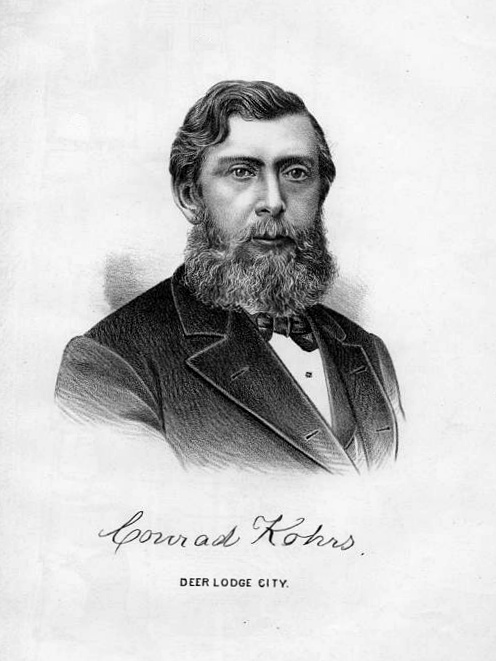
Conrad Kohrs -- The Cattle King of Montana


A few of you have asked me about the latest television series "1883." Some of you are asking why Montana didn't see the arrival of cattle until that year. 

Well, according to records, cattle ranching in Montana actually began in the late 1840s. Documentation shows how the first cattle operations in Montana were started in Deer Lodge Valley by Johnny Grant and Conrad Kohrs. In fact, the founding of the cattle industry in Montana had everything to do with the Oregon Trail and the Westward migration. 

The story goes that Westward bound pioneers needed fresh oxen and cattle about the time they reached what would later become Idaho and Montana in the 1840s and 1850s. Most folks believe that early pioneers primarily used horses and mules, but it was oxen that played a dominant role in pulling those wagons West. And really, there are a few great reasons why oxen were preferred over horses and mules in most cases.

While our pioneers traveled about 12 to 15 miles a day, they did so for 6 months from where they started. The entire trek was over 2,000 miles. And as for their oxen, they only moved about 2 miles an hour. For those who may not know, oxen are castrated bulls used as draft animals. Draft animals are domesticated animals used to pull wagons or draw heavy loads. Draft animals pull wagons and other farm work equipment such as plows, stone boats, skids, and logs. Animals used for pulling can be harnessed to pull other equipment and even remove stumps. Historically the most common draft animals were oxen. 

As I said before, oxen are castrated male cattle (bulls). And because of that, some people refer to them as "working steers." Oxen are trained in a yoke to pull equipment. Oxen tend to move more slowly than horses and mules. As I said before, the pioneers used mostly oxen because of a couple of reasons. First, while oxen were slower than mules and horses, oxen have better stamina than horses and mules. That made them ideal for plowing large fields or pulling wagons a longer distance without having to rest. Other reasons why oxen were preferred have to do with advantages such as they ate less, require less care, oxen can pull heavier loads, and unlike horses and mules -- cattle don't sweat. Actually, cattle don't sweat effectively so they rely on respiration to cool themselves.

As for the question that I'm asked a lot, "Why were oxen preferred in place of horses and mules by pioneers coming West? First they were easier replaced along the way by entrepreneurs who some called "road ranchers." When livestock became fatigued and trail-worn, they were traded out for the oxen kept at trading posts for just that purpose. 

This was a very shrewd way of making money. The so-called "road rancher" kept cattle, oxen, mules, and horses, ready to swap them out. In some cases, it was a two-for-one proposition. The "rancher" would trade one of his rested animals for two from the pioneer passing through. In that way, a rancher would increase his herd, graze his cattle cheaply, keep them on hand to trade, and have them available for the wagon trains next Spring. One of the men who made a lot of money this way was Montana's Johnny Grant.

Grant was born a Canadian in 1831 at Fort Edmonton. His father was responsible for setting up trading posts, which were essentially forts, for the Hudson Bay Company. In 1847, Johnny joined his father in what was Fort Hall. Today, we know that place as Pocatello, Idaho. It was there that he learned about trading stock with travelers coming West. 

About 10 years later, Johnny Grant was grazing his stock in the Deer Lodge Valley at Cottonwood. The place we know today as Deer Lodge, Montana. It was there that he built a trading post and home. Like most small businesses of the day, the trading post store was on the first floor and the family's living quarters were on the second floor. 

At the start of the Civil War, his ranch provided beef, horses, mules, and needed supplies to miners headed for the Bannack and Virginia City, Montana, goldfields. By 1863, Johnny Grant is said to have had over 3,000 horses and over 3,500 head of cattle on his ranch. 

Some say it was the rising taxes of the times. Others say it was increasing crime after the Civil War that made him sell out. And yes, there are those who have written to say that he started having problems with the law, and that spurred him into selling out and moving to Canada. Either way, by 1867, he sold his ranch and herd to Conrad Kohrs for almost $20,000. Of course, $20,000 in 1867 is equivalent in purchasing power to about $375,605.41 today. So no, it's not as if Grant didn't make money when he sold out and left.

Conrad Kohrs was a few years younger than Johnny Grant. Kohrs was born in Denmark and started out as a cabin boy aboard a ship at the age of 15. During his three years at sea, he sailed to Africa, South America, and later to the United States. He started out in New York City and then Davenport, Iowa, where he was employed as a butcher, a salesman, a log raft pilot, and even a distillery worker. By 1857, Kohrs became a legal U.S. citizen.

Soon, like many, he was drawn to California for the Gold Rush. After he played out his hand there, he drifted to the Fraser River diggings in Canada, and then to Bannack in 1862. In Bannack, he worked as a butcher earning about $25 a month. For those of you who are curious, $25 in 1862 is equivalent in purchasing power to about $687.99 today. Of course, while he was working at Hank Crawford’s butcher shop making $25 a month plus room and board, he was building a great reputation as a solid employee. 

His knowledge and dedication to Hank Crawford paid off as he was soon making $100 a month. And since I know that you'll want to know want sort of paying power $100 had in 1862, $100 in 1862 is equivalent in purchasing power to about $2,751.96 today (2022).

Soon, Conrad Kohrs owned Crawford's butcher shop. How he ended up owning it is an interesting story in itself. The backstory on that has to do with how Hank Crawford was a very popular man in town. He was so popular, that in 1863, Crawford was asked to run for sheriff. He ran against a known gunman by the name of Henry Plummer. 

Crawford won the election, but Plummer didn't take his defeat very well at all. In fact, a very angry Plummer is said to have gone looking for Crawford with a shotgun right after the election. Supposedly, they met and Crawford ended up shooting Henry Plummer first. But, unlucky for Crawford, he only wounded Plummer who as I said before was a noted gunman at the time. 

Where does this story end? Well, fearing that Plummer would seek revenge, Sheriff Hank Crawford left town with only the money that was in his butcher shop cash register. Henry Plummer became Sheriff right after that fiasco in a new election that May. 

How does this tie in with Conrad Kohrs? Well, when Crawford skedaddled out of town as fast as he could, he essentially left his business to Kohrs. Kohrs took that butcher shop and made it into a thriving business. In fact, Kohrs turned out to be such an entrepreneur himself, that he hired butchers and opened shops in other gold mining boomtowns.

At first, Kohrs bought and traded for whatever cattle that he could find locally in an effort to build his herd. And yes, he was also known to have gotten cattle from Johnny Grant. But when the numbers of local cattle dwindled, he brought in cattle from Texas and even California. Soon, Kohrs was ripe with cattle for his own needs, to supply his butcher shops, and actually ended up selling cattle to other ranchers.  

Kohrs died in 1920 at age of 85. He had seen the cattle industry evolve from the days of the mountain men through the days of the open range and into the days when the range was wired off and managed. Because of his contributions, he rightfully earned the nickname, "Montana's Cattle King."

It's true. The Conrad Kohrs started when he and his brother would drive herds of cattle to Montana, by buying and selling, and expanding their Montana cattle empire. At the peak of their operation, it is said that the Kohrs grazed cattle across 10 million acres. And yes, it is also true that for a while, they ran the largest cattle operation in North America for decades.

Tom Correa

Sunday, May 29, 2022

Memorial Day 2022 -- Let's Say "Thank You!"

Memorial Day is a day that we have set aside to honor our members of the armed services who have been killed in action or have once served and have now passed away. It is a day when Americans are supposed to honor our fallen warriors. It is a day to do our duties and honor those who have fallen, console the bereaved families, as well as be there for those orphaned and widowed.

We should show our gratitude towards those who have fallen and their families in the following ways:

· By adorning their graves with flowers and flags.

· By visiting military cemeteries, or the veteran's section in cemeteries.

· By attending observances, services, and memorials.

· By furling the American Flag at half-mast until noon.

· By observing a moment of silence at 3 p.m. which is the "National Moment of Remembrance"

· By listening to Taps being played for those not here.

· By taking a pledge to aid disabled veterans, widows, widowers, and orphans of the fallen. And yes, we must keep that pledge.

Memorial Day is a day for us to show our gratitude by never forgetting those who have fallen.

From the battles of the American Revolution, the War of 1812, the Civil War, the Spanish-American War, World War I, World War II, Korea, Vietnam, the Persian Gulf, Iraq, Afghanistan, and in the many operations around the world, members of our military have given us their honorable service and died for us.

Time after time over more than two centuries, Americans have been called to defend the founding ideals of our Republic. During these centuries, American troops have liberated cities, vanquished evil, destroyed tyranny, and lifted the oppressed out of bondage. Yes. More so than any other nation in the history of the world.

We have forced dictators and despots to flee and, in some cases, commit suicide. We have given freedom to more than can be counted. And in contrast to every other such powerful nation in the history of mankind, Americans have not planted our flag and declared ourselves conquerors. Instead, we have only sought friendship and peace in return. In every case where diplomacy has failed, the American Soldier, Sailor, Airman, and Marine have been there to right wrongs and bring about victory.

On Memorial Day, all of us demonstrate our love and gratitude by together as a grateful nation remembering the proud patriots who made the ultimate sacrifice in defense of liberty's blessings. We do so because it is right. We do so because we understand the cost of freedom. We do so because we are a good people.

As we observe Memorial Day, we remember the more than one million Americans killed in action preserving our freedoms, the more than 140,000 who were prisoners of war, all those who have been declared missing in action, those Veterans who have passed on, and their loved ones.

We must all understand that all our troops, everyone who ever died in uniform, have died attempting to do great and noble deeds. In the big picture, our men and women in uniform have died attempting to set nations free, to save lives, to feed the world, to free enslaved people, stop conquest, to protect our way of life, and much more. They have stepped forward to preserve our uniquely American society based on the principles of freedom and liberty that make America the hope of the world.

Yes, freedom is something that is fought for and fought for and fought for, generation after generation after generation.

While that is the big picture, the small picture, the more personal picture, is even more impressive because our troops died in battle for each other. It's true. While they died for the freedoms we enjoy every day, in more cases than can possibly be imagined, they died so a buddy, a comrade, a fellow member of his or her unit, could make it home in their place.

Today, Americans remember those killed in action and those veterans who have passed. And while doing so, it is only right that we say, “We have not forgotten you. Thank you. God Bless you.”

Tom Correa

The Wreck of the Sir John Franklin

On November 8, 1864, President Abraham Lincoln was re-elected president of the United States. On November 16, 1864, General Sherman's Army of Georgia began the "March to the Sea"

On December 10, 1864, Sherman's Army of Georgia arrived at Savannah, Georgia, completing the famous "March to the Sea". At Savannah, his troops take Fort McAllister and force Confederate defenders to evacuate the city. By December 16, 1864, the Battle of Nashville, Tennessee ends when the Confederate Army under the command of Gen. John Bell Hood is thoroughly defeated.

On January 15, 1865, Union forces assault and capture Fort Fisher, North Carolina. Union occupation of this fort at the mouth of the Cape Fear River closes access to Wilmington. It is the last Southern seaport on the East Coast that was open to blockade runners and commercial shipping.

On January 17, 1865, a geographic name change takes place on a cape between Pigeon Point and Point Año Nuevo on the California coast. Early charts labeled the cape as "Middle Point." After January 17, 1865, it will be known as "Franklin Point" because the American clipper ship Sir John Franklin wrecked there. Today, Franklin Point is part of the Año Nuevo State Reserve in San Mateo County, California. The point is named after the clipper ship Sir John Franklin.

The American clipper ship Sir John Franklin was known to make a regular run along the West Coast. es, even during the days of the Civil War, it routinely ran cargo between South American ports and San Francisco, California. In January of 1865, the ship was bound for San Francisco after taking on cargo in Rio de Janeiro, Brazil. By the time it reached the California coast, it found itself in mercilessly dense fog and fighting heavy seas with a full cargo of lumber, pianos, coal oil, candles, other dry goods, and 300 barrels of "spirits." Its Captain, John J. Despeaux, believed his ship was further out to sea and away from the coast. Then almost instantly, it violently ran aground on the rocks on the point which would forever after bear its name.

The Daily Alta California (San Francisco, CA), January 19, 1865, p.1, col.2. reported:

DISASTROUS SHIPWRECK AND LOSS OF LIFE—THE SHIP "SIR JOHN FRANKLIN" LOST—THE CAPTAIN AND ELEVEN MEN DROWNED.

First Officer Boyd, of the American ship Sir John Franklin, arrived in this city last evening from Pigeon Point, between thirty and forty miles south of Point Lobos, where the ship went on shore in the fog on Tuesday night. He reports the vessel and cargo a total loss. His statement is that owing to the prevailing fog no observation had been taken for twenty-four hours, and it was supposed that the vessel was about seventy miles off land. 

She was standing in shore, and about nine o'clock, when the fog lifted, it was discovered that she was close in on the breakers. Orders were given at once to wear ship, but before they could be carried out, she struck with great violence on the rocks, outside the bar, staving her bottom and carrying her masts overboard. In a few minutes after striking, the vessel parted amid-ships and the cargo went out of her. The wreck floated over the rocks and went ashore on the beach, the sea making clean breaks over her. 

When she broke in two, Captain Despeaux and the crew, twenty in all, were standing near together, amidships, with the exception of two men on the forecastle, and all clung to the vessel until it struck the beach. Then they commenced washing overboard, the undertow carrying them out from the land repeatedly, and after being nearly two hours in the water, struggling among the drift and pieces of the wreck and cargo. First Officer Boyd, Second Officer Ball, Third Officer Jefferson Welch and five seamen, gained the shore alone, all the rest having perished. 

The survivors wandered on the shore for some hours, wet, and nearly perishing with cold and exhaustion, before reaching a farm-house, where they were cared for as well as circumstances would permit. The survivors, with the exception of Mr. Boyd, remained at the farm house last evening, having no means of coming up to the city save by footing it. 

The Sir John Franklin was owned by Lambert Gidden of Baltimore, and was rated as a first-class ship. She was loaded, in part, with the cargo of the ship Charles Pennell, which put into Rio in distress and was condemned, and in part with general merchandise, consigned to Brooks & Co. 

Captain Despeaux was a native of Baltimore, and leaves no family. Mr. Boyd believes that the ship and cargo were insured, but it is not positive of the fact. This in the second disastrous shipwreck in that locality, the Carrier Pigeon having left her frame and name there some year since.

Records report that the Pacific Ocean ruthlessly beat the ship to death. Its cargo gone, it destroyed, and with its Captain and eleven men killed, it sat at the mercy of the Pacific. When help arrived to assist, only 8 of the ship's crew were found alive. Of the rest of the crew, only six of the bodies of the victims were recovered. Of the original 20-man crew, 8 survived and 12 drowned. And think about this, only four seamen, the Captain, and another officer were found.

The Daily Alta California (San Francisco, CA), 23 January 1865, p 1, col 2., reported:

FROM THE WRECK

Captain J. W. Sayward, who left the wreck of the Sir John Franklin on Saturday evening, informs us that up to that time six bodies had been recovered, and an inquest had been held by the Coroner of Santa Cruz county.

Imagine for a moment, that of the 12 that drowned, that includes the ship's Captain. Only six of the victims were recovered for burial. And here's more, when their bodies came ashore, it was local Portuguese whalers who buried the four seamen on that point. And while the four crewmen were buried right there on the point, the bodies of Capt. Despeaux and another officer were not -- and instead were taken to San Francisco.

So now you're wondering why the Captain and the other officer were taken to San Francisco instead of being buried with the others? Well, believe it or not, that has to do with the 300 barrels of booze. Hours after the Sir John Franklin struck the rocks, word of her being battered and beaten by the waves was telegraphed to San Francisco newspapers and the Merchants' Exchange in that city.

Merchants and saloon owners immediately realized that its cargo of 300 barrels of "spirits" may still be salvaged. So they assembled several local militia groups. They armed themselves and made the march to where the Sir John Franklin lay stranded and being broken. To their disappointment, the precious cargo of booze mysteriously disappeared by the time the San Francisco militias arrived.  

On their return, the San Francisco militias transported the bodies of 47-year-old Captain John J. Despeaux and the other ship's officer with them. As for Captain Despeaux, by late October, he was transported by rail to Baltimore, Maryland where he was buried near his home in Green Mount Cemetery. The ad-hoc cemetery where those Portuguese whalers buried the four crewmen in the sand dunes became what is known today as the Franklin Point Cemetery. And yes, the story of that cemetery in the sand is coming up next. 

Tom Correa


Saturday, May 21, 2022

On Yellowstone's 150th anniversary, 150 fascinating facts about America's first national park

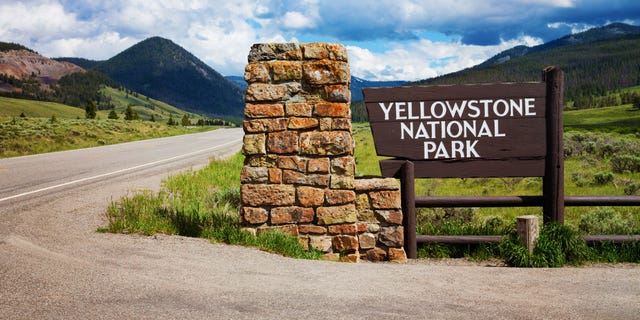
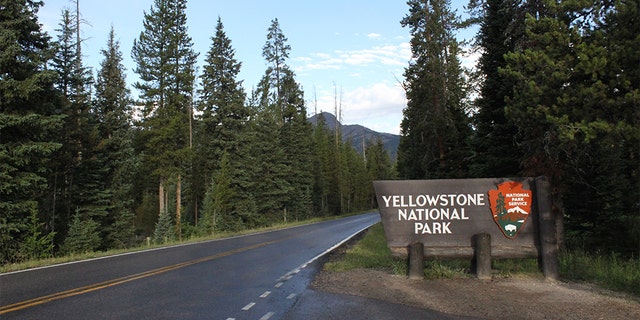
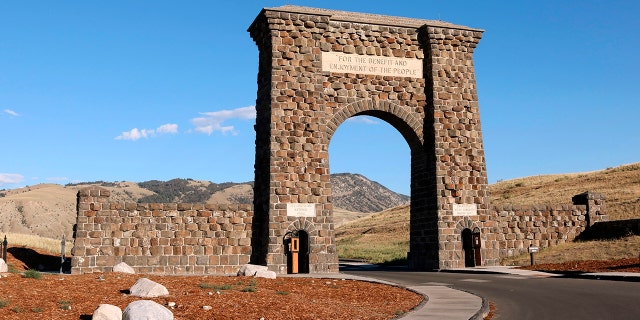
One of the entrances to Yellowstone National Park is shown here. 

Article ByAngelica Stabile
Fox News

American history, science, nature, and more are celebrated within this stunning national treasure
Happy 150th birthday, 
Yellowstone National Park!

As the U.S. celebrates — all year long — a milestone anniversary of this treasured American national park, here's a collection of fascinating facts, featured players, and sometimes-forgotten but always interesting details, numbers, quotes, and more connected to our remarkable national preserve.
As Yellowstone turns 150 this year, 
check out these 150 facts — and share them!

Yellowstone's beginnings

1. Established on March 1, 1872, Yellowstone National Park became the first national park in the U.S.

2. President Ulysses S. Grant signed the Yellowstone Protection Act into law for "the benefit and enjoyment of the people."

3. President Grant never visited Yellowstone; but he explored areas of the American West such as Washington state, Nebraska, the Dakotas, and Colorado, all of which piqued his interest in wildlife preservation.

4. Archeological sites, trails, and oral histories prove that humans have inhabited Yellowstone for the last 11,000 years.

5. Yellowstone National Park was the site of 27 Native American tribes for more than 10,000 years before the park was founded.

6. The first organized European American expedition explored Yellowstone in 1870.

7. The railroad arrived at Yellowstone in 1883 — expanding accessibility to the park.

8. The U.S. Army was put in charge of watching over the park in 1886.

Yellowstone National Park stretches for 3,472 square miles and across more than 2.2 million acres — making it larger than Rhode Island and Delaware combined.

9. In the early 1900s, the federal government launched a campaign that killed off nearly all predatory species and bison.

10. The National Park Service was founded in 1916.
 
Yellowstone's geography

11. Yellowstone exists across 3 states — mostly in Wyoming (96%) and in Montana (3%) and Idaho (1%) as well.

12. The highest point of Yellowstone National Park is 11,358 feet, at Eagle Peak.

13. The lowest point of Yellowstone National Park is 5,282 feet at Reese Creek.

14. The park is comprised of forest (80%), grassland (15%) and water (5%).
 
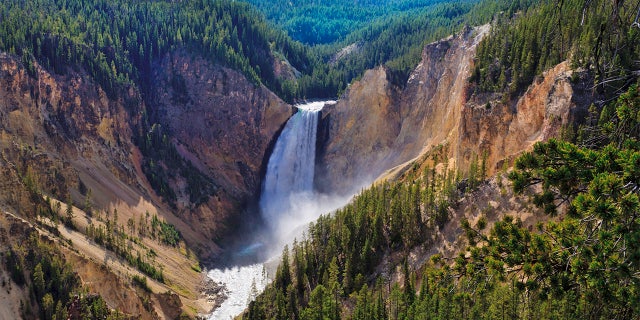
Yellowstone Falls — Grand Canyon of the Yellowstone — in Yellowstone National Park.

15. The park is located at the convergence of the Great Plains, Great Basin and Columbia Plateau.

16. Yellowstone National Park is bigger than 2 U.S. states. It stretches for 3,472 square miles and across more than 2.2 million acres — making it larger than Rhode Island and Delaware combined, according to Yellowstone.org.

Yellowstone's landscape

17. Yellowstone Lake is the largest high-elevation lake in North America, at 7,733 feet above sea level.

18. Yellowstone Lake measures 131.7 square miles of surface area and 141 miles of shoreline.

19. Yellowstone Lake reaches a maximum depth of 430 feet.

20. Yellowstone has over 1,000 native flowering species and 225 species of invasive plants.
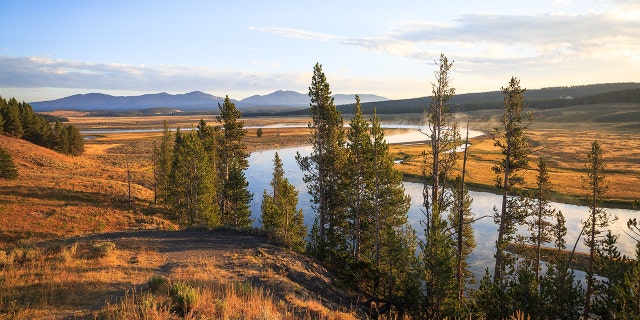
The sun begins to set on the Hayden Valley landscape at Yellowstone State Park. 

21. More than 80% of Yellowstone’s forests are made up of lodgepole pine.

22. Yellowstone is classified under the highest category (Class 1) of clean air protection under the Clean Air Act (1970).

23. Across Yellowstone’s more than 2.2 million acres, about 290 waterfalls can be found.

24. The Grand Canyon of the Yellowstone River in Hayden Valley is roughly 20 miles long, flowing from the 109-foot Upper Falls.

25. Lower Falls of the Yellowstone River is the tallest waterfall near a road, measuring 308 feet.

26. The canyon’s Lower Falls flows about 63,500 gallons of water per second over the falls at peak runoff.
Yellowstone's Super Volcano and geothermal features

27. The Yellowstone Volcano Observatory (YVO) was established in 2001 to monitor volcanic activity.

28. Yellowstone sits atop an active volcano, yet an eruption in the next few hundred years is unlikely, according to YVO research.

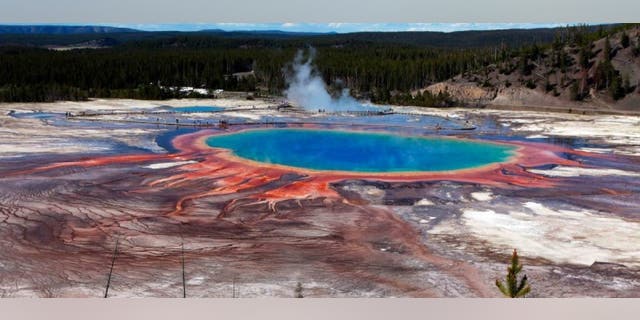
The Grand Prismatic Spring, the largest in the United States and third-largest in the world, is seen in Yellowstone National Park, Wyoming, on June 22, 2011. 

29. The Yellowstone Super Volcano is one of the largest calderas in the world, measuring 45 x 30 miles.

30. Yellowstone has more than 10,000 hydrothermal features, including geysers, hot springs, mud pots and fumaroles.

There are more than 500 active geysers in Yellowstone.

31. Grand Prismatic Spring is Yellowstone's largest hot spring, measuring 200-330 feet in diameter and more than 121 feet deep.

32. Hot springs have killed or injured more people in Yellowstone than any other natural features.

33. Boardwalks and trails have been laid down for visitor safety in thermal areas, since more than 20 people have died from severe burns.

34. There are more than 500 active geysers in Yellowstone — that's more than half of all the geysers in the world.
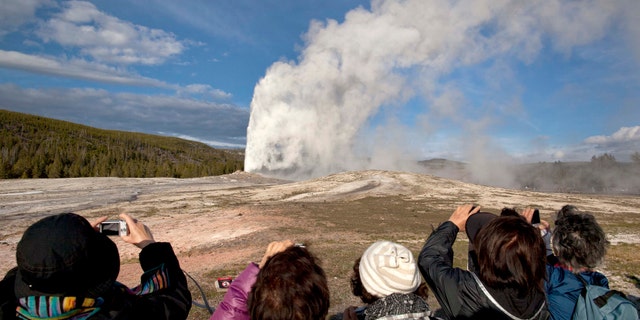
Tourists snap pictures of Old Faithful erupting late in the afternoon in Yellowstone National Park on May 11, 2011. 

35. The Upper Geyser Basin has the highest concentration of geysers in the world, including Old Faithful, the Giantess Geyser, the Grand Geyser and the Morning Glory Pool.

36. Yellowstone is home to cone geyser Old Faithful — one of the most famous geothermal features in the world, according to Outdoor Project.

37. Old Faithful got its name from the way it faithfully erupts every 45 to 125 minutes.

38. Eruptions at Old Faithful last from 3 to 10 minutes — and can blast up to 185 feet high.

39. Old Faithful eruptions can dispel anywhere from 3,700 to 8,400 gallons of nearly boiling water. 

40. Hikers can visit Yellowstone’s Boiling River, located at the Wyoming-Montana border, and soak in the natural hot springs that are cooled down by the Gardner River.

41. The Mammoth Hot Springs on the east flank of the 8,012-foot tall Terrace Mountain have created natural travertine steps, such as Minerva Terrace.

Yellowstone's wildlife and ecosystem

42. The park is home to the largest population of mammals in the lower 48 states.

43. There are 67 different species of mammals in the Yellowstone area.

44. Yellowstone requires wildlife watchers to stay 100 yards away from predatory species and 25 yards from all other animals.

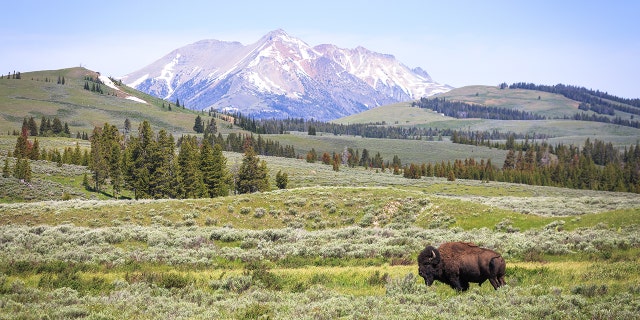
A bison is spotted out in the wide-open Wyoming landscape. 

45. Yellowstone has been nicknamed the "American Serengeti" for its unpredictable wildlife patterns and vast ecosystem, according to Natural Habitat Adventures.

46. The last known Yellowstone wolf pack was exterminated in 1926, according to National Geographic.

47. Forty-one wolves were reintroduced to Yellowstone in the mid-'90s to reestablish ecosystem balance.

48. Grizzly bear and mountain lion populations grew due to increased protection in the 90s, as well.

Yellowstone is home to the largest free-ranging herd of bison in North America.

49. Grizzly bears in the state of Wyoming are federally managed and endangered, with only an estimated 600 to 800 bears left. Canada lynx and grizzly bears are both threatened species.

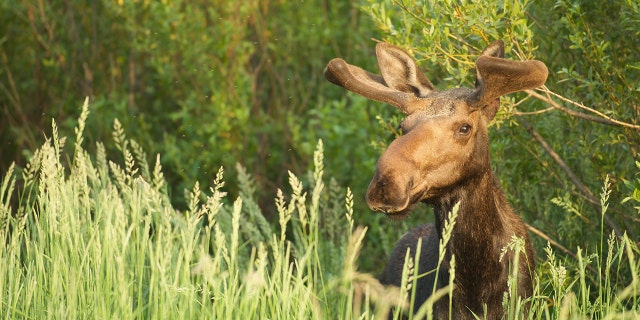
50. Moose, the largest member of the deer family, can stand over six feet tall.

A moose stands alert over brush in Wyoming. 

51. Moose antlers can weigh up to 25 pounds each and span up to six feet wide.

52. Moose can run 30 to 35 miles an hour — a lot faster than humans, according to Jackson Hole EcoTour Adventures founder Taylor Phillips.

53. Breeding season for Yellowstone elk takes place in late September, early October when lots of bugling can be heard. 

54. Dominant bull elk require a harem of females, ranging from 5 to 90 at a time.

55. Elk have a tendency to ram into car doors on Yellowstone roadways during breeding season, due to their increased testosterone.

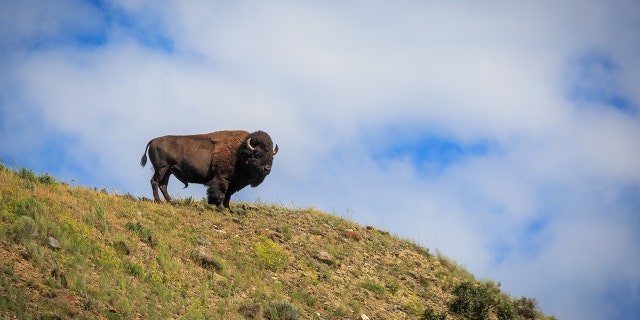
A bull bison stands on top of a mountain in Yellowstone National Park.

56. Yellowstone is home to the largest free-ranging herd of bison in North America.

57. Yellowstone has recovered a population of about 3,000 to 4,000 bison per year since the extermination of an estimated 60 million in the 1800s.

58. Bison are the largest land mammal in North America, with the biggest male bison weighing up to 2,000 pounds.

59. A bison attack occurs every year at Yellowstone — patrons are tossed by a bison’s horns, according to Phillips. 

60. Bison, bears and other wildlife often block traffic on Yellowstone’s roadways.

61. An estimated 100 colonies of beavers are native to Yellowstone as of 2015.

62. Beavers, the largest rodent in North America, can measure up to 40 inches long and weigh up to 60 pounds.

63. As of 2019, 285 bird species — 150 of them nesting — could be spotted in Yellowstone.

64. Yellowstone is home to 16 fish species, 6 reptile species and 5 amphibian species.

65. Cutthroat trout were the dominant Yellowstone fish species even prior to Euroamerican settlement.

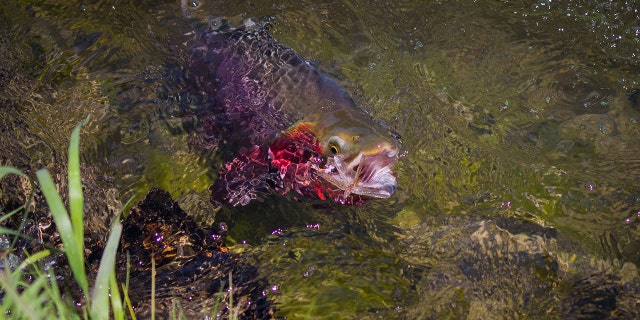
Cutthroat trout swimming in Wyoming.

66. Some 50,000 visitors out of 4 million visit Yellowstone annually to fish. 

67. Fishing in the park is lead-free to protect birds that are vulnerable to lead poisoning like waterfowl, cranes and shore birds.

68. Fishermen can encounter native fish like cutthroat trout, Arctic grayling and mountain whitefish. (See no. 65!)

69. Angling is permitted at Yellowstone — but any intentional snagging of fish is prohibited.

70. The Lacey Act of 1894 prohibited all hunting of animals in Yellowstone National Park unless needed to protect human life.

Yellowstone's explorations

71. Lamar Valley is considered the best site to view wildlife in Yellowstone by Outdoor Project.

72. Rocky terrain species like bighorn sheep, bison, antelope and deer can be best spotted in the Tower-Roosevelt area aloft Yellowstone’s cliffs.
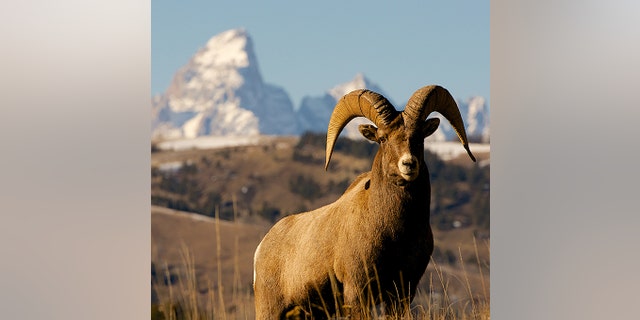
A rocky mountain bighorn sheep stands in front of the mountainous Wyoming landscape.

73. Grizzly bears can be spotted in Hayden Valley in the spring and early summer months — along with bison, coyotes, and various birds.

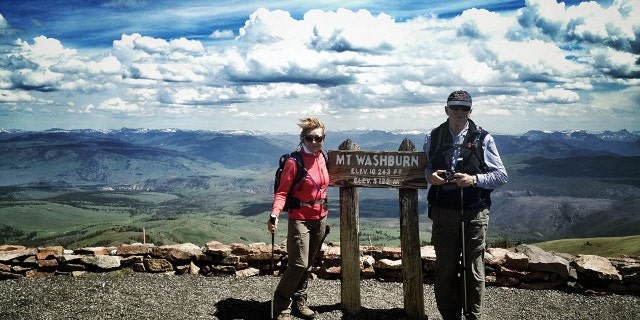
74. Canyon Village’s Mount Washburn, a popular place for a day hike, has a peak elevation of 10,219 feet.

75. Mount Washburn has panoramic views for 20 to 50 miles.

A couple poses at the summit of Mount Washburn.

76. Mount Washburn, the remnant of volcanic activity, was named after the 1870s Washburn-Langford-Doane expedition leader General Henry Washburn.

77. Wildflower season begins at lower elevations in April and continues upward through July.

78. Dunraven Pass is a popular destination for visitors to view carpets of wildflowers.

Yellowstone's recreation and visitation

79. There are about 3,200 employees working for concessioners during the summer peak at Yellowstone.

80. Yellowstone National Park has 11 visitor centers, museums, and contact stations.

81. The park has 9 hotels and lodges, with more than 2,000 rooms.

82. Yellowstone has 7 campgrounds managed by the National Park Service (NPS) and 5 concession-operated campgrounds.

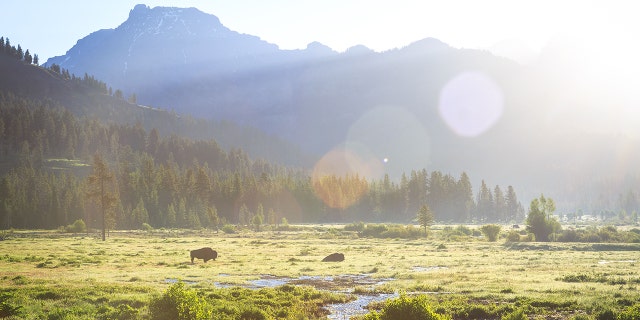
Bison spotted during sunrise in Lamar Valley at Yellowstone National Park. 

83. Yellowstone has 52 picnic areas and one marina.

84. The park has a total of 466 miles of paved roads and more than 15 miles of boardwalk.

85. There are approximately 1,000 miles of hiking trails throughout the park.

86. Yellowstone has 35 ski and snowshoe trails.

In July 2021, the park exceeded 1 million visitors in that month alone.

87. Yellowstone's Grand Loop is 142 miles of road; it curves in a figure-8 throughout the park, according to Planet Ware.

88. Driving the entire loop can take 4 to 7 hours, depending on traffic.

The entrance to Yellowstone National Park in Wyoming.

89. Scattered throughout Yellowstone’s back country are 301 campsites and 92 trailheads.

90. The year 2021 marked Yellowstone’s busiest year on record, at 4,860,537 visitors — up 28% from 2020 (the year the coronavirus pandemic hit the U.S.).

91. July 2021 was the most visited month that year — and the month of July continues to be the most popular month for visitors every year.

92. In July 2021, the park exceeded 1 million visitors in that month alone, which marked the first time it had done so in recorded history.

Yellowstone's weather

93. Yellowstone receives about 10 inches of precipitation annually at the north boundary and about 80 inches in the southwest corner.

94. Yellowstone hit a record-high temperature of 99 degrees Fahrenheit in Mammoth Hot Springs in 2002.

95. The park hit a record-low temperature of -66 degrees Fahrenheit in 1933 at West Entrance, Riverside Station.

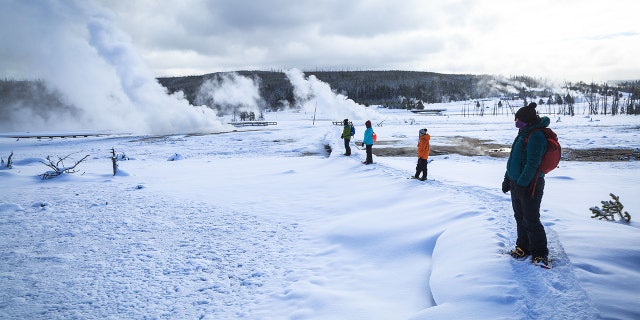
Travelers view Yellowstone National Park's thermal features during snowy winter. 

96. The average daily temperature in Yellowstone is a high of 80 degrees and a low of 9 degrees.

97. From April to October, the Milky Way is visible over Yellowstone.

98. The Northern Lights (aurora borealis) appear once or twice a year.

99. Average annual park-wide snowfall is 150 inches, but the snow can reach 200-400 inches at higher elevations, according to Yellowstone National Park Lodges. 

100. Lightning can ignite dozens of forest fires in a single summer.
Yellowstone's wildfires

101. The 1988 wildfires burned more than a third of Yellowstone National Park — approximately 500,000 acres of land.

102. The first 18 lightning-induced wildfires were left to burn out, but a dry July allowed seven of the fires to spread about 17,000 acres in one week.

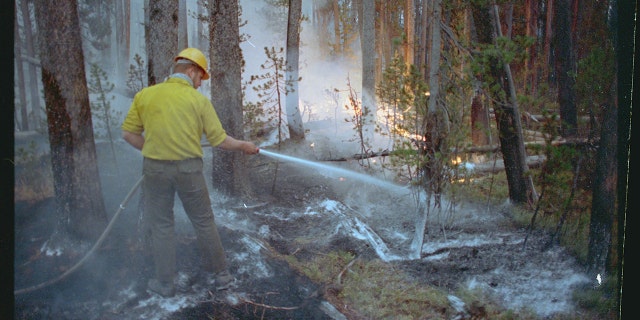
(Original Caption) Yellowstone National Park, Wyo: A firefighter knocks down a hot spot in the forest outside of Canyon in Yellowstone National Park late September 6th, 1988. 

103. More than $120 million was spent fighting the total of 51 wildfires in 1988.

104. All new natural fires after July 15, 1988, were ordered to be suppressed manually.

105. A quarter-inch of snow on Sept. 11, 1988, put a final stop to the fires that year.

Yellowstone's landscape has been naturally shaped by 14,000 years of wildfires.

106. Wildfires in 2016 at Yellowstone burned 70,285 acres of land. 

107. Ninety-two% of Yellowstone fires never burn more than 100 acres.

108. Yellowstone's landscape has been naturally shaped by 14,000 years of wildfires.

Yellowstone's research and history

109. More than 1,800 archeological sites are known to be located within the park.

110. Over 20,000 museum items, 30 historic vehicles — plus 20,000 rare books, manuscripts and periodicals — and millions of archived documents are housed at Yellowstone’s research centers.

111. The Yellowstone Research Library collects published and unpublished materials related to the national park for public enjoyment.

112. The library is hosting a Sesquicentennial Summer Reading Challenge for the 150th anniversary — challenging participants to read 1,872 minutes between April and August. 

113. Yellowstone has 25 sites, landmarks, and districts listed on the National Register of Historic Places.

114. There are more than 900 historic buildings in Yellowstone.

115. The Old Faithful Inn, a National Historic Landmark located near the Old Faithful geyser, stands 7 stories high.

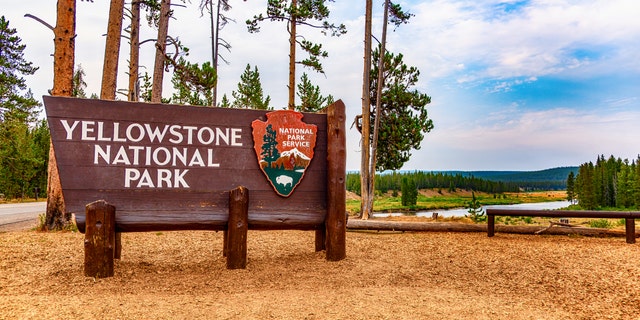
The sign at the south entrance to Yellowstone National Park, America's first officially designated national park, is shown in Wyoming in August 2018. 

116. The Old Faithful Inn has been considered the world's largest log cabin open to lodging guests and a dining room that feeds the public.

117. The 1,170-mile Nez Perce National Historic Trail — stretching from Wallowa Lake, Oregon, to the Bear’s Paw Mountains in Montana — cuts through Yellowstone Park.

118. The trail founded in 1986 and managed by the U.S. Forest Service pays tribute to the Nez Perce tribe that was uprooted and killed by settlers in 1877.

There are more than 900 historic buildings in Yellowstone.

119. Mission 66 revitalization efforts began in 1955 to mend deterioration that occurred during WWII. 

120. National Park Service Director Conrad Wirth persuaded Congress to approve Mission 66 funding with an aim to complete projects by National Park Service's 50th anniversary in 1966.

121. Canyon Village opened in July 1957 under Mission 66.
Yellowstone's presidential connections

122. Yellowstone's landmark Roosevelt Arch structure built in 1903 stands at the Gardiner, Montana, entrance to Yellowstone National Park.

123. The designer of the Roosevelt Arch remains a mystery, according to Yellowstone.org.

124. The purely decorative arch is made up of hundreds of tons of native columnar basalt.

125. The arch stands 50 feet tall and can be spotted from miles away.

The Roosevelt Arch is located at the north entrance to Yellowstone National Park on the edge of Gardiner Montana. 

126. Arch construction took about 6 months and cost about $10,000. 

127. The top of the arch features President Grant’s words written in the Yellowstone Protection Act. (See no. 2!)

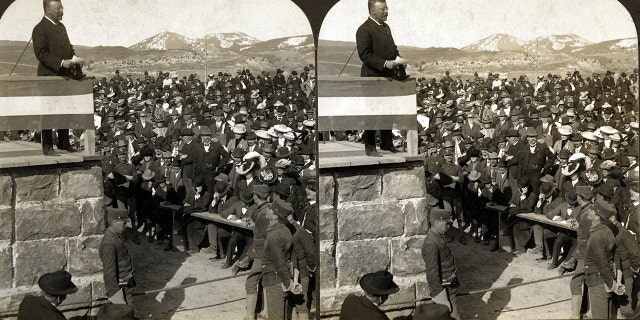
128. The arch was dedicated in Teddy Roosevelt’s name because he happened to be vacationing in Yellowstone during its construction and was asked to make a dedication speech.

President Theodore Roosevelt's western tour included a speech at the entrance to Yellowstone National Park. Photographic print on stereo card, stereograph, 1903. 

129. A time capsule put together by local Masons was placed inside the arch; it reportedly contains a Bible, a picture of Roosevelt, Masonic documents, newspapers, coins and other belongings.

130. Roosevelt never returned to Yellowstone after the dedication and never witnessed the completed arch.

Harding snapped a photo with Yellowstone’s famous black bear Jesse James.

131. President Woodrow Wilson approved the National Park Service Organic Act put forward by Congress on Aug. 25, 1916, which marked the beginning of the National Park Service.

132. President Warren Harding visited Yellowstone National Park in 1923 as the first stop on his national parks’ tour, according to the White House Historical Association. (He died on Aug. 2, 1923.)

133. Harding snapped a photo with Yellowstone’s famous black bear Jesse James.

134. Alongside reporters and a camera crew, Harding told the public, "Commercialism will never be tolerated here as long as I have the power to prevent it."
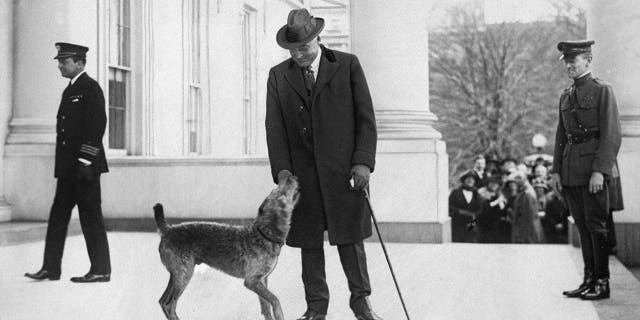
President Harding is shown with presidential dog Laddie Boy on the steps of the White House, on April 9, 1923. 

135. President Calvin Coolidge and his first lady, Grace Coolidge, visited Yellowstone on Aug. 22, 1927.

136. Coolidge caught 15 fish — when instructed in fishing with spinners by a park ranger — in the Firehole River near Old Faithful.

137. President Gerald R. Ford worked as a park ranger at Yellowstone National Park as a youth during the summer of 1936.

138. Ford returned to Yellowstone as president on Aug. 29, 1976, to renew national interest in America’s parks.

Yellowstone's celebrity status

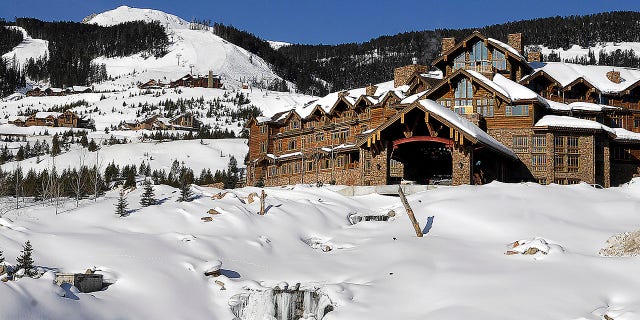
139. Yellowstone Club is the world’s only private ski, golf and adventure community.

140. The club situated in the Rocky Mountains, located north of the park, spans 15,200 acres in Big Sky, Montana.

The Yellowstone Club near Big Sky, Montana, north of Yellowstone National Park. 

141. Luxury Yellowstone Club real estate and custom residencies are available for purchase.

142. Celebrity Yellowstone Club members include Bill and Melinda Gates, Tom Brady and Gisele Bundchen, and Justin Timberlake and Jessica Biel, according to Celebrity Net Worth.

The Season 4 finale of "Yellowstone" broke major records, with more than 11 million total viewers.

143. Paramount Network's popular drama "Yellowstone" launched in 2018. It highlights the modern-day struggle of ranchers who have owned land for centuries.

144. The Season 4 finale of "Yellowstone" broke major records, with more than 11 million total viewers, according to Deadline.

145. "Yellowstone" star Kevin Costner is set to launch the "Yellowstone: One-Fifty" series on Fox Nation later this year.

Yellowstone's noted quotes

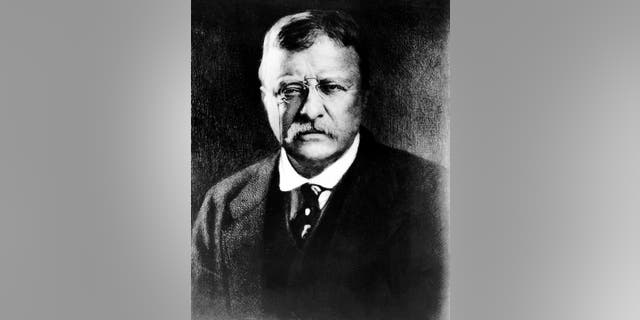
146. Theodore Roosevelt said, "There can be nothing in the world more beautiful than the Yosemite, the groves of the giant sequoias and redwoods, the Canyon of the Colorado, the Canyon of the Yellowstone, the Three Tetons; and our people should see to it that they are preserved for their children and their children’s children forever, with their majestic beauty all unmarred."
 
Theodore Roosevelt, the 26th president of the United States, is seen in this undated file photo.

147. "Maybe you weren’t born with a silver spoon in your mouth, but like every American, you carry a deed to 635 million acres of public lands," said Rep. John Garamendi, D-Calif. "That’s right. Even if you don’t own a house or the latest computer on the market, you own Yosemite, Yellowstone, the Grand Canyon, Golden Gate National Recreation Area, and many other natural treasures."

148. "Yellowstone, of all the national parks, is the wildest and most universal in its appeal," said Brigham Young University associate professor of history Susan Rugh. "Daily new, always strange, ever full of change, it is nature’s wonder park. It is the most human and the most popular of all parks."

149. Naturalist John Muir wrote, "To everybody over all the world, water is beautiful forever, whether falling upward into the sky in snowy geysers, or downward into deep resounding canyons, or gliding and resting in calm rivers and lakes."

150. "The Yosemite, the Yellowstone, the Grand Canyon are national properties in which every citizen has a vested interest; they belong as much to the man of Massachusetts, of Michigan, of Florida, as they do to the people of California, of Wyoming, and of Arizona," said Stephen Mather, first director of the national parks.

Sources for the material in this article include the National Park Service, Yellowstone National Park, Yellowstone National Park Lodges, Jackson Hole EcoTour Adventures, Outdoor Project, National Geographic, Natural Habitat Adventures, White House Historical Association, Yellowstone Club, Planet Ware, and Celebrity Net Worth.

Fox News Writer Angelica Stabile is a lifestyle writer for Fox News Digital. Follow her on Twitter at @atstabile.

Monday, May 16, 2022

His Name Is August Landmesser


Let's talk about August Landmesser. Let's talk about how he had guts, how he showed that he had cojones, even when surrounded by frightened sheep. Let's talk about a man who did not take a knee or accepted being "Woke" to the wonders of Fascist Socialism in Nazi Germany. Let's talk about a man who refused to be concerned with social justice, race-baiting, political correctness, peer pressure, and other similar methods of coercion.

He was born May 24th, 1910, and died on October 17th, 1944. He was a shipyard worker at the Blohm Voss Shipyard in Hamburg, Germany, in the 1930s and into the 1940s. Yes, during World War II. He's in one of my favorite historical photographs ever taken. He is best known because, in that photo, he refused to perform the Nazi salute at the launch of the naval training vessel, the Horst Wessel, on June 13th. 1936.

It's said that he had problems with the Nazi Party. But in reality, the Nazi Party had a problem with him since they did not approve of his "unlawful" relationship with Irma Eckler, a Jewish woman. 

He was later imprisoned and then forced to work as a laborer in the Nazi military war machine, then the German Army. He was killed in action. Irma Eckler was sent to a concentration camp where she was killed. Some will write to tell me that he too joined the Nazi Party in the 1930s. But people today forget that our Great Depression was felt all over the world, and in 1931, he did in fact join the Nazi Party as a way to get work. Yes, just as others did, he too hoped it would help him get a job. 

And just like many others at the time, he didn't know what he was doing when he joined the Nazi Party. We forget that the Nazi Party in 1931 was really no different than any other political party. In 1931, there were few in Germany who knew what the Nazi Party would become. 

Of course, people belonging to a political party with the most clout is nothing new in human history. During hard economic times, people used whatever sources were available to find a job. Joining political parties and other associations was seen as helpful to that extent. The problem comes about when one realizes that those perks were in reality all about making a deal with the Devil.

In 1935, August Landmesser became engaged to Irma. Because of the Nazi hatred for the Jewish race, August was expelled from the Nazi Party. The couple registered to be married in Hamburg, but the Nuremberg Laws enacted a month later prevented it. 

Love being the motivator that it is, the Nuremberg Laws forbidding the marriage of mixed races didn't stop the course of nature. So, they were married. And on October 29th, 1935, August and Irma gave birth to a daughter. They named their daughter Ingrid.

By 1937, August and Irma tried to flee with their child to Denmark. But they were apprehended and returned to Hamburg. She was again pregnant, and he was charged under Nazi racial laws. He was found guilty in July of 1937 of "dishonoring the race." 

August argued that neither he nor Irma knew that she was fully Jewish and was acquitted on May 27th, 1938, for lack of evidence. But, they were only acquitted with the warning that a repeat offense would result in a multi-year prison sentence. 

The couple may or may not have thought the threat from the government had passed. But either way, they publicly continued their relationship as a husband and wife with a child. This came to a stop on July 15th, 1938, when August was arrested again. This time he was sentenced to two and a half years in the concentration camp Börgermoor. 

While August was imprisoned in that concentration camp, Irma was detained by the Gestapo and held at the prison Fuhlsbüttel, where she gave birth to a second daughter, Irene. From there, she was sent to the Oranienburg concentration camp, the Lichtenburg concentration camp for women, and then the women's concentration camp at Ravensbrück. 

Meanwhile, August was released from prison on January 19th, 1941. He worked as a foreman for the haulage company Püst. The company had a branch at the Heinkel-Werke factory in Warnemünde. A few letters came from Irma Eckler until January of 1942. It is believed that she was taken to the Bernburg Euthanasia Center in February of 1942.

In February 1944, August was forced into the Nazi military in a "penal battalion," the 999th Fort Infantry Battalion. He was declared missing in action, then killed in action, after being killed during the fighting in Croatia on October 17th, 1944. 

In the course of examining documentation in 1949, after the war, Irma was pronounced legally dead with a date of April 28th, 1942. She was among 14,000 killed at the Oranienburg concentration camp. Like Irma, August Landmesser was legally declared dead in 1949. The marriage of August Landmesser and Irma Eckler was recognized retroactively by the German government in the summer of 1951. 

As for their children, their children were initially taken to the city orphanage. Ingrid was later allowed to live with her maternal grandmother while Irene went to the home of foster parents in 1941. In the autumn of 1951, Ingrid assumed her father's surname Landmesser. Ingrid was also placed with foster parents after her grandmother's death in 1953. But as for Irene, it is believed that she continued to use her mother's surname, Eckler.

Their father, August Landmesser, is featured in the photograph taken on June 13th, 1936, published on March 22nd, 1991, in Die Zeit


As one can clearly see, it shows a large gathering and all there with raised arms in the Nazi salute. The most obvious exception is that of August Landmesser, who defiantly stood with his arms crossed over his chest. Several others have also refrained from saluting but are not so obviously defiant.

There are so many lessons that we can learn from this. Obviously, being defiant in the face of an adversarial government is admirable. And yes indeed, that is one lesson here. But the bigger lesson is not allowing a central government, be it the Communist Party throughout their rule in the Soviet Union, the Nazi Party, or any Fascist Socialist government, even that disguised as a democratic government, to have so much power that they have the power to rule instead of governing their nation. When a nation is ruled by the government, the people are subjects. When a nation is governed, the people are citizens. 

Tom Correa

Tuesday, May 10, 2022

BLM Identifies Equine Virus Killer Of 95 Wild Horses


On April 28, 2022, the Bureau of Land Management announced tests determined an equine influenza virus caused the mysterious respiratory disease that killed at least 95 wild horses and forced a federal holding facility in Colorado to go under quarantine. The BLM report did state that the virus is "not uncommon" among horses.

The BLM conducted tests that showed that a strain of the virus, known as H3N8, was likely the cause of the outbreak and related horse deaths. The BLM issued the following statement: 

A VIRUS HAS BEEN IDENTIFIED AS THE PRINCIPAL CAUSE OF THE OUTBREAK AND MORTALITY AT BLM’S WILD HORSE AND BURRO FACILITY

CAÑON CITY, Colo. – An equine influenza virus that is not uncommon among both wild and domestic horses has been identified as the likely cause of the respiratory disease outbreak and associated mortality that is occurring at the BLM’s Wild Horse and Burro Corrals located on the Colorado Department of Corrections (CDOC) East Canon Complex in Canon City, CO. Positive polymerase chain reaction (PCR) laboratory test results from two leading veterinary diagnostic laboratories in the United States identified the virus in nasal swabs and lung tissue from several horses.

This strain of equine influenza (subtype H3N8) is not related to the current outbreak of highly pathogenic avian influenza (subtype H5N1) that is currently impacting wild birds and poultry across the United States.

The PCR testing has also identified two equine herpes viruses (EHV-2 and EHV-5) but these commonly occur in normal, healthy horses, and it is unclear to what extent these may also be contributing to the severity of the clinical signs observed in the more severely affected group of horses at the facility.

More typical mild clinical signs of influenza are also being observed in approximately 10-20 percent of the other 2,184 horses at the facility that are not from West Douglas. No mortality has occurred in the larger groups of horses. The West Douglas horses were gathered in an emergency operation in 2021 following a wildfire that impacted their habitat. As of today, April 28, 95 horses have died at the facility since April 23.

“The Bureau of Land Management will review operations at the Canon City facility to prevent future outbreaks like this from occurring,” said BLM Colorado Acting Associate State Director Ben Gruber. “This tragic outcome was influenced by a population of horses that may have been particularly vulnerable given their time in the West Douglas area and their exposure to last year’s wildfire that prompted their emergency gather.”

“This unfortunate event is being taken very seriously by the Department of Corrections and the BLM,” said CDOC Executive Director Dean Williams. “We are working in coordination to mitigate the spread of the virus and identify and prevent any potential risk which could lead to future similar events.”

BLM continues to work with the attending veterinarians on the scene as well as the diagnostic laboratories, veterinarians, and epidemiologists from the US Department of Agriculture and the Colorado State Veterinarian’s Office to investigate and mitigate the factors that may be contributing to the most severe cases and prevent further spread of the disease. 

The facility remains under a voluntary quarantine with no horses allowed to leave the premises at this time and for the foreseeable future until it has been determined that the animals are again healthy and pose no risk to the domestic equine population in the community.

The veterinarian report and additional information can be found online at https://www.blm.gov/programs/wild-horse-and-burro/herd-management/herd-management-areas/colorado

The BLM manages more than 245 million acres of public land located primarily in 12 western states, including Alaska, on behalf of the American people. The BLM also administers 700 million acres of sub-surface mineral estate throughout the nation. Our mission is to sustain the health, diversity, and productivity of America’s public lands for the use and enjoyment of present and future generations.

-- end of BLM statement.

The BLM is in charge of caring for America's wild horses and announced that the outbreak had taken place when at least 57 horses had died in Cañon City, Colorado, located more than 100 miles south of Denver. Four days after the announcement, that number had reached 95.

According to reports, that is the second time between late March and the middle of April that the BLM had to shut down a wild horse facility because of a widespread illness among its horses. In March, a BLM wild horse facility in Wyoming was also closed because some animals developed "Streptococcus Equi." 

Streptococcus Equi is the bacterium that causes a disease in horses known as "strangles." Most horse owners know that "strangles" is primarily an upper respiratory infection.  It is characterized by swelling of the lymph nodes and the formation of abscesses, primarily in the head and neck. Disease severity varies and younger horses often exhibit more severe clinical signs than older horses. Strangles is a highly contagious bacterial disease among horses.

Tom Correa


Wednesday, May 4, 2022

1895 -- 8th Grade Final Exam & Answers -- Subject Orthography

A Completed 8th Grade Final Exam
Salina, Kansas, 1895

Here is a completed 8th Grade Final Exam -- Subject: Orthography  

1. What is meant by the following: Alphabet, phonetic orthography, etymology, syllabication? 
  1. Alphabet - A system of characters, signs, and symbols used to indicate letters or speech sounds, the basis of all writing. 
  2. Phonetic orthography - The standardization of the sounds of the letters of the alphabet in accordance with accepted usage. This varies from area to area within our nation but is becoming more and more uniform as communication and travel between the sections increases. 
  3. Etymology -- The study of the origin and development of a word, tracing it back to its original language and to its sources in contemporary or earlier languages. 
  4. Syllabication - The process of dividing a word into syllables, to determine the phonemic sound, the accent, and roots, to enable the reader to better grasp the meaning and pronounce the word in speech and writing. 
2. What are elementary sounds? How classified? 

The elementary sounds are the consonants and vowels: 
  • A consonant is any speech sound produced by stopping and releasing the air stream (p, t, k, b, d, g), by stopping it at one point while it escapes at another (m, n, l, r), by forcing it through a loosely closed or vary narrow passage (f, v, s, z, sh, zh, th, H, kh, h, w, y) or a combination of these means. 
  • A vowel (a, e, i, o, u and sometimes y) is a voiced speech sound characterized by generalized friction of the air passing in a continuous stream through the pharynx and open mouth, but with no constriction narrow enough to produce local friction. 
  • Phonemes include all significant differences of sound, including features of voicing, place, and manner of articulation, accent, and secondary features of nasalization, glottalization, labialization, and the like. Labial sounds are mainly formed by the lips; glottal speech sounds are formed mainly by closure of the glottis; nasal sounds are formed primarily by resonance in the nasal passages. 

3. What are the following, and give examples of each: Trigraph, subvocals, diphthong, cognate letters, linguals? 
  1. A trigraph is a combination of three letters representing one sound. An example is eau as in bureau. 
  2. A subvocal is beneath the voice, a silent or nearly silent sound. 
  3. A dighthong is a complex vowel sound made by gliding continuously from the position of one vowel to that for another within the same same syllable. An example is ou as in down. 
  4. Cognate letters are related in derivation, for instance, i and y. 
  5. Linguals are sounds articulated by using the tongue, for instance the sound th
4. Give four substitutes for caret 'u'. 

Substitutes for caret 'u' are oo as in tool, eau as in bureau, ew as in crew. 

5. Give two rules for spelling words with final 'e'. Name two exceptions under each rule. 
  1. When spelling words having a final silent e, drop the e when adding a suffix beginning with a vowel. Exceptions - knowledgeable, despiteous 
  2. If the suffix or verb ending begins with a consonant, keep the final e. Exceptions - truly, judgment 
6. Give two uses of silent letters in spelling. Illustrate each. 

Sometimes words have silent letters. These follow patterns that can be memorized. Examples: 
  • gn, pn, kn = n as in gnome, pneumonia, knife 
  • rh, wr = r as in rhyme, wrestle 
  • pt, ght = t as in ptomaine, height 
  • ps, sc = s as in psalm, science 
  • wh = h as in whole 
7. Define the following prefixes and use in connection with a word: bi, dis, mis, pre, semi, post, non, inter, mono, super. 
  1. bi - having two elements or natures, i.e., biangular, bifurcated. 
  2. dis - meaning away or apart from, i.e., disassemble, disregard. 
  3. mis - meaning wrong, wrongly, bad, badly, i.e., misstep, misapply. 
  4. pre - meaning before, ahead of, i.e., predate, prescience. 
  5. semi - meaning not whole, partly, not fully, i.e., semicircle, semifinal. 
  6. post - meaning after, behind, i.e., postscript, postpartum. 
  7. non - meaning not, i.e., nonhuman, nonagressive. 
  8. inter - meaning between, among, or reciprocal, i.e., intercede, interchangeable. 
  9. mono - meaning one, single, alone, i.e., monocline, monotheism. 
  10. super - meaning above, over, on top of, i.e., superabundant, superpose. 
8. Mark diacritically and divide into syllables the following, and name the sign that indicates the sound: Card, ball, mercy, sir, odd, cell, rise, blood, fare, last. 

[ Note: due to the limitations of html, the "macron" diacritical mark for vowels, a dash over the vowel, signifying the sound of the vowel name, is shown as ¯a, ¯e, ¯i, ¯o, ¯u ] 

card = cärd, 
ball = bôl 
mercy = mur'c¯e
sir = sur 
odd = ãd; 
cell = sel; 
rise = r¯is; 
blood = blud; 
fare = fer; 
last ~ last 

9. Use the following correctly in sentences, Cite, site, sight, fane, fain, feign, vane, vain, vein, raze, raise, rays. 
  1. The cite which was given as a source for the quote was incorrect. 
  2. The site was surveyed yesterday. 
  3. My rifle has a front and a rear sight. 
  4. We celebrated the re-birth at fane. 
  5. She would fain stay with her husband. 
  6. Can she feign surprise and excitement? 
  7. The vanes on the windmill are broken. 
  8. It is vain to think you are better than others. 
  9. Mother has a varicose vein in her leg. 
  10. Tomorrow they will raze the old barn. 
  11. Today they started to raise a new barn. 
  12. The rays of the sun feel good in the spring. 
10. Write 10 words frequently mispronounced and indicate pronunciation by use of diacritical marks and by syllabication. 
  1. anonymity == an' o nym' i ty 
  2. bestial == b¯es' tyal 
  3. Capernaum == Ca pur' na um 
  4. datum == d¯at' um 
  5. either == ¯e' ther 
  6. financier == fin' an sir' 
  7. get == get 
  8. homonym == häm' a nim 
  9. inchoate == in k¯o' it 
  10. I couldn't think of one starting with a "j", so, Salina == Sa l¯i' na , not Sa l¯e' na 
--- end of 1895 8th Grade Final Exam and Answers in U.S. History 

Time to take this exam: 1 hour

Editor's Note:

I've made the same comment and asked the same questions after each section in this series on the 8th Grade Final Exam given in Salina, Kansas, in 1895. As I said in the other parts of this series, after reading these questions and answers, I realized how much was expected of children in the past. And second, while I've been able to determine that the test is real and from 1895, I have not been able to find out who wrote these answers. And yes, my friends, I had to look them up to make sure they are correct -- and they are.

How well do you think you would have done taking this 1895 8th Grade Final Exam? Do you think 4-year college students today can pass this exam? How about Teachers today, how would they do taking this exam? Would they be able to pass this test? 

Of course, if you don't think they or your 8th Grade kids would be able to pass this test, it's important that we ask the questions: Why can they? What has happened that has made us unaware of things that 8th Graders in 1895 were required to know? 

Just some things to think about.

More to come!

Tom Correa


Sunday, May 1, 2022

The Reno Gang & The First Train Robbery


While I've never considered Indiana a part of the West, certainly not the Old West, there is no denying that the first post-Civil War train robbery in the United States took place in Indiana on October 6th, 1866. It was accomplished by none other than the now-famous Reno Gang. This newspaper clipping above was published a couple days later. It gave an account of the robbery:

BOLD ROBBERY ON AN EXPRESS CAR.

Adams' Express Car on the Ohio and Mississippi Railroad Robbed of $15,000 The Through Safe Thrown from the Car, hut Afterwards Recovered The Robbers Escape.


INDIANAPOLIS, October 7 -- Last night, as the eastward bound train on the Ohio and Mississippi Railroad left Seymour, two men, with their faces masked, entered the messenger car of Adams' Express, presented a pistol at the head of the messenger, took his key, opened the local safe, and rifled it of $15,000. They then threw out the through safe, containing a large amount of papers and coin, and jumped from the car. The train was stopped some miles ahead and a hand-car sent back to the scene of the robbery. The safe, which was too heavy to carry, was recovered, but the robbers escaped. The company offers a liberal reward for their apprehension.

-- end of the 1866 news article.

The Reno Gang that was responsible for pulling off that heist was also known as the Reno Brothers, the Reno Brothers Gang, and even the Jackson Thieves. I found it interesting that the short-lived gang of outlaws actually had their start in 1864, while the Civil War was still going on. 

While Hollywood has portrayed them as Confederates stealing from wealthy Northern bankers in more than one B-Western, the Reno brothers were Yankees. After the war, those Yankee badmen operated in what we know today as the Midwest. And while most know the Reno Gang as train robbers, it's interesting that the gang also dealt in counterfeiting, thievery, and even murder-for-hire. Some sources say they were one of the first murder-for-hire gangs in Indiana. 

Though they were not around very long, unlike other outlaw gangs, the law had very little to do with breaking up the Reno Gang. The fact is they were stopped because citizens had enough of their lawlessness. It's true. Citizens formed vigilante groups. They are said to have lynched ten of the gang in 1868. And that, well that pretty much broke up the gang. Frankly, as we all know, necktie parties have that effect on criminals.

As for those in the vigilante groups who lynched the Reno Gang's members, it's interesting that no one was ever identified or ever prosecuted in connection to those lynchings. Of course, another interesting fact about the Reno Gang is that most of their stolen money was never recovered. Imagine that.

Tom Correa


Thursday, April 28, 2022

1895 -- 8th Grade Final Exam & Answers -- Subject Arithmetic

A Completed 8th Grade Final Exam 
Salina, Kansas, 1895

Here is a completed 8th Grade Final Exam -- Subject: Arithmetic

1. Name and define the Fundamental Rules of Arithmetic. 
  1. The Fundamental Rules of Arithmetic are Addition, Subtraction, Multiplication, and Division. 
  2. Addition - the summing of a set of numbers to obtain the total quantity of items to which the number set refers indicated in arithmetic by + . 
  3. Subtraction - the mathematical process of finding the difference between two numbers or quantities, indicated in arithmetic by - . 
  4. Multiplication - the mathematical process of finding a number or quantity (the product) obtained by repeating a specified number or quantity a (the multiplicand) a specified number of times (the multiplier), indicated in arithmetic by X . 
  5. Division - the mathematical process of finding how many times a number (the divisor) is contained in another number (the dividend); the number of times constitutes the quotient, indicated in arithmetic by ÷ . 
2. A wagon box is 2 ft. deep, 10 feet long, and 3 ft. wide. How many bushels of wheat will it hold? 

The wagon box contains 2 x 10 x 3 = 60 cubic feet. A struck bushel equals 1 1/4 cubic feet. A heaped bushel in general equals 1 1/4 struck bushels. Therefore the wagon box if heaped contains 60 bushels and if struck, 1/5th less or 48 bushels. 

3. If a load of wheat weighs 3942 lbs., what is it worth at 50 cts. per bu, deducting 1050 lbs. for tare?

The actual weight of the wheat, subtracting the tare of the wagon weight of 1050 lbs is 2892 lbs. A fully ripe and dried struck bushel of wheat weighs on average 58 lbs per bushel. Therefore the solution is 2892 ÷ 58 X $.50 = $24.93 

4. District No. 33 has a valuation of $35,000. What is the necessary levy to carry on a school seven months at $50 per month, and have $104 for incidentals? 

The cost of 7 months of school equals $50 X 7 + $104, therefore $454.The mil levy is therefore $454 ÷ $35,000 which equals .013 levy or $1.30 per $100 valuation of the district. 

5. Find cost of 6720 lbs. coal at $6.00 per ton. 

One ton equals 2000 lbs, therefore 6720 ÷ 2000 X $6 = $20.16 

6. Find the interest of $512.60 for 8 months and 18 days at 7 percent. 

A banking month is 30 days, or 360 days per year. If the principal is held for 258 days the proportional interest for the period held is 258 ÷ 360 X $512.60 X 7% or $25.72 

7. What is the cost of 40 boards 12 inches wide and 16 ft. long at $.20 per inch? 

40 X 12 X $.20 = $96.00 To verify this, lumber costs $150/1000 board feet, therefore - - 40 X 16 ÷ 1000 X $150 = $96.00 

8. Find bank discount on $300 for 90 days (no grace) at 10 percent. 

90 days is 3 months, 1/4 of the banking year, therefore the discount is .10 ÷ 4 X $300 = $7.50 

9. What is the cost of a square farm at $15 per acre, the distance around which is 640 rods? 

An acre measure is 160 square rods. The farm has each side of 160 rods or 160 rods square, therefore 25600 square rods, is 160 acres in extent and is $2400 in value. 

10. Write a Bank Check, a Promissory Note and a Receipt. 

Bank Check Promissory Note

Farmer's Coop Bank                                                              1895 
Salina, Kansas                                                           June 1, 1894 
Received Of                       John Q. Parent                       $57.16 

Receipt:

Fifty Seven and 16/100 -------------------------------------  Dollars 

1894-95 Tuition - 
James                                                       Roscoe R. Pound, Chmn

__________________________________________________

--- end of 1895 8th Grade Final Exam and Answers in Arithmetic 

Time to take this exam: 1.25 hours

Editor's Note:

First, as I said in Part One of this series, after reading these questions and answers, I realized how much was expected of children in the past. And second, while I've been able to determine that the test is real and from 1895, I have not been able to find out who wrote these answers. And yes, my friends, I had to look them up to make sure they are correct -- and they are.

How well do you think you would have done taking this 1895 8th Grade Final Exam? Do you think 4-year college students today can pass this exam? How about Teachers today, how would they do taking this exam? Would they be able to pass this test?

I have to wonder why 8th Grade children in 1895 were able to pass this test versus 8th Graders today? Maybe we should be asking if our children are learning the essentials in schools today? If not, and instead there really is too much political indoctrination in public schools, then how can we return schools to being places of learning instead of places of political indoctrination?

More to come! 

Tom Correa


Wednesday, April 20, 2022

Jimmy Doolittle - A True American Hero


It's hard for me to believe that it's the 80th Anniversary of the Doolittle Raid on Japan. I remember being a boy in grade school and hearing my teachers talk about it taking place "just a few years ago." Of course, World War II had only ended about 15 or so years before that. So yes, I can see why some folks at the time might have felt that only a few years had passed. 

Imagine hearing such an exciting story as a kid?

"It was April 18th, 'just a few years ago,' when Col. Doolittle and his sixteen B-25 crews took off from the deck of the aircraft carrier USS Hornet. They had just been spotted by a Japanese picket boat and Col. Doolittle had to make the decision to start their mission earlier than they wanted to. That, by itself, meant that the crews would have farther to go and less fuel to escape after they hit their targets in Japan. And remember, of those brave men, all volunteered for the mission.  

It was nighttime, dark, the weather was stormy, and the planes started to run out of fuel. All in all, they had been flying for about 12 hours. Fifteen of the planes headed for safety in China. One chose to land in Russia. 

Col. Doolittle and his crew bailed out safely over China when their B-25 ran out of fuel, and so did most of the other crews who took part in that one-way mission. Col. Doolittle landed in a rice paddy near Chuchow, China. He and his crew were finally able to link up after they bailed out. They were helped through Japanese lines by Chinese guerrillas and an American missionary by the name of John Birch. Although most eventually did reach safety, other aircrews were not so fortunate. 

One crewman was killed while bailing out after the mission. He was buried by Rev. Birch. Two men from Crew #6 had actually drowned because they crash-landed in the ocean off the China coast. Eight men were captured by the Japanese. Of them, three were executed by firing squad and one died of beriberi and starvation while in prison. Four of the men survived 40 months in solitary confinement in a Japanese prison."

That is a thrilling story of American courage. And while it is said that Col. Doolittle thought he would be court-martialed for launching the raid ahead of schedule after being spotted by a Japanese patrol boat, as well as the loss of all 16 B-25 bombers, in reality, he was instantly seen as an American hero. His service to our country was rightfully praised. He received the Medal of Honor from President Franklin D. Roosevelt. He was awarded the Medal of Honor for planning and leading his historic raid on Japan.

His Medal of Honor citation reads: "For conspicuous leadership above and beyond the call of duty, involving personal valor and intrepidity at an extreme hazard to life. With the apparent certainty of being forced to land in enemy territory or to perish at sea, Lt. Col. Doolittle personally led a squadron of Army bombers, manned by volunteer crews, in a highly destructive raid on the Japanese mainland."

Jimmy Doolittle was only a Major in the U.S. Army Air Corps when the Empire of Japan bombed Pearl Harbor in December of 1941. He was promoted to Lt. Col when we entered World War II. In fact, James H. "Jimmy" Doolittle was promoted to Lt Colonel on January 2nd, 1942, and assigned to Army Air Forces Headquarters. It was there that he took part in the planning for what was considered a retaliatory air raid on the Japanese homeland following the attack on Pearl Harbor. 

He volunteered for and received General Henry H. "Hap" Arnold's personal approval to lead the top-secret attack on targets in Tokyo, Kobe, Yokohama, Osaka, and Nagoya, Japan. The idea of having land-based planes take off from an aircraft carrier was first thought of by General Arnold. The idea of a raid on Tokyo using land-based bombers belongs to Admiral Francis S. Low. It's said that Doolittle started working on his concept of what was needed in the way of a raid on Tokyo right after the Japanese attack on our fleet on December 7th, 1941. The Doolittle Raid on April 18th, 1942, took place just a little over 4 months after Pearl Harbor was hit.

As for the Doolittle Raid, also known as the Tokyo Raid, of April 18th, 1942? The story that I relate above told to me in grade school was fairly accurate as to what took place. We know that planning "The Doolittle Raid" involved total secrecy. We know that sixteen B-25 Mitchell medium bombers were transported aboard the aircraft carrier USS Hornet which took them as close to Japan as possible. We know that those Mitchell Bombers had to take off on a short runway. Something that was never been done before. We know that the planes were stripped-down of non-essentials and filled with bombs. All of the planes involved in the Doolittle Raid were lost.

A foreign power was to attack the Japanese homeland. That was new in itself. Launching U.S. Army Air Corps bombers from an aircraft carrier was also something that was also never done -- other than attempting it twice before the actual raid. Many called the raid unprecedented, audacious, and purely American. Its success was called a "miracle" by many.

As for the idea of undertaking a bombing mission and knowingly doing it while fully understanding that you might never get back? Plan the mission to run out of fuel and crash land in Japanese-held China, while praying that they avoid Japanese patrols? Can you imagine pitching that idea to your superiors?

While some can argue its tactical importance, there is no arguing that it was a great victory and morale boost for Americans. And yes, it scared the Hell out of the Japanese military that ruled the Japanese government at the time. In fact, it is believed that the Doolittle Raid on Tokyo was what prompted the Japanese to attack Midway Island on Jun 4, 1942. It was a decision on their part that was disastrous for the Japanese Navy.

What some folks might not know is that Jimmy Doolittle flew in the lead plane on that historic raid. And yes, believe it or not, it was his very first combat mission. He survived and received the Medal of Honor for his daring raid on Japan. In July 1942, he was promoted to Brigadier General. Yes, he went from Lt-Col. to Brigadier General which means he had bypassed the rank of full Colonel and had been promoted by two grades on the day after the raid on Tokyo.

Doolittle became Commanding General of the Twelfth Air Force which was operating in North Africa. He was promoted to Major General in November 1942, and in March 1943 became Commanding General of the Northwest African Strategic Air Force. It was there that he garnered a reputation for his use of airpower to annihilate an enemy position

One example of his use of airpower against an enemy position is his use of airpower against the Italian town of Battipaglia which was held by Mussolini's elite forces. It is said that the town had been razed to the ground. In fact, it was said to have had so much destruction that Lt. General Carl Andrew Spaatz sent him a joking message: "You're slipping Jimmy. There's one crabapple tree and one stable still standing."

Maj. Gen. Doolittle took command of the Fifteenth Air Force in the Mediterranean Theater of Operations in November of 1943. On June 10th, 1943, believe it or not, as a Major General and commanding officer of the Fifteenth Air Force, he actually flew as a co-pilot on a mission. He and Jack Sims, who was also one of his men during the raid on Tokyo, flew a B-26 Marauder of the 320th Bombardment Group, 442nd Bombardment Squadron, on a mission to attack gun emplacements on the Italian island of Pantelleria off of Sicily. 

Pantelleria was regarded as crucial to Operation Husky which was the name for the Allied invasion of Sicily in 1943. The reason for its importance had to do with how planes based on Pantelleria could readily reach Sicily. In Operation Corkscrew, Allies bombed Pantelleria heavily from the air and the sea for days before the Sicily invasion. After the Italian garrison surrendered, the island of Pantelleria became what could only be considered a vital base for Allied airpower during the assault on Sicily. And yes, it is said that Maj. Gen. Doolittle continued to fly missions despite the risk of him being shot down and captured.


Though his promotion date to Lt General was March 13th, 1944, in January of 1944, he was put in command of the Eighth Air Force in England. So yes, in just a mere two years, he was promoted from Lt. Col. to Lt. General. His command of the Eighth Air Force would change the war in Europe.

As the commander for the entire Eighth Air Force in Europe, among other things, he would be responsible for securing the air during the preparations for D-Day. In fact, he was credited with reducing the effectiveness of the Luftwaffe and giving the Allies complete air superiority over Europe. He was the planner behind Operation Argument which was better known as “Big Week.” That was the Allied six-day air offensive that changed who had air superiority over Europe.

Doolittle forced Germany to respond with fighter interceptions so that he could either destroy the Luftwaffe in the air or destroy the production of replacement aircraft. While the Germans thought they had an advantage with their heavy fighter tactics, which made them very confident to take on the Eighth Air Force bombers, Doolittle surprised them by using our new longer-range P-51 Mustang fighters to leave our bombers as escorts -- and instead go hunting for German fighters. Doolittle had them do that by sweeping the skies looking for Luftwaffe well ahead of our bombers. That was new and effective.

In Operation Argument, Lt.Gen. Doolittle targeted factories in more than 11 German cities. And in what became known as the largest aerial formation ever assembled, on the first day, 3,894 heavy bombers and 800 fighters took off from England. Doolittle's new long-range fighter tactics were devastating to the Germans. In all, our pilots hunted down and picked off the Luftwaffe fighters before they could even get close to our bomber formations. Over the next six days, Doolittle's plan resulted in our damaging or destroying 75 percent of the factories that produced 90 percent of Germany’s aircraft. This gave the Allies total air superiority over Europe in time for the D-Day invasion of France.

A result of Doolittle's audacious plan and his tactic of allowing American fighters to sweep the skies, doing that instead of being in their formations with the bombers as escorts, that Operation took the German Luftwaffe from offense to defense for the rest of the war. And frankly, because of Operation Argument, the German Luftwaffe would never again be considered a threat to the Allies in the air.

It is said that the German High Command actually feared Lt. Gen. Jimmy Doolittle more than other Generals in our command structure because they knew that he would target and destroy Germany's oil industry, its supply chain, and its transportation infrastructure, as well as its communication capabilities. All from the air. And yes, their fears were well-founded since that was something that Doolittle had the Eighth Air Force do for the rest of the war.

So, while Jimmy Doolittle's raid on Tokyo was impressive, so was what he did in Europe. And fortunate for us, Jimmy Doolittle was more than just one of the Raiders who flew a remarkable mission to bomb Tokyo. He is a true American hero who has a special place among America's great Generals. No doubt about it.

Tom Correa